Ovarian Cysts: Types, Symptoms, Causes, And Treatment
By Dr. Shachi SinghUpdated

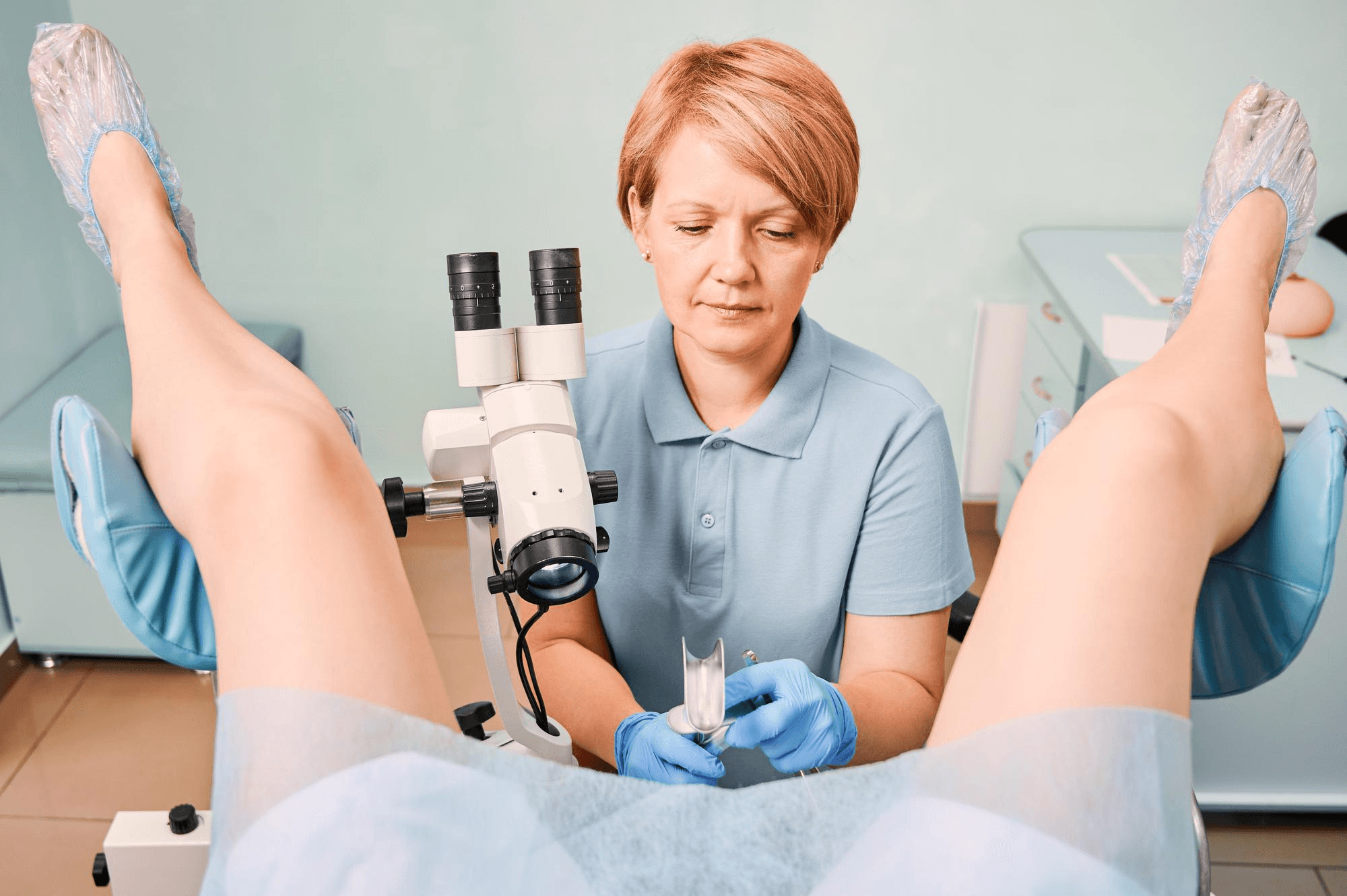
A picture illustrating a model of the female reproductive organs, a uterus with ovaries, under a magnifying glass, showing how to identify an ovarian cyst, raising awareness about reproductive health and screening tests.
Ovarian cysts are fluid-filled sacs that grow on or in the ovaries, and they are often found in women of reproductive age. Most ovarian cysts are benign, they self-resolve, and they don't cause any symptoms, but others cause pain, have effects on the hormonal balance of a woman, and can develop further and may need treatment. Various types of ovarian cysts exist; the common ones have symptoms, and this blog describes their respective management options; it will inform the reader to identify which symptoms of an ovarian cyst need a doctor's attention.
What are Ovarian Cysts?
An ovarian cyst is a sac that contains fluid or has semisolid contents that forms on or within one or both ovaries. Ovarian cysts are extremely common, especially in pre-menopausal women. In many instances, they are benign, painless, resolve without symptoms, and are found during pelvic examinations and ultrasound examinations.
In some cases, complications arise, including pain or other irregularities, which necessitate the involvement of a healthcare provider whose diagnosis and recommended treatment plan will vary based on individual assessment. Regular pelvic examination and discussion of changes with a healthcare provider is paramount.
Different Types Of Ovarian Cysts
1. Functional Ovarian Cysts
Functional cysts are the most common kind and arise from the normal process of ovulating every month, so they actually mean the ovaries are working normally. These types of cysts generally need no treatment and usually disappear on their own within 6-8 weeks.
2. Follicular Cysts
They are created when an egg does not release from its follicle, and then the follicle swells up and fluid accumulates inside the cyst. Follicular cysts tend to be small and symptomless.
3. Corpus Luteum Cysts
These form after ovulation. The follicle then turns into the corpus luteum, but when the follicle does not shrink down after ovulation, fluid will gather and make it a cyst. This can be slightly uncomfortable in the pelvis, causing a late period.
4. Cystadenomas
These can form on the surface of the ovaries and be filled with water or mucus-type fluid, often filling up the ovaries to quite a size, and may become noticeable as abdominal swelling.
5. Dermoid Cysts (Teratomas)
These cysts are formed from different body tissues (hair, skin, teeth, etc.) but are often found to be benign growths and can slowly expand over the years.
6. Endometriomas
These types of cysts are formed because of endometriosis. They are formed from collected blood and so appear very dark, and these often cause discomfort in the pelvis.
7. Ovarian Cancer Cysts
These are often not really cysts in the normal sense; they are masses of solid or complex nature that can indicate that cancer is growing in the ovary, and these are typically found in postmenopausal women
Symptoms Of Ovarian Cysts
- Many ovarian cysts cause no signs, particularly the small ones, and are often found unexpectedly during routine examination of the abdomen and pelvis.
- Pain in the pelvis or a dull ache in the lower abdomen or back may persist.
- A heavy feeling in the lower abdomen, with the body appearing bloated and full, is common and can sometimes be more on one side, and is associated with the bigger cysts.
- Dyspareunia, which means painful intercourse, can occur.
- Irregular periods, which may also be very painful, or the absence of a period may indicate symptoms.
- Urinary urgency and or difficulty with emptying bowels can occur from a pressing effect.
- A persistent symptom can sometimes be suggestive of other conditions, such as polycystic ovarian syndrome( PCOS).
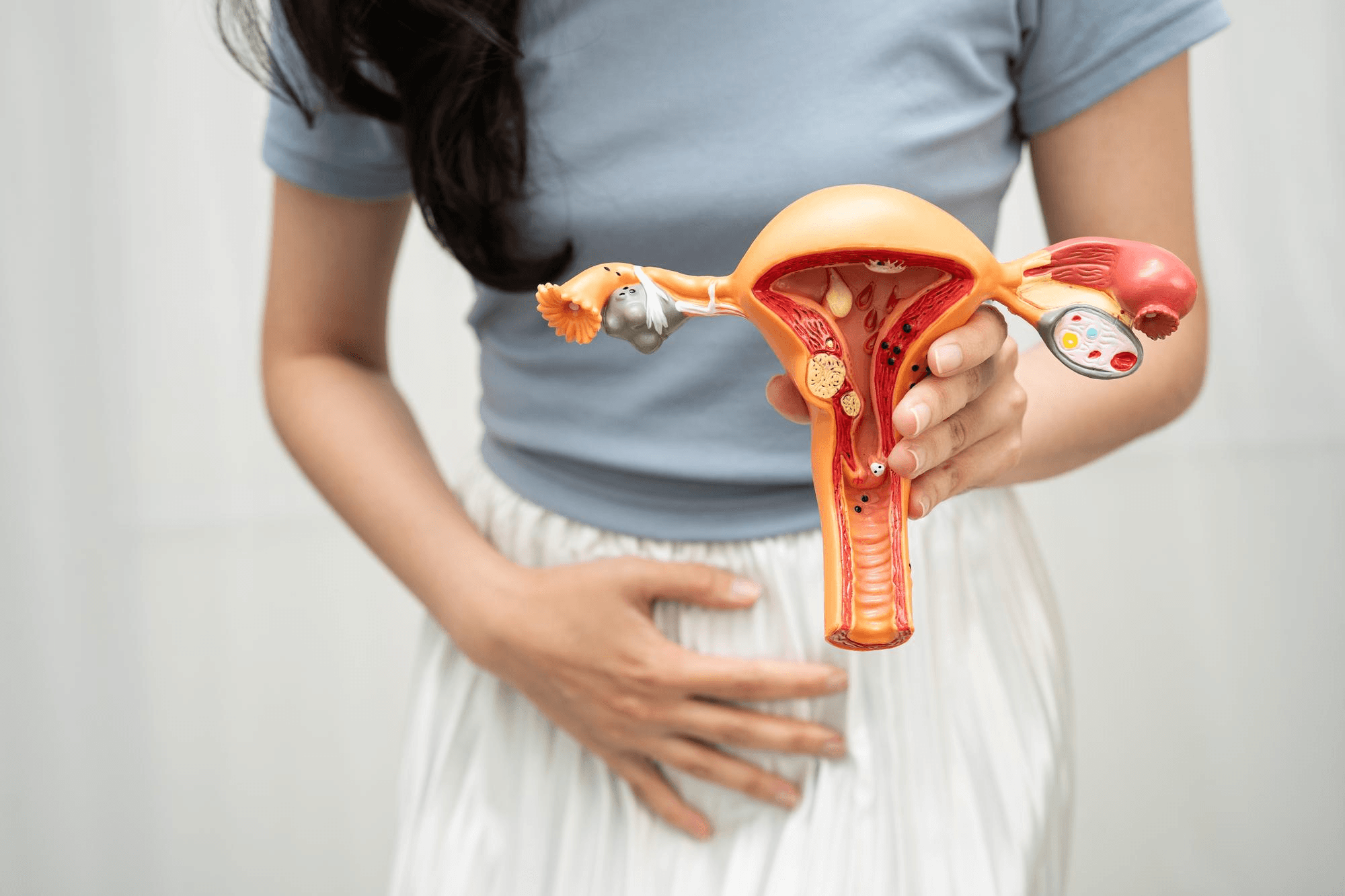
Image showing a woman presenting a model of the female reproductive organs, where you can see the uterus and ovaries. She is demonstrating which parts of the anatomy are more prone to ovarian cysts.
Why Do Ovarian Cysts Form?
1. Ovulation
Most ovarian cysts form due to the natural ovulation cycle in women when the ovary releases an egg.
2. Uncontrolled Cell Growth
In these cases, a tumor grows rapidly, resulting in various cysts such as cystadenomas and dermoid cysts.
3. Endometriosis
An untreated condition that causes an abnormal tissue growth (like that found in the uterus) to grow outside the womb and into the ovary, causing cysts filled with blood. These are known as endometriomas.
4. PCOS (Polycystic Ovary Syndrome)
An abnormality of hormones that causes many small cysts to appear in both ovaries.
5. PID (Pelvic Inflammatory Disease)
If left untreated for long enough, the PID infection will spread into the ovaries, as stated.
Treatment for Ovarian Cysts
1. Observation and Surveillance
A good proportion of ovarian cysts, especially functional ones, will regress on their own; thus, they do not warrant any intervention. Asymptomatic ovarian cysts would likely be managed with watchful waiting with regular transvaginal sonography and pelvic examination to monitor the size and development of cysts.
2. Medications
Combined oral contraceptive pills or hormonal pills may be prescribed to help regulate menstruation and decrease the chances of new cyst formation. Over-the-counter pain-relieving medications or anti-inflammatory drugs may be prescribed if there is pain related to cysts.
3. Treatment of Underlying Cause
If there is a contributing factor, such as Polycystic Ovary Syndrome or Endometriosis, treatment of the underlying condition is warranted using appropriate interventions such as hormonal therapy.
4. Surgical Treatment
Cysts may be surgically removed if they are large, persistent, symptomatic, or are suspicious for malignancy. Techniques such as laparoscopy with a simple excision of the cyst (cystectomy) or oophorectomy in cases where the ovary itself is removed may be performed. The former can be performed via minimally invasive surgery. Open surgery may be warranted in situations where malignancy is suspected.

A picture that explains the topic of ovarian cysts by showing a medical professional discussing with a patient in an exam room. They talk about their symptoms and treatment for an ovarian cyst diagnosis.
Final Thoughts
Ovarian cysts are a common condition that usually poses no threat but may require medical attention. Although several cysts pass without the need for intervention, understanding and identifying the signs, along with prompt medical attention, are essential for preventing serious issues. A thorough knowledge of ovarian cyst varieties, their origin, and therapy is necessary to assist women in making well-informed health-related decisions. Early detection and comprehensive treatment are assured by routine pelvic exams and clear communication with medical specialists.
Expert Care With Dr. Shachi Singh
For a complete diagnosis and treatment of your ovarian cyst that might also need surgical procedures, there is no better choice than an obstetrician, gynecologist, and laparoscopic surgeon, Dr. Shachi Singh, who has been expertly trained in using minimal invasive surgical procedures to efficiently treat ovarian cysts with minimal risks, along with offering a speedy recovery process for the patient. So, book your appointment today.
Frequently Asked Questions (FAQs)
1. What symptoms would signal to me that my ovarian cyst might be serious?
If you start to experience severe or ongoing pain in the pelvic area or abdominal cramping or sharp pain in your abdomen or any swelling in your stomach or fever, then you should consult your doctor immediately. Also, other symptoms like rapid swelling, irregularities in the periods, a sensation of nausea or discomfort when urinating or having bowel movements could also signal a problem. Any complex ovarian cysts shown up in imaging scans or in women post-menopause could also signify serious complications and require investigation.
2. What would happen to my ovarian cyst if it went untreated?
In most cases, ovarian cysts resolve by themselves and are not problematic in any way. If it is left untreated, the ovarian cyst may continue to grow and may result in rupture, ovarian torsion, which is a surgical emergency, or, in the worst case,e it may signal the presence of ovarian cancer. Other possible problems include interference with the normal functioning of an ovary, or it may even be a signal of existing, previously unnoticed, pathology in the ovary. Any suspicion about this situation would warrant a proper medical investigation.
3. What is the optimum management for an ovarian cyst?
Management of ovarian cysts depends on their type, size, associated symptoms, and the age of the patient. A functional cyst might need surveillance or symptomatic treatment, with anxiolytics or hormones, and a large, non-regressing ovarian cyst might be managed with operative laparoscopic excision of the cyst.
4. Is there any natural remedy to treat ovarian cysts?
There are no clinically proven natural remedies that can remove ovarian cysts. However, achieving a healthy weight, a healthy diet, and exercise may help balance the reproductive hormones. Good lifestyle management, controlling stress, and having regular checkups may lead to hormonal balance. It is advised that one must consult a doctor.