Vaginal Yeast Infection: Causes, Symptoms & Treatment

Woman holding lower abdomen showing discomfort from bacterial vaginosis, highlighting vaginal infection symptoms and the importance of proper hygiene during summer.
It starts with itching. Then a burning sensation. Then a thick, white discharge that is unlike your normal discharge, and a discomfort that makes wearing underwear, sitting for long periods, or having sex genuinely unpleasant.
You probably know something is off. But many women in India hesitate to talk about it, even to their doctor. There is still enough stigma around vaginal health that women search for remedies online, try home treatments, or simply endure the discomfort rather than seeking proper care.
Vaginal yeast infections are one of the most common gynecological conditions women experience. An estimated 75% of women will have at least one in their lifetime, and many will have several. They are not a sign of poor hygiene. They are not a sexually transmitted infection. And they are very treatable when properly diagnosed.
Dr. Shachi Singh, senior gynecologist at Prakash Hospital, Sector 33, Noida, regularly helps women across Noida and Greater Noida manage vaginal health concerns with sensitivity, accuracy, and without judgment. This guide covers everything you need to understand about vaginal yeast infections clearly and honestly.
What Is A Vaginal Yeast Infection?
A vaginal yeast infection, medically called vulvovaginal candidiasis, is a fungal infection caused by an overgrowth of a fungus called Candida, most commonly Candida albicans.
Here is the thing: Candida naturally lives in your vagina. It is always there, in small quantities, as part of the normal vaginal ecosystem. It is not a foreign invader. The problem occurs when the balance of your vaginal environment shifts, and Candida starts multiplying out of control.
Your vagina maintains itself through a careful balance of bacteria and fungi. The key players on the protective side are Lactobacillus bacteria, which produce lactic acid and keep the vaginal environment slightly acidic. This acidity keeps Candida in check. When something disrupts this balance and reduces those protective bacteria, Candida seizes the opportunity and overgrows, causing the symptoms of a yeast infection.
What Causes a Vaginal Yeast Infection?
This is one of the most misunderstood aspects of yeast infections. The cause is rarely about hygiene. It is about the disruption of the vaginal ecosystem, and many common, everyday situations can trigger it.
1. Antibiotic Use
This is one of the most frequent causes. Antibiotics are designed to kill bacteria, but they do not distinguish between harmful bacteria and the protective Lactobacillus bacteria in your vagina. When a course of antibiotics wipes out those protective bacteria, Candida has room to overgrow. Many women notice a yeast infection appearing within days of completing a course of antibiotics, particularly broad-spectrum ones.
2. Hormonal Changes
Estrogen promotes the growth of vaginal tissue and affects the vaginal environment. Fluctuations in estrogen during pregnancy, around menstruation, or with the use of hormonal contraceptives can shift the vaginal balance enough to trigger Candida overgrowth. Pregnancy in particular significantly increases the risk of yeast infections because elevated estrogen levels create a more yeast-friendly environment.
3. Uncontrolled Blood Sugar (Diabetes)
High blood sugar levels increase the glucose content in vaginal secretions, which acts as a nutrient source for yeast. Women with poorly controlled diabetes are significantly more prone to recurrent yeast infections. If you are experiencing frequent infections and have not been evaluated for diabetes, this is worth discussing with your doctor.
4. A Weakened Immune System
Your immune system normally helps keep Candida in check. Anything that compromises immunity, like illness, certain medications, chronic stress, or conditions like HIV, increases the vulnerability to fungal infections, including vaginal candidiasis.
5. Tight Or Synthetic Clothing
This is particularly relevant in India's warm, humid climate. Tight synthetic underwear, tight-fitting jeans or leggings, and non-breathable fabrics create warmth and moisture in the vaginal area, exactly the conditions in which Candida thrives. Cotton underwear allows airflow; synthetic fabrics trap heat and moisture.
6. Douching And Excessive Internal Cleaning
Douching using water, commercial products, or home mixtures to clean inside the vagina is one of the most counterproductive things a woman can do for vaginal health. The vagina is self-cleaning. Douching washes out the protective Lactobacillus bacteria that keep infections at bay, and disrupts the pH balance that keeps yeast in check. Many women douche because they believe it keeps them clean or removes odor. In reality, it does the opposite and significantly increases infection risk.
7. Prolonged Dampness
Sitting in wet swimwear or sweaty workout clothes for extended periods after exercise creates a warm, moist environment favourable for yeast growth. Changing out of damp clothing promptly significantly reduces this risk.
Symptoms Of A Vaginal Yeast Infection
Symptoms can range from mild discomfort to severe, disruptive inflammation. Not every woman experiences all of these, and the intensity varies widely. Common symptoms include:
- Itching and irritation in the vaginal area and vulva - often intense, persistent, and worsening at night.
- Burning sensation - particularly during urination or sexual intercourse.
- Thick, white, cottage-cheese-like discharge - this is the most characteristic sign. The texture is clumpy or chunky, not watery.
- Redness and swelling of the vulva.
- Vaginal soreness or a raw, inflamed feeling.
- Painful or uncomfortable sex
One important note: yeast infections typically do not produce a strong or unusual odour. If there is a noticeable fishy or unpleasant odour alongside your symptoms, that points more toward bacterial vaginosis, a different condition that requires different treatment.
Yeast Infection Vs. Bacterial Vaginosis - Why Getting The Right Diagnosis Matters
Vaginal yeast infections and bacterial vaginosis (BV) are the two most common causes of vaginal discomfort, and they can appear quite similar. But they are caused by completely different organisms and require completely different treatments. Using the wrong treatment not only fails to cure the infection, but it can also delay recovery and make things worse.
| Yeast Infection | Bacterial Vaginosis (BV) | |
|---|---|---|
| Cause | Fungal (Candida overgrowth) | Bacterial imbalance (anaerobic bacteria) |
| Discharge | Thick, white, cottage-cheese texture | Thin, grey or white, watery |
| Odour | Typically none | Strong, fishy — especially after sex |
| Itching | Prominent, often intense | Mild or absent |
| Treatment | Antifungal medication | Antibiotic medication |
This is exactly why self-diagnosing and self-treating, particularly using over-the-counter antifungal creams without confirmation, can be problematic. If you are treating a bacterial vaginosis with antifungal medication, you will get no improvement. And if you have never had a confirmed yeast infection before, you should see a gynecologist before treating it yourself.
Diagnosis

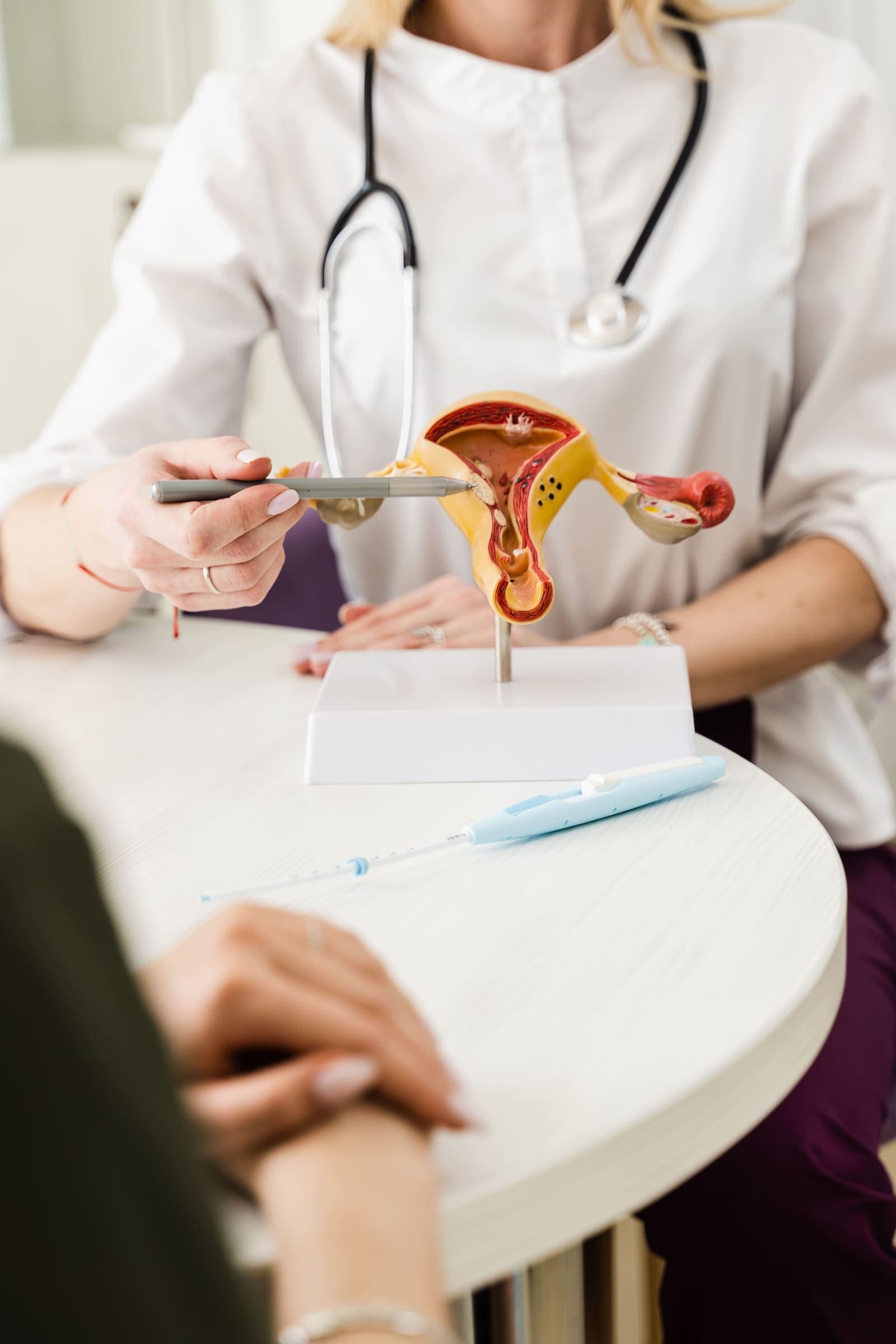
A gynecologist explaining vaginal infection using a uterus model during consultation, discussing symptoms, causes, treatment options, and reproductive health care
Your gynecologist will typically:
- Ask about your symptoms, their duration, and any recent triggers (antibiotics, hormonal changes, etc.).
- Perform a pelvic examination to assess the vaginal area visually.
- Take a vaginal swab for microscopy or culture, as this identifies whether the organism is Candida and, if needed, which species, which is important for treatment selection.
There are no reliable home tests that distinguish between yeast infection and other vaginal conditions with accuracy. A proper diagnosis is always the correct first step.
Treatment Of Vaginal Yeast Infections
The good news is that vaginal yeast infections respond well to treatment. Most uncomplicated infections resolve within a few days of starting the right medication.
1. Antifungal Medications
Yeast infections are treated with antifungals and not antibiotics. Using antibiotics for a yeast infection will not help and can actually make it worse by further reducing protective bacteria. Common treatment options include:
- Topical antifungals - creams, gels, or suppositories applied inside the vagina and to the vulva (clotrimazole, miconazole). These work locally and are well-tolerated.
- Oral antifungals - a single oral tablet (fluconazole) is often prescribed for uncomplicated infections. It is convenient and effective.
- Extended courses - for more severe infections or early recurrent cases, a longer course over several days may be prescribed.
Your gynecologist will decide which option is appropriate based on the severity of your symptoms, whether this is a first episode or recurrent, and your overall health situation. Do not share medication with others or use leftover treatments from a previous episode without a fresh evaluation.
2. Recurrent Yeast Infections
A yeast infection is considered recurrent if it occurs four or more times in a year. This affects roughly 8% of women and deserves proper investigation, not just repeated antifungal courses.
Recurrent infections may point to an underlying factor: undiagnosed or poorly controlled diabetes, immune system issues, a non-albicans Candida species (some of which are resistant to common antifungals), or ongoing exposure to triggers that are not being addressed. Your gynecologist will evaluate these possibilities and may prescribe a maintenance antifungal regimen, a preventive schedule of medication taken weekly or monthly to keep infections from recurring.
What Not To Do
Several commonly tried home remedies can make a yeast infection significantly worse or mask symptoms that need proper treatment:
- Do not douche - ever, but especially not when you have an infection. It removes protective bacteria and disturbs the pH balance further.
- Avoid scented soaps, washes, or sprays in the vaginal area - these disrupt the natural ecosystem and can irritate.
- Do not use yogurt internally - despite being a popular home remedy, applying yogurt internally is not a medically validated treatment and can introduce new bacterial contamination.
- Do not self-treat if you are pregnant - antifungal treatments during pregnancy need to be specifically chosen by your gynecologist, as some are not safe for use during pregnancy.
- Do not ignore recurrent infections - treating each episode in isolation without investigating the underlying pattern is not adequate care.
Prevention: How To Reduce The Risk
No prevention strategy eliminates the risk, but these measures consistently reduce it:
- Wear cotton underwear - breathable, absorbent, and far less conducive to yeast growth than synthetic fabrics.
- Change out of wet or sweaty clothing promptly - swimwear, workout clothes, and wet underwear should not be worn for extended periods.
- Avoid tight-fitting bottoms - particularly tight synthetic trousers or leggings worn for long hours.
- Do not douche - the vagina cleans itself. External cleaning with plain warm water is entirely sufficient.
- Complete antibiotic courses wisely - if you are prescribed antibiotics and have a history of post-antibiotic yeast infections, mention this to your doctor. They may consider prescribing a prophylactic antifungal alongside the antibiotic.
- Manage blood sugar - if you have diabetes, keeping blood sugar well-controlled is one of the most impactful things you can do for vaginal health.
- Eat probiotic-rich foods - curd (dahi) with live cultures provides Lactobacillus bacteria that support vaginal health. This is not a treatment but may support prevention as part of a generally healthy diet.
- Wipe front to back - this prevents bacteria from the rectal area from reaching the vaginal area.
When To See Your Gynecologist
See a gynecologist rather than self-treating if:
- This is your first episode, and you are not sure what you have.
- Symptoms are severe, significant swelling, broken skin, and intense pain.
- Symptoms do not improve after completing a standard treatment course.
- You have had four or more infections in the past year.
- You are pregnant.
- You have diabetes or a known immune condition.
- There is a strong odour alongside your other symptoms, which suggests bacterial vaginosis, not a yeast infection.
- Symptoms return within two months of treatment.
Vaginal Health Care In Noida And Greater Noida

Woman clutches abdomen, discomfort hinting at vaginal infection symptoms like pain, burning, and urine urgency.
Vaginal health concerns, including yeast infections, are among the most common reasons women visit a gynecologist, and they deserve the same matter-of-fact, non-judgmental care as any other medical issue.
Dr. Shachi Singh at Prakash Hospital, Sector 33, Noida, provides confidential, thorough, and compassionate gynecological care to women across Noida and Greater Noida. Whether this is a first episode, a recurrent infection, or a concern about discharge and vaginal discomfort that has been worrying you for a while, she will give you a proper diagnosis and a treatment plan that actually works. There is no reason to be embarrassed. There is every reason to get proper care.
To book a consultation with Dr. Shachi Singh, call: +91 97023 46853
Clinic Hours: Monday to Saturday, 9 AM – 6 PM | Sunday, 10 AM – 2 PM
Clinic Address: D-12A, 12B, Sector-33, G.B. Nagar, Noida, Uttar Pradesh 201301
Frequently Asked Questions
1. Is a vaginal yeast infection a sexually transmitted infection (STI)?
No. Yeast infections are not classified as STIs because you do not need to be sexually active to develop one. However, sexual activity can sometimes trigger a yeast infection in women who are prone to them, and it is possible to pass a yeast infection to a sexual partner, though this is uncommon.
2. Can I use an over-the-counter antifungal cream without seeing a doctor?
If you have had a confirmed yeast infection before and your current symptoms are identical, an over-the-counter antifungal may be appropriate. However, if you have never had a confirmed diagnosis, if symptoms are severe, or if you are pregnant, see a gynecologist first.
3. How long does a yeast infection take to clear up?
With the right antifungal treatment, most uncomplicated yeast infections clear up within three to seven days. Oral antifungal tablets may work faster. If symptoms persist beyond a week of treatment, go back to your gynecologist.
4. Can men get yeast infections?
Yes, though it is less common. Men can develop a yeast infection on the penis, typically presenting as redness, itching, and a rash on the head of the penis. Treatment is with a topical antifungal cream.
5. Is it safe to have sex during a yeast infection?
It is advisable to avoid sexual intercourse until the infection has fully cleared. Sex can worsen symptoms, cause discomfort, and may transmit the infection to a partner.
6. Why do I keep getting yeast infections every month?
Recurrent infections, four or more in a year, usually have an underlying cause. Common culprits include poorly controlled diabetes, a non-albicans Candida species resistant to standard treatment, hormonal factors, or a trigger you are not avoiding. See your gynecologist for a proper evaluation rather than continuing to treat each episode in isolation.
This blog is written for educational and informational purposes only. It is not a substitute for professional medical advice. Please consult Dr. Shachi Singh or a qualified gynecologist for evaluation and treatment specific to your condition.