Safe Pregnancy Exercises For The First Trimester
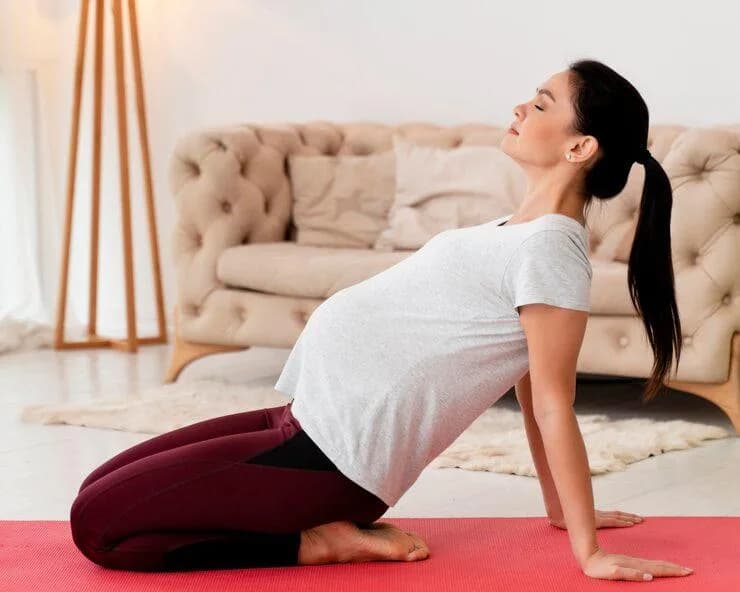
Pregnant woman in third trimester stretching.
The first trimester is exhausting. Between the nausea, the fatigue that hits you like a wall by 3 PM, the hormonal surges, and the sheer mental load of processing the fact that you are growing a human being, exercise is probably the last thing on your mind.
And yet, staying gently active during the first trimester is one of the best things you can do for yourself and your pregnancy. Not intense workouts. Not training sessions. Just consistent, appropriate movement and the difference it makes to your energy levels, your mood, your back pain, and your preparation for labour is genuinely significant.
Dr. Shachi Singh, senior gynecologist and obstetrician at Prakash Hospital, Sector 33, Noida, encourages women across Noida and Greater Noida to stay active during pregnancy with the right exercises, the right modifications, and always with their doctor's guidance. This guide walks you through what is safe, what to avoid, and how to start if you have never exercised regularly before.
Is It Safe To Exercise In The First Trimester?
Yes, for the vast majority of women with uncomplicated pregnancies, exercise in the first trimester is not only safe but genuinely beneficial.
The old idea that pregnant women should rest completely, avoid exertion, and treat pregnancy as a fragile state has been comprehensively replaced by evidence-based guidance. The American College of Obstetricians and Gynaecologists (ACOG) and most leading obstetric bodies now recommend that pregnant women with uncomplicated pregnancies aim for at least 150 minutes of moderate-intensity activity per week spread across most days.
The key words here are uncomplicated pregnancy and moderate intensity. If you have been advised bed rest, have a high-risk pregnancy, have experienced previous miscarriages, or have conditions like placenta praevia, subchorionic haematoma, or severe morning sickness (hyperemesis gravidarum), the guidance changes. Always check with your gynecologist before starting or continuing any exercise programme during pregnancy.
Why Exercise Matters In The First Trimester
The first trimester is when your baby's brain, spinal cord, heart, and major organs are forming. Your body is simultaneously managing enormous hormonal changes and building the placenta. It is a lot of work, which is why you are tired. Gentle, consistent exercise during this period:
- Reduces fatigue - counterintuitive, but light movement genuinely improves energy levels by improving circulation and releasing endorphins.
- Manages nausea - many women find that a short walk or gentle movement helps settle first-trimester nausea better than lying still.
- Improves sleep quality - physical activity helps regulate sleep, which is already disrupted by hormonal changes and frequent urination.
- Reduces the risk of gestational diabetes - women who exercise regularly during pregnancy reduce their risk of gestational diabetes by up to 50%.
- Lowers the risk of preeclampsia - moderate exercise is associated with nearly a 40% reduction in preeclampsia risk.
- Reduces back pain - strengthening the core and pelvic muscles early reduces the back pain that gets progressively worse as the pregnancy advances.
- Prepares the body for labour - a stronger cardiovascular system, stronger pelvic floor, and better stamina all translate to a body that copes better with the demands of labour and delivery.
- Supports mental health - pregnancy anxiety and mood fluctuations are real; exercise is one of the most evidence-backed tools for managing both.
The Talk Test: How To Know If Your Intensity Is Right
A simple, reliable way to gauge whether you are exercising at the right intensity during pregnancy is the Talk Test. You should be able to hold a normal conversation while exercising. If you are too breathless to speak in full sentences, you are working too hard and need to slow down.
This matters particularly in the first trimester, when overheating is a genuine risk. High body temperature in the early weeks of pregnancy, when the neural tube is forming, can be harmful to the baby. Avoid hot yoga, saunas, exercising outdoors in intense heat, and any activity that leaves you flushed, overheated, or unable to catch your breath.
Best Safe Exercises for the First Trimester
Safe and moderate exercise during the first trimester can help improve energy levels, reduce pregnancy discomfort, and support overall maternal health.
1. Walking
Walking is the single most accessible, safest, and most effective pregnancy exercise, and it needs no equipment, no gym membership, and no experience.
A brisk 30-minute walk most days of the week gives your cardiovascular system a genuine workout, improves circulation, reduces swelling in the legs, lifts your mood through endorphin release, and helps with constipation and digestion. It is genuinely one of the best things you can do throughout your entire pregnancy, starting right from the first week.
In the Indian context, where many women are not accustomed to structured exercise, walking is the perfect starting point. Morning walks in a park, evening walks in a colony, or even walking within the home if outdoor heat or air quality is a concern. Start with 15 minutes if 30 feels like too much, and build gradually.
2. Prenatal Yoga
Prenatal yoga is one of the most beneficial and widely recommended activities during pregnancy, and India has a deep-rooted yoga tradition that makes it particularly accessible. In the first trimester, prenatal yoga focuses on:
- Gentle stretching that releases the tension building in your lower back, hips, and shoulders.
- Breathing exercises (pranayama) that help manage nausea, reduce anxiety, and build the breath awareness that will serve you enormously during labour.
- Balance and body awareness as your centre of gravity begins to shift.
Avoid hot yoga entirely during pregnancy. Avoid any inversions (headstands, shoulder stands) and poses that require lying flat on your back for extended periods. Look for a class specifically designed for pregnancy, or an instructor experienced in prenatal modifications. A cat-cow stretch, supported child's pose (with knees wider apart to accommodate the belly), seated forward folds, and gentle hip circles are all excellent first-trimester poses.
3. Swimming And Water Aerobics
Swimming is one of the kindest exercises possible during pregnancy. Water supports your body weight, completely removing the pressure from your joints, back, and pelvis that land-based exercise creates. It keeps your core temperature regulated, reducing the overheating risk. And it works your cardiovascular system, arms, and legs simultaneously with minimal impact.
For women who experience significant pelvic or back pain even in the first trimester, swimming is often the most comfortable option available. Water aerobics classes designed for pregnant women are another excellent, low-impact choice.
4. Kegel Exercises (Pelvic Floor Training)
Kegel exercises are perhaps the most important exercises you can do during pregnancy, and they require no equipment, no gym, and no special time set aside. You can do them sitting at your desk, riding in a car, or watching television.
Your pelvic floor is a group of muscles that support the uterus, bladder, and bowel. During pregnancy, the weight of the growing baby places enormous stress on these muscles. A weak pelvic floor contributes to urinary leakage (a very common pregnancy complaint), pelvic pain, and a longer, more difficult recovery after delivery. How to do Kegels correctly:
- Identify your pelvic floor muscles. These are the muscles you would use to stop the flow of urine midstream,
- Contract these muscles and hold for 5 to 10 seconds.
- Release fully and relax for an equal amount of time.
- Repeat 10 times, three times a day.
Important: The release is as important as the contraction. Your pelvic floor needs to both contract strongly and relax fully, especially for labour, where the muscles need to open and lengthen. Do not hold your breath during Kegels; breathe normally throughout. If Kegels cause any pain or discomfort, stop and mention this to your gynecologist. Some women have tight rather than weak pelvic floor muscles, and they need a different approach.
5. Stationary Cycling
A stationary bicycle provides good cardiovascular exercise with zero fall risk, which matters because your balance is already beginning to shift in the first trimester due to hormonal changes affecting your joints and ligaments. Keep the resistance low and the pace comfortable, and avoid leaning forward aggressively on the handlebars. Outdoor cycling is generally not recommended during pregnancy due to the fall risk, particularly as the pregnancy progresses and balance is affected further.
6. Gentle Strength Training
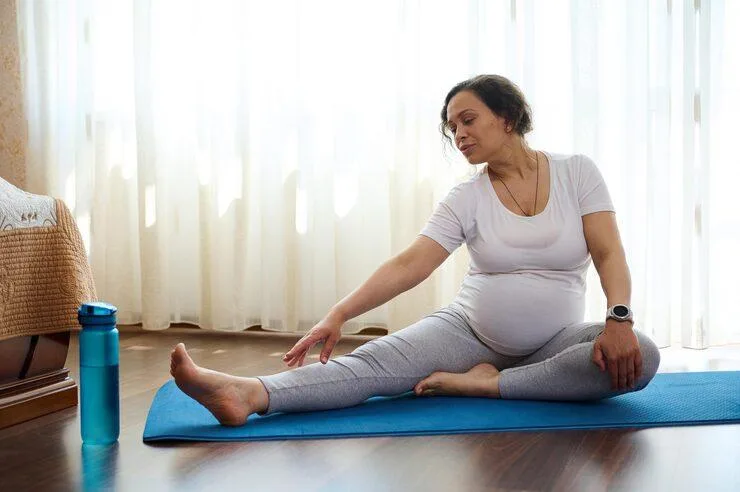
Woman exercising.
If you exercised regularly before pregnancy and included strength training in your routine, you can generally continue with appropriate modifications in the first trimester. The key principles:
- Reduce intensity as this is not the time to increase weights or push personal bests.
- Avoid exercises that involve lying flat on your back for extended periods.
- Avoid heavy overhead lifting that creates excessive intra-abdominal pressure.
- Avoid deep twisting movements that place strain on the abdominal muscles.
- Focus on controlled, moderate movements rather than high-effort lifts.
Exercises like supported squats, wall push-ups, and seated rows are all manageable in the first trimester. Always breathe, never hold your breath during resistance exercises when pregnant.
7. Pelvic Tilts And Cat-Cow Stretches
These are gentle, effective exercises for the lower back that become increasingly valuable as pregnancy progresses, but starting them early builds the habit and the muscle memory.
Pelvic tilt (seated or standing):
- Sit tall or stand with soft knees.
- Gently tuck your pelvis under, flattening your lower back slightly.
- Hold for a breath and release.
- Repeat 10 times.
Cat-Cow (on all fours):
- Begin on all fours with a flat back.
- Inhale, let your belly drop gently, and lift your gaze slightly (cow).
- Exhale, round your back upward, and drop your head (cat).
- Move slowly and continuously for 30 to 60 seconds.
These two exercises directly address the lower back pain that almost all pregnant women experience at some point.
Exercises To Avoid In The First Trimester
Some activities carry genuine risks during pregnancy and should be avoided regardless of your pre-pregnancy fitness level:
- High-intensity interval training (HIIT) - the intensity and impact are too high.
- Heavy weightlifting - excessive intra-abdominal pressure.
- Contact sports - risk of falls and abdominal impact (football, basketball, martial arts).
- Hot yoga or Bikram yoga - overheating risk is significant in the first trimester.
- Activities with a fall risk - horse riding, skiing, skating, road cycling.
- Abdominal crunches and sit-ups - these create problematic intra-abdominal pressure and place strain on the midline of the abdominal muscles.
- Exercising in high heat or humidity - whether indoors or outdoors.
- Scuba diving - decompression risk to the baby.
What To Do If Nausea Makes Exercise Feel Impossible
This is one of the most common first-trimester challenges. Nausea, sometimes all-day nausea, makes the idea of getting up and moving feel laughable. A few approaches that genuinely help:
- Walk at the time of day when nausea is mildest - for many women, this is mid-morning or early evening rather than first thing.
- Keep it very short - even a 10 to 15 minute walk counts. Start there.
- Eat a small snack before exercising - an empty stomach worsens nausea. A small banana or a few plain crackers before a walk makes a real difference.
- Stay hydrated - dehydration amplifies nausea. Sip water before, during, and after any activity.
- Try gentle yoga breathing - even on days when physical movement feels impossible, slow pranayama breathing can settle nausea and count as mindful physical practice.
If nausea is severe and persistent enough that you cannot eat, drink, or function, that is hyperemesis gravidarum, a medical condition that needs treatment, not just management through exercise. See your gynecologist.
When To Stop Exercising And Call Your Doctor
Stop any exercise immediately and contact your gynecologist if you experience:
- Vaginal bleeding or spotting.
- Suddenly, severe abdominal pain or cramping.
- Fluid leaking from the vagina.
- Chest pain or palpitations.
- Severe dizziness or fainting.
- Difficulty breathing before you even begin.
- Persistent headache during or after exercise.
- Calf pain or swelling.
These are warning signs that need medical evaluation, not rest-and-see.
Who Should Not Exercise During Pregnancy?
Exercise is contraindicated or needs significant modification in women with:
- Placenta praevia (placenta covering the cervix)
- Subchorionic haematoma
- Cervical incompetence or a cervical stitch (cerclage)
- Risk of premature labour in a previous pregnancy
- Severe anaemia
- Uncontrolled hypertension or cardiac conditions
- Multiple pregnancy (twins, triplets) with complications
- Severe or debilitating hyperemesis gravidarum
If any of these apply to you, or if your pregnancy has been classified as high-risk for any reason, speak with Dr. Shachi before starting any exercise programme. The guidance for high-risk pregnancy is different, and what is safe depends entirely on your specific situation.
Pregnancy Exercise Guidance In Noida And Greater Noida
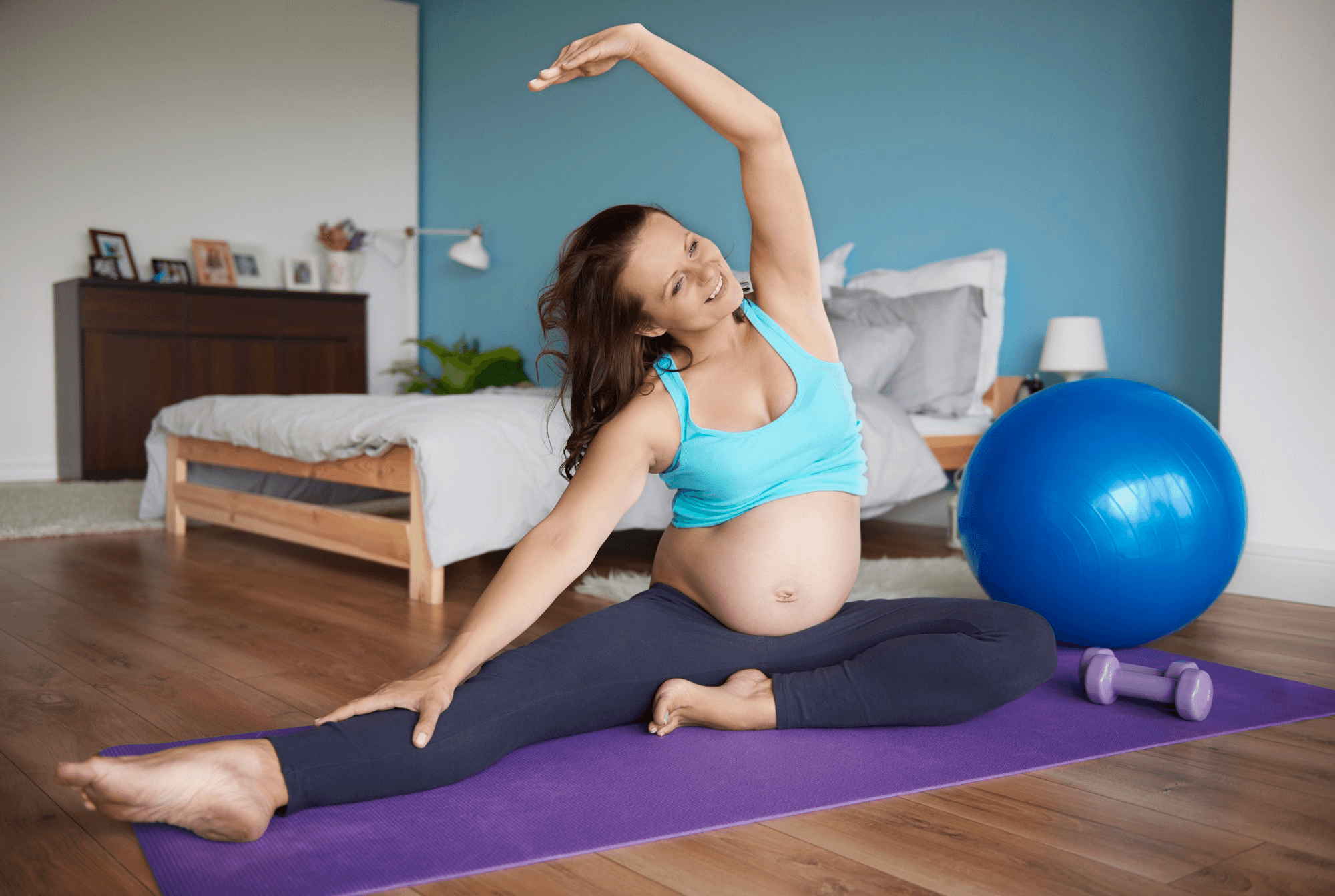
Pregnant woman exercising on a yoga mat with an exercise ball and dumbbells beside her, with a happy expression.
Every pregnancy is different. What is appropriate for one woman may not suit another, and the first trimester, in particular, is a time when your body is going through changes that can make even the mildest activity feel like too much on some days.
The most important step is to have this conversation with your gynecologist. At your antenatal appointments, ask about what exercise is appropriate for your specific pregnancy, your health history, and your trimester. Do not rely solely on general guides, including this one, without that personalised context.
Dr. Shachi Singh at Prakash Hospital, Sector 33, Noida, provides comprehensive antenatal care to women across Noida and Greater Noida, including guidance on exercise, nutrition, and managing the physical challenges of each trimester. Whether this is your first pregnancy or your third, her focus is on helping you have the healthiest, most comfortable experience possible.
To book a consultation with Dr. Shachi Singh, call: +91 97023 46853
Clinic Hours: Monday to Saturday, 9 AM – 6 PM | Sunday, 10 AM – 2 PM
Clinic Address: D-12A, 12B, Sector-33, G.B. Nagar, Noida, Uttar Pradesh 201301
Frequently Asked Questions
1. Is it safe to start exercising in the first trimester if I was not active before pregnancy?
Yes, with caution. Start very gently. A 15 to 20-minute daily walk is an excellent and completely safe beginning. Do not attempt to start an intense new fitness programme during the first trimester. Build gradually and always keep the intensity conversational.
2. Can exercise cause a miscarriage?
For women with uncomplicated pregnancies, moderate exercise does not increase the risk of miscarriage. However, very high-intensity exercise with excessive exertion in the early weeks does carry some risk, which is why the guidance emphasises moderate, not intense, activity.
3. Is walking on a treadmill safe during pregnancy?
Yes, walking on a treadmill at a comfortable pace is perfectly safe during the first trimester. Keep the incline moderate, hold the rails if you feel unsteady, and make sure the environment is not too warm.
4. Can I do yoga in the first trimester?
Yes, prenatal yoga, or a yoga class modified for pregnancy, is safe and beneficial. Avoid hot yoga, inversions, and deep backbends. Look for a prenatal-specific class or an instructor who can modify poses appropriately.
5. How long should I exercise each day during the first trimester?
Aim for 20 to 30 minutes most days, working up to 150 minutes of moderate activity across the week. On days when fatigue or nausea is significant, a 10-minute gentle walk still counts and is far better than nothing.
6. My doctor said I have a high-risk pregnancy. Can I still exercise?
This depends entirely on what makes your pregnancy high-risk. Some high-risk conditions restrict exercise significantly; others may allow gentle walking. This conversation needs to happen directly with your gynecologist; it is not a one-size-fits-all situation.
This blog is written for educational and informational purposes only. It is not a substitute for personalised medical advice. Always consult Dr. Shachi Singh or your gynecologist before starting or continuing any exercise programme during pregnancy.