Hormonal Imbalance In Women: What Your Body Is Trying To Tell You

Hormones concept with pills, alarm clock, notebook labeled hormones, and female symbol representing causes of hormonal imbalance in women.
Your periods have been irregular for months. You are gaining weight despite not changing your diet. Your skin is breaking out like you are seventeen again. You feel exhausted by noon, anxious without reason, and your hair is coming out in the shower in amounts that alarm you. You have probably been told it is stress. Or that it is just part of getting older. Or that it will settle on its own.
It might not be any of those things. It might be your hormones, and unlike stress or aging, that is something that can be properly investigated, diagnosed, and treated. Hormonal imbalance is one of the most common yet consistently underdiagnosed conditions affecting women in India. Estimates suggest that as many as 1 in 3 people will experience a significant hormonal imbalance at some point in their lives, and women are disproportionately affected due to the natural hormonal cycles built into female biology.
Dr. Shachi Singh, senior gynecologist at Prakash Hospital, Sector 33, Noida, helps women across Noida and Greater Noida identify and address hormonal imbalances often after years of being dismissed or given incomplete answers. This guide explains what hormonal imbalance actually means, what drives it, what the symptoms look like, and what treatment genuinely helps.
What Are Hormones And Why Does Balance Matter?
Hormones are chemical messengers produced by glands throughout the body, such as the ovaries, thyroid, adrenal glands, pituitary gland, and pancreas, among others. They travel through the bloodstream and regulate virtually every significant function in the body: your menstrual cycle, metabolism, mood, sleep, body temperature, hair growth, skin condition, fertility, bone density, and libido.
When hormone levels sit within their normal range, most of these functions run quietly in the background. You do not think about them. When even one hormone is produced in too high or too low an amount or when two hormones that need to stay in balance with each other are disrupted, the downstream effects are wide and often confusing, because symptoms rarely point neatly to a single cause.
Hormones That Most Commonly Become Imbalanced In Women
Hormonal imbalances in women commonly involve key reproductive and metabolic hormones that can affect periods, mood, energy levels, fertility, and overall health.
1. Oestrogen And Progesterone
These two reproductive hormones work in a carefully choreographed cycle. Oestrogen rises in the first half of the menstrual cycle to prepare the uterine lining; progesterone takes over after ovulation to maintain it. When either is too high or too low or when they fall out of balance with each other, menstrual irregularities, PMS, mood changes, and fertility issues follow.
2. Thyroid Hormones (T3 And T4)
The thyroid gland controls your metabolism. An underactive thyroid (hypothyroidism) slows everything down metabolism, digestion, cognition, mood, and hair growth. An overactive thyroid (hyperthyroidism) does the opposite. Thyroid disorders are particularly common in Indian women and are frequently missed or attributed to other causes for years.
3. Androgens (Including Testosterone)
Women produce testosterone in small amounts, and it plays a role in energy, libido, and muscle maintenance. When androgen levels are elevated as they are in PCOS, the result is acne, excessive facial or body hair (hirsutism), and irregular periods.
4. Insulin
Insulin manages blood sugar. Insulin resistance, when cells stop responding normally to insulin, is closely linked to PCOS, weight gain, and an increased risk of type 2 diabetes. It is also a significant driver of hormonal disruption in women.
5. Cortisol
Cortisol is your stress hormone, produced by the adrenal glands. Chronic stress keeps cortisol elevated, and persistently high cortisol disrupts the production of reproductive hormones, interferes with thyroid function, disturbs sleep, and contributes to weight gain, particularly around the abdomen.
Common Causes Of Hormonal Imbalance In Women
Hormonal imbalance in women can occur due to a variety of factors, including stress, lifestyle changes, underlying medical conditions, and natural life stages like puberty, pregnancy, or menopause.
1. PCOS (Polycystic Ovary Syndrome)
PCOS is one of the most common hormonal conditions affecting Indian women, with an estimated prevalence of around 20–22%, roughly 1 in 5 women of reproductive age. It involves elevated androgens, irregular ovulation, and insulin resistance, and is one of the leading causes of irregular periods and infertility in India.
2. Thyroid Disorders
Both hypothyroidism and hyperthyroidism significantly disrupt female hormones. Because thyroid symptoms are so varied and nonspecific, fatigue, weight changes, hair loss, and mood changes are frequently attributed to lifestyle factors and left undiagnosed for extended periods.
3. Perimenopause And Menopause
As women approach their forties, oestrogen and progesterone production begin to decline. Perimenopause, the transition period leading to menopause, can begin years before periods stop and brings its own set of hormonal fluctuations: irregular cycles, hot flushes, sleep disruption, mood changes, and bone density loss.
4. Chronic Stress
India's urban women, particularly in cities like Noida and Delhi NCR, carry significant stress loads, professional, domestic, and social. Chronically elevated cortisol is a direct driver of hormonal imbalance, disrupting reproductive hormones and thyroid function simultaneously.
5. Poor Diet And Lifestyle
A diet high in refined carbohydrates, sugar, and processed foods directly affects insulin levels and, through insulin, a cascade of other hormones. A sedentary lifestyle worsens insulin resistance. Inadequate sleep, now a significant issue among Indian women, disrupts growth hormone, cortisol, and reproductive hormones.
6. Obesity
Excess body fat, particularly abdominal fat, actively produces oestrogen, which can disrupt the hormonal balance and worsen conditions like PCOS and endometriosis. Weight management is therefore not just about appearance; it is a direct intervention in hormonal health.
7. Medications
Certain medications, including hormonal contraceptives, corticosteroids, and some psychiatric medications, can alter hormone levels as a side effect. This is not a reason to avoid medication, but it is worth discussing with your doctor if you notice significant changes after starting a new prescription.
Symptoms Of Hormonal Imbalance In Women
The challenge with hormonal imbalance is that symptoms are broad, overlap with many other conditions, and are often dismissed as stress, aging, or lifestyle issues. What makes it worth investigating is the persistence and pattern of these symptoms.
1. Menstrual Irregularities

A woman looks confused, holding a sanitary pad in one hand and a menstrual calendar in the other, showing she’s dealing with irregular or delayed periods.
Irregular period cycles that are unusually short, long, heavy, light, or simply unpredictable are one of the most common flags. Absent periods (amenorrhoea), very heavy bleeding (menorrhagia), or periods with severe pain all warrant hormonal evaluation.
2. Unexplained Weight Changes
Gaining weight without significant dietary changes, particularly around the abdomen, is a common symptom of thyroid disorders, insulin resistance, or elevated cortisol. Difficulty losing weight despite genuine effort can also signal an underlying hormonal driver.
3. Persistent Fatigue
Fatigue that does not improve with rest and is disproportionate to your activity level is frequently associated with thyroid disorders, anaemia driven by hormonal factors, and adrenal imbalances.
4. Mood Changes - Anxiety, Depression, Irritability
Oestrogen and progesterone directly affect serotonin and dopamine, the brain chemicals that regulate mood. Imbalances in either can cause anxiety, low mood, irritability, or emotional sensitivity that seems out of proportion to circumstances.
5. Skin And Hair Changes
Adult acne, particularly along the jaw, chin, and lower face, is a classic sign of androgen excess, as seen in PCOS. Hair thinning or loss from the scalp (and sometimes eyebrows) is frequently linked to thyroid disorders. Excessive facial or body hair growth is another androgen-related sign.
6. Sleep Disruption
Difficulty falling or staying asleep, night sweats, or unrefreshing sleep can all be driven by hormonal changes, particularly low progesterone, elevated cortisol, or the oestrogen fluctuations of perimenopause.
7. Reduced Libido
A drop in sexual interest that is not explained by relationship or psychological factors can be driven by low testosterone, elevated prolactin, or the fatigue and mood changes associated with broader hormonal imbalance.
8. Digestive Issues
Some hormones regulate gut motility. Hormonal imbalances, particularly thyroid disorders, can cause bloating, constipation, or diarrhoea that does not respond to dietary changes.
How Is Hormonal Imbalance Diagnosed?
Diagnosis starts with a thorough conversation about your symptoms, their timeline, your menstrual history, family history, and lifestyle. This context matters enormously. Blood tests are the primary diagnostic tool and typically assess:
- Reproductive hormones - FSH, LH, oestrogen, progesterone, testosterone, prolactin.
- Thyroid function - TSH, T3, T4
- Metabolic markers - Fasting blood sugar, insulin, HbA1c (to assess insulin resistance and diabetes risk).
- Other markers - DHEA-S, cortisol, AMH (for ovarian reserve assessment), Vitamin D, and others depending on your specific symptoms.
Timing matters for some tests, as hormone levels fluctuate across the menstrual cycle, and your doctor will advise when specific tests are best done. An ultrasound of the pelvis and thyroid may also be part of the evaluation, depending on your symptoms.
Treatment Options For Hormonal Imbalance
Treatment depends entirely on which hormones are imbalanced, by how much, and what is driving the imbalance. There is no single universal treatment.
1. For PCOS
Lifestyle modification, weight loss through diet and exercise, is the most impactful first-line intervention. Even a 5 to 10% reduction in body weight significantly improves hormone levels, menstrual regularity, and fertility in women with PCOS. Metformin is frequently prescribed to address insulin resistance. Hormonal medications may be used to regulate cycles and manage symptoms like acne and hirsutism.
2. For Thyroid Disorders
Hypothyroidism is typically treated with daily thyroid hormone replacement, a medication that, once at the right dose, restores thyroid levels to normal. Hyperthyroidism has several treatment options depending on the underlying cause. Both conditions are manageable with consistent treatment and regular monitoring.
3. For Perimenopause And Menopause
Hormone replacement therapy (HRT), lifestyle modification, and targeted supplements can significantly reduce perimenopausal symptoms. The decision about HRT is individual and needs to weigh benefits against risks based on your health history, a conversation best had directly with your gynecologist.
4. Lifestyle Interventions
For many hormonal conditions, particularly those driven by insulin resistance, stress, and poor sleep, lifestyle changes are not supplementary; they are primary treatment:
- A diet lower in refined carbohydrates and sugar, higher in vegetables, protein, and healthy fats.
- Regular physical activity, even 30 minutes of walking daily, improves insulin sensitivity significantly.
- Consistent sleep of 7 to 8 hours is not optional for hormonal health.
- Stress management, chronic cortisol elevation cannot be medicated away if the underlying stress is not addressed.
When Should You See A Gynecologist?
Do not wait until symptoms are severe or have been ongoing for years. See a gynecologist if:
- Your periods are consistently irregular, absent, or unusually heavy.
- You are experiencing unexplained weight gain, hair loss, or adult acne.
- You have been trying to conceive for over six months to a year without success.
- You feel persistently fatigued, anxious, or depressed without a clear cause.
- You are in your forties and noticing significant changes in your cycle, mood, or sleep.
Hormonal Care In Noida And Greater Noida
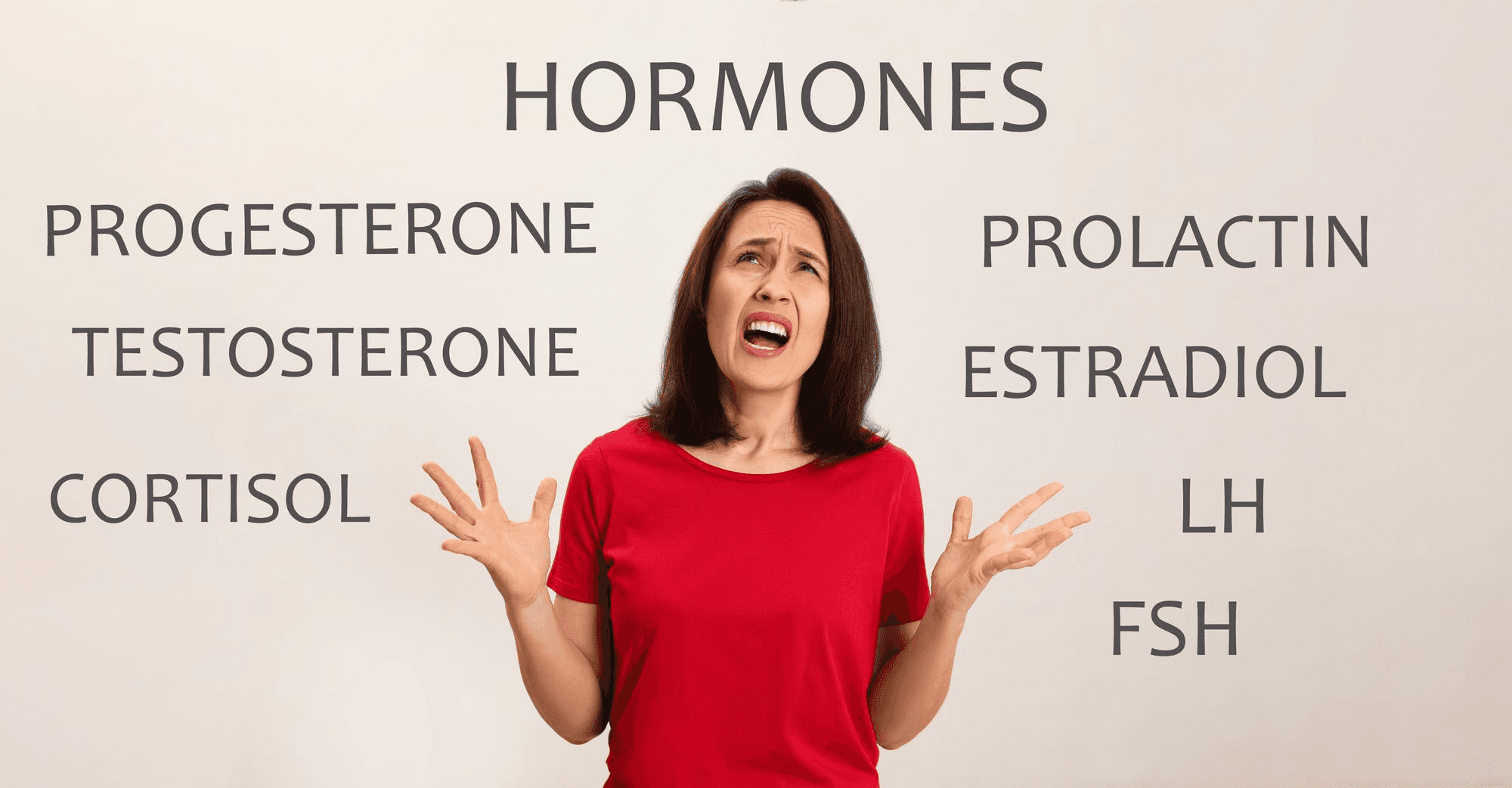
Woman surrounded by words like estrogen, progesterone, cortisol, LH, and FSH, showing how hormones shift as women age.
Dr. Shachi Singh at Prakash Hospital, Sector 33, Noida, evaluates and manages hormonal conditions across all life stages from adolescence through menopause. Women across Noida and Greater Noida consult her for PCOS management, thyroid-related gynecological concerns, menstrual irregularities, fertility issues, and perimenopausal care. If you have been living with symptoms that feel unexplained for months or years, a proper hormonal evaluation is where you start.
To book a consultation with Dr. Shachi Singh, call: +91 97023 46853
Clinic Hours: Monday to Saturday, 9 AM – 6 PM | Sunday, 10 AM – 2 PM
Clinic Address: D-12A, 12B, Sector-33, G.B. Nagar, Noida, Uttar Pradesh 201301
Frequently Asked Questions
1. Can a hormonal imbalance be cured permanently?
Some hormonal imbalances, such as those caused by lifestyle factors, can be significantly improved or resolved with sustained changes. Others, like thyroid conditions, require ongoing management. "Cured" is a less useful word than "well-managed," which most hormonal conditions can be with proper treatment.
2. Is hormonal imbalance the same as PCOS?
No. PCOS is one specific condition involving hormonal imbalance. Hormonal imbalance is a broader term that encompasses many different conditions, such as thyroid disorders, adrenal issues, perimenopause, insulin resistance, and more.
3. Can stress alone cause a hormonal imbalance?
Yes, chronically elevated cortisol from persistent stress directly disrupts reproductive hormones, thyroid function, and insulin regulation. Stress is a genuine driver of hormonal disruption, not just a contributing factor.
4. Will birth control fix a hormonal imbalance?
Hormonal contraceptives can regulate symptoms like irregular periods and acne by overriding your natural hormone cycle, but they do not treat the underlying cause. When the medication is stopped, the original imbalance often returns. Speak with your gynecologist about whether symptom management or root-cause treatment is the right approach for your situation.
5. How long does it take to rebalance hormones?
This varies significantly by cause and treatment. Some women see improvement in menstrual regularity and energy within three to six months of lifestyle changes. Thyroid medication adjustments may take several weeks to show full effect. There is no universal timeline; your gynecologist will track your progress through follow-up blood tests and symptoms.
This blog is written for educational and informational purposes only. It is not a substitute for professional medical advice. Please consult Dr. Shachi Singh or a qualified gynecologist for evaluation and treatment specific to your condition.