Uterine Polyps: What They Are, When They Need Treatment, and How They Are Removed

A woman holding a sad face card up in front of her lower abdomen, with red flowers positioned next to her vagina and vulva, and vaginal care is hinted at for and related to feminine hygiene and female health.
Uterine polyps — small growths on the lining of the uterus (endometrium) — are one of the most commonly found incidental findings on pelvic ultrasound. Many women are told they have a polyp and then left wondering: Is this dangerous? Does it need to come out? Will it affect my fertility?
Dr. Shachi Singh, consultant gynaecologist at Prakash Hospital, Sector 33, Noida, gives clear, practical answers.
What Uterine Polyps Are
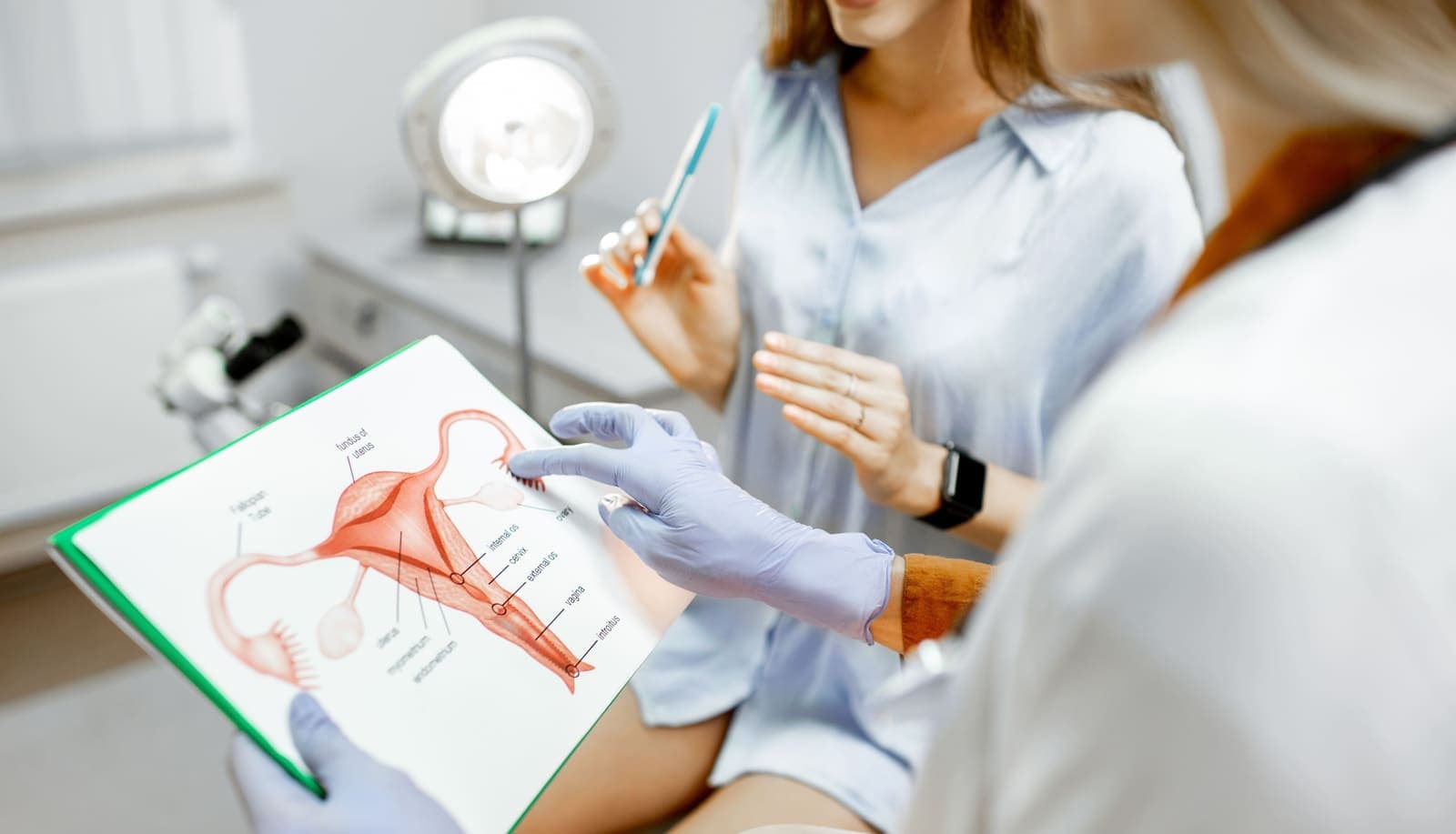
Endometrial polyps are overgrowths of the uterine lining — small, soft, grape-like structures attached to the inner wall of the uterus by a thin stalk or a broad base. They are almost always benign (non-cancerous), particularly in premenopausal women. They range from a few millimetres to several centimetres in size.
Cervical polyps are similar growths on the cervix — often visible on pelvic examination. They are even more reliably benign but can cause postcoital bleeding.
What Causes Polyps?
Polyps are thought to result from localised overgrowth of endometrial tissue in response to oestrogen stimulation. They are more common in women with higher oestrogen exposure — those who are overweight, those with PCOS (chronically elevated oestrogen from anovulation), those on tamoxifen (a medication used in breast cancer treatment that has oestrogen-like effects on the uterus), and perimenopausal women.
Symptoms of Uterine Polyps
Many polyps cause no symptoms and are found incidentally on ultrasound. When symptoms occur, they include:
- Irregular vaginal bleeding: Spotting between periods, irregular periods, or heavier-than-usual periods
- Postcoital bleeding: Bleeding after sexual intercourse — from cervical polyps or from large endometrial polyps near the cervical canal
- Postmenopausal bleeding: Any bleeding after menopause — always requires investigation for polyps (and for endometrial cancer)
- Fertility difficulties: Polyps in the uterine cavity reduce implantation rates — even small polyps distort the uterine environment
When Do Polyps Need to Be Removed?
Asymptomatic polyps in premenopausal women: Small asymptomatic polyps (typically below 1 cm) in women who are not trying to conceive are often observed rather than immediately removed — many resolve spontaneously. Monitoring with a repeat ultrasound in 3 to 6 months is reasonable.
Symptomatic polyps: If the polyp is causing irregular bleeding, heavy periods, or postcoital bleeding, removal is recommended.
Polyps and fertility: Any uterine polyp distorting the cavity in a woman trying to conceive should be removed before fertility treatment — even small polyps reduce implantation rates and IVF success rates. Polypectomy before IVF significantly improves embryo transfer outcomes.
Postmenopausal polyps: All polyps in postmenopausal women should be removed for pathological assessment — to definitively exclude endometrial cancer, which has a higher prevalence in this group.
Any polyp with concerning ultrasound features: Irregular vascularity, rapid growth, or unusual appearance on imaging warrants removal and histological examination.
How Polyps Are Removed — Hysteroscopy
Hysteroscopic polypectomy is the standard treatment. A thin camera (hysteroscope) is passed through the cervix into the uterine cavity under direct visualisation, and the polyp is excised at its base using a small loop electrode or scissors. The entire polyp is sent for pathological analysis.
The procedure: Done under general anaesthesia or, for small polyps, under local anaesthesia as an outpatient procedure. Takes 15 to 30 minutes. Most women go home the same day.
Recovery: Mild cramping and spotting for 1 to 5 days. Return to normal activity the following day for most women.
After polypectomy: The polyp may recur — the underlying tendency to form polyps persists. Hormonal management (combined pill or Mirena IUS) can reduce recurrence risk. Most recurrences are easily managed with repeat hysteroscopy.
Gynaecological Care in Noida and Greater Noida
Dr. Shachi Singh at Prakash Hospital, Sector 33, Noida, performs hysteroscopic assessment and polypectomy for women across Noida and Greater Noida.
To book a consultation with Dr. Shachi Singh, call: +91 97023 46853
Clinic Hours: Monday to Saturday, 9 AM – 6 PM | Sunday, 10 AM – 2 PM
This blog is for informational purposes. Consult Dr. Shachi Singh or a qualified gynaecologist for assessment specific to your polyp finding.