Amniocentesis: When It Is Advised, How It Is Done, Risks and Results
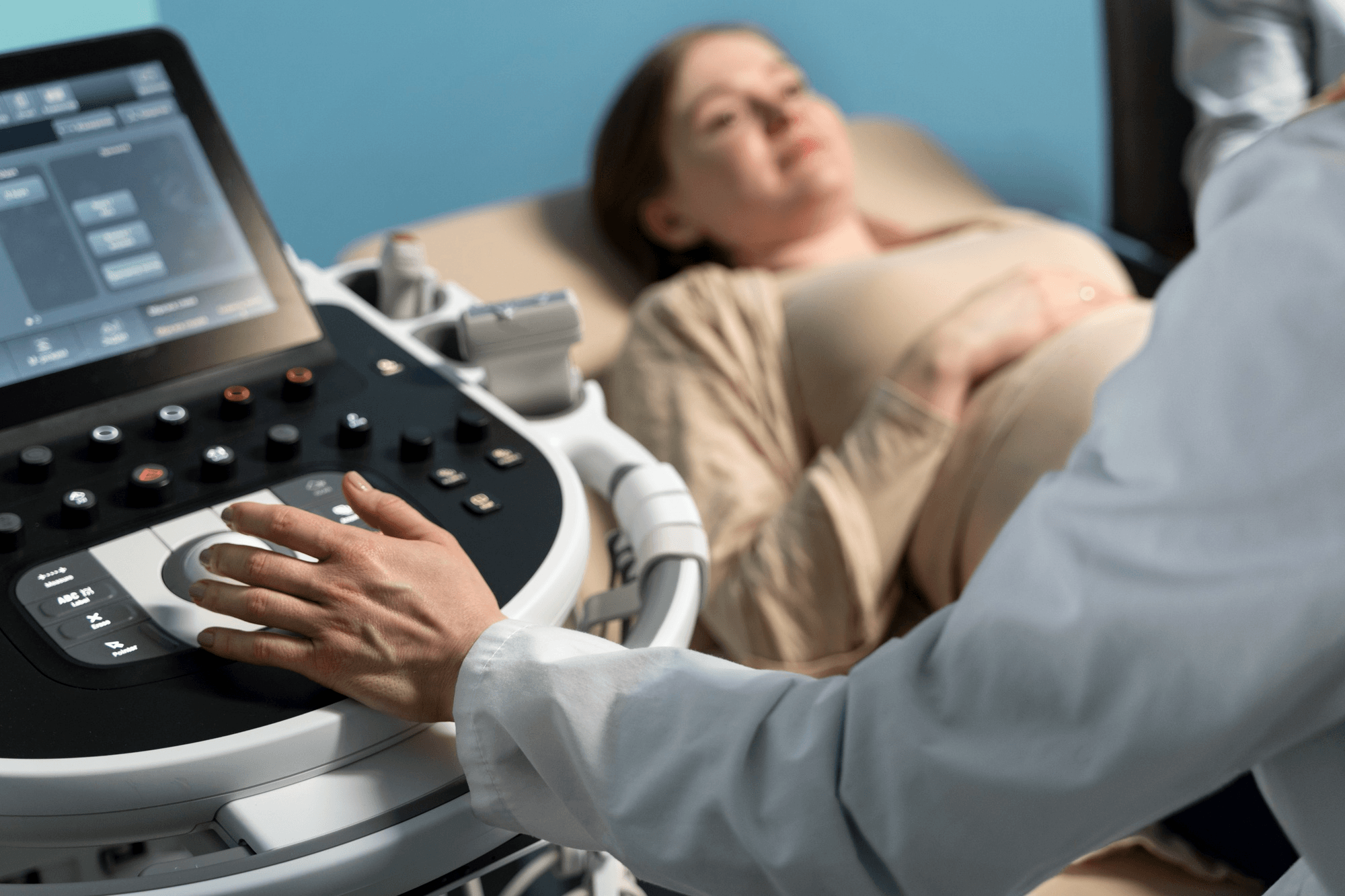
The needle is in for under a minute, guided by ultrasound so the doctor can avoid the baby and the cord.
Few words in pregnancy cause as much worry as "amniocentesis." Perhaps you have just received a high-risk double marker result, or your scan showed something that needs a closer look, and now your doctor has mentioned a test where a needle goes into the womb.
I want to take some of the fear out of that sentence. Amniocentesis is a well-established test that has been used for decades. It gives definite answers where screening tests only give probabilities. It also carries a small risk, which is why it should always be a considered, informed choice.
This guide explains what amniocentesis is, who is offered it, how it is done, how it feels, what the risks are, how long results take and what the results can and cannot tell you. If you are looking for an experienced gynaecologist in Noida for prenatal counselling, you will find details at the end.
What is amniocentesis?
Your baby floats in amniotic fluid, a clear, pale fluid inside the amniotic sac. That fluid contains cells shed by the baby (from skin, the lining of the bladder and the digestive tract). In an amniocentesis, a doctor uses a thin needle, guided by ultrasound, to remove a small sample of fluid, usually about 15 to 20 ml (roughly 3 to 4 teaspoons). The body replaces this fluid within a day or so.
The cells in the fluid are sent to a laboratory, where the baby's chromosomes and, if needed, genes are analysed.
Why is it advised?
Amniocentesis is a diagnostic test, not a screening test. Screening tests, such as the double marker or NIPT, estimate the chance of a condition. Amniocentesis tells you whether the baby actually has it. Doctors offer it in situations such as:
- A high-risk result on first trimester screening or the quad marker test
- A positive or high-risk NIPT result needing confirmation
- An abnormal anomaly scan, or soft markers suggesting a chromosomal cause
- A previous baby or pregnancy with a chromosomal or genetic condition
- A known genetic condition in the family, for example thalassaemia, cystic fibrosis, spinal muscular atrophy or Duchenne muscular dystrophy, when the specific mutation is known
- Suspected fetal infection, such as cytomegalovirus, toxoplasmosis or rubella, by testing the fluid
- Occasionally, to assess fetal lung maturity or check for fetal anaemia late in pregnancy in specific situations
Age alone, for example being over 35, is no longer a reason on its own for amniocentesis. Most women of that age are offered screening first and diagnostic testing only if screening shows a higher risk.
When is it done?
Usually between 15 and 20 weeks of pregnancy, although it can be done later if needed. Before 15 weeks, there is more risk of complications such as fluid leakage and, in older studies, a higher chance of foot deformities (clubfoot), so doctors avoid early amniocentesis.
If testing is needed earlier than 15 weeks, chorionic villus sampling (CVS) is an alternative, done at 11 to 14 weeks. It samples a small piece of placenta instead of fluid.
What are the legal and ethical points in India?
Prenatal diagnostic procedures are regulated under the PCPNDT Act. The centre must be registered, you will sign a consent form, and the test is carried out for medical reasons only. Disclosing the sex of the baby is prohibited. Even if the results include the sex chromosomes, reputable laboratories will not report sex outside of a medical need.
How to prepare
- Talk it through. Your doctor should explain the reasons, the risks, the alternatives and what each possible result means. Take your partner with you if you can. You can ask for time to decide.
- Bring your reports, including blood group and previous scans.
- Check your blood group. If you are Rh negative, you will need an anti-D injection after the test (see below).
- Tell the doctor about medicines such as blood thinners, and about any bleeding or infections like hepatitis B, hepatitis C or HIV, which may need extra precautions.
- You usually do not need to fast. Wear loose, comfortable clothing.
- It is a good idea to have someone with you who can take you home.
How is the procedure done?
The procedure takes about 20 to 30 minutes, though the needle itself is in the abdomen for just a minute or less.
- You lie on your back. An ultrasound scan locates the baby, the placenta and a safe pocket of fluid.
- The skin of the abdomen is cleaned with antiseptic. Local anaesthetic is sometimes used, though many centres do not need it since the needle is very fine.
- Under continuous ultrasound guidance, a thin needle is passed through the abdominal wall and into the amniotic sac. The doctor avoids the baby, the cord and, where possible, the placenta.
- A small amount of fluid is withdrawn into a syringe.
- The needle is removed. The baby's heartbeat is checked on the scan.
- You rest for a short time, then go home.
Does it hurt?
Most women describe pressure or a short pinch, and some feel a cramping sensation as the needle goes through the uterine wall. It is generally less painful than people fear. The anticipation is usually worse than the procedure. If you tense up, slow breaths help.
After the procedure
- Rest for the day. Avoid heavy lifting, strenuous exercise and travel for about 24 to 48 hours.
- Mild cramps or a feeling of tightness are common for a day.
- A little spotting can happen occasionally.
- Drink plenty of fluids and take paracetamol if needed. Avoid anti-inflammatory painkillers unless your doctor allows them.
- Avoid intercourse for a few days.
Call your doctor or go to hospital immediately if you have:
- Leakage of clear fluid from the vagina
- Heavy bleeding
- Strong or persistent cramping
- Fever or chills
- Foul-smelling discharge
- Reduced fetal movement (later in the pregnancy)
What are the risks?
Honest information on risk is the most important part of this conversation.
Miscarriage. The traditional figure quoted is about 1 in 200 (0.5 percent) or slightly higher in older studies. More recent studies, performed with modern ultrasound techniques by experienced operators, suggest the extra risk may be lower, perhaps around 1 in 500 to 1 in 1000. The figure depends on the operator, your background risk and the reason for the test. Ask your doctor what the rate is at their centre.
Fluid leakage. A small number of women leak fluid after the procedure. In most cases, the leak stops and the pregnancy continues normally.
Infection. Very rare, but serious when it happens.
Needle injury to the baby. Extremely rare with ultrasound guidance.
Rh sensitisation. If you are Rh negative and the baby is Rh positive, some of the baby's blood could mix with yours. An anti-D immunoglobulin injection within 72 hours of the procedure prevents your body from forming antibodies that could affect this or later pregnancies.
Transmission of infection from mother to baby. In women with hepatitis B, C or HIV, the risk is low and extra precautions are used. Tell your doctor about any infection beforehand.
Failure to get a sample, or a culture failure. Occasionally the procedure needs to be repeated.
The risk of the procedure should always be weighed against the benefit. If your risk of a serious chromosomal condition is high, or a scan has shown an abnormality, the information often outweighs the small risk. If your risk is low, the balance may favour not having it.
How accurate is it?
For chromosomal conditions like Down syndrome, amniocentesis is more than 99 percent accurate when the correct test is carried out. It is far more reliable than screening tests. However, no test covers everything. It can't detect all genetic diseases, structural defects (the anomaly scan does that), or conditions such as autism or cerebral palsy.
Rarely, a result can show mosaicism, where some cells have a chromosome change and others do not. That can require further testing and specialist counselling.
Types of tests on the fluid
The lab chooses tests based on the reason for amniocentesis.
- QF-PCR or FISH: A rapid test for the most common chromosome conditions (trisomy 21, 18, 13 and sex chromosome numbers). Results often come in 2 to 3 working days.
- Karyotype: The traditional method that grows cells in culture and examines all 46 chromosomes under a microscope. It takes around 1 to 2 weeks.
- Chromosomal microarray: A more detailed test that picks up tiny missing or extra pieces of chromosomes that a karyotype may miss. It takes around 1 to 2 weeks. It is often advised if the anomaly scan found a structural problem.
- Single-gene or panel testing: For specific inherited conditions when the family mutation is known.
- PCR for infection: For suspected CMV, toxoplasmosis and others.
What do the results mean?
Normal result. The chromosomes tested are normal. This is a great relief, but I always remind parents that it does not guarantee a perfectly healthy baby. It excludes the conditions that were tested for.
Abnormal result. A chromosomal or genetic condition has been found. You will be offered detailed counselling about what the condition means for the baby's health, development and quality of life, the range of outcomes and your options. This conversation should involve a genetic counsellor or fetal medicine expert, and your decision, whatever it is, is yours to make. Time and support matter.
Inconclusive result. If the sample is contaminated, there is mosaicism, or the cells did not grow, you may need further tests.
Decision-making: some thoughts from practice
Parents often ask me, "What would you do?" I find it more helpful to ask a different question: "What would you do with the information?" Some families want to know so they can prepare medically and emotionally. Some would consider ending the pregnancy in case of a severe condition. Others would continue regardless but still prefer to know. There is no single right answer, and it is fine to decline the test.
What I want is for you to choose with full information, not under pressure. Take the time you need, within the limits of the pregnancy timeline.
Common questions
Can amniocentesis tell me the baby's gender? Technically the chromosomes reveal it, but under Indian law it cannot be disclosed.
Will I be able to work the next day? Most women rest for a day or two and return to normal activity soon after.
What if my blood group is Rh negative? You will receive an anti-D injection after the test.
How long should I wait before travelling? Avoid long travel for a day or two and check with your doctor.
Can I have the test with twins? Yes, but each sac may need sampling. It requires more expertise.
Is NIPT a replacement? NIPT is a very good screening test, but a positive result still needs confirmation by amniocentesis or CVS before any major decision.
Support through the process
Waiting for results is hard. Keep your doctor's contact details handy, tell your partner how you feel, and avoid reading worst-case stories online. I see parents from Noida, Greater Noida and Delhi NCR at Prakash Hospital, Sector 33, and will go through your reports with you. To book a consultation, call +91 97023 46853.
Related reading
- Double marker test: how to read your results
- TIFFA scan: what it checks
- Pregnancy after 35: what to expect
- High-risk pregnancy care
- Rh-negative pregnancy and anti-D injection
This article is for educational purposes. Decisions about prenatal testing should always be made with your doctor.