Complete Pregnancy Diet Chart for Indian Women: What to Eat, Trimester by Trimester
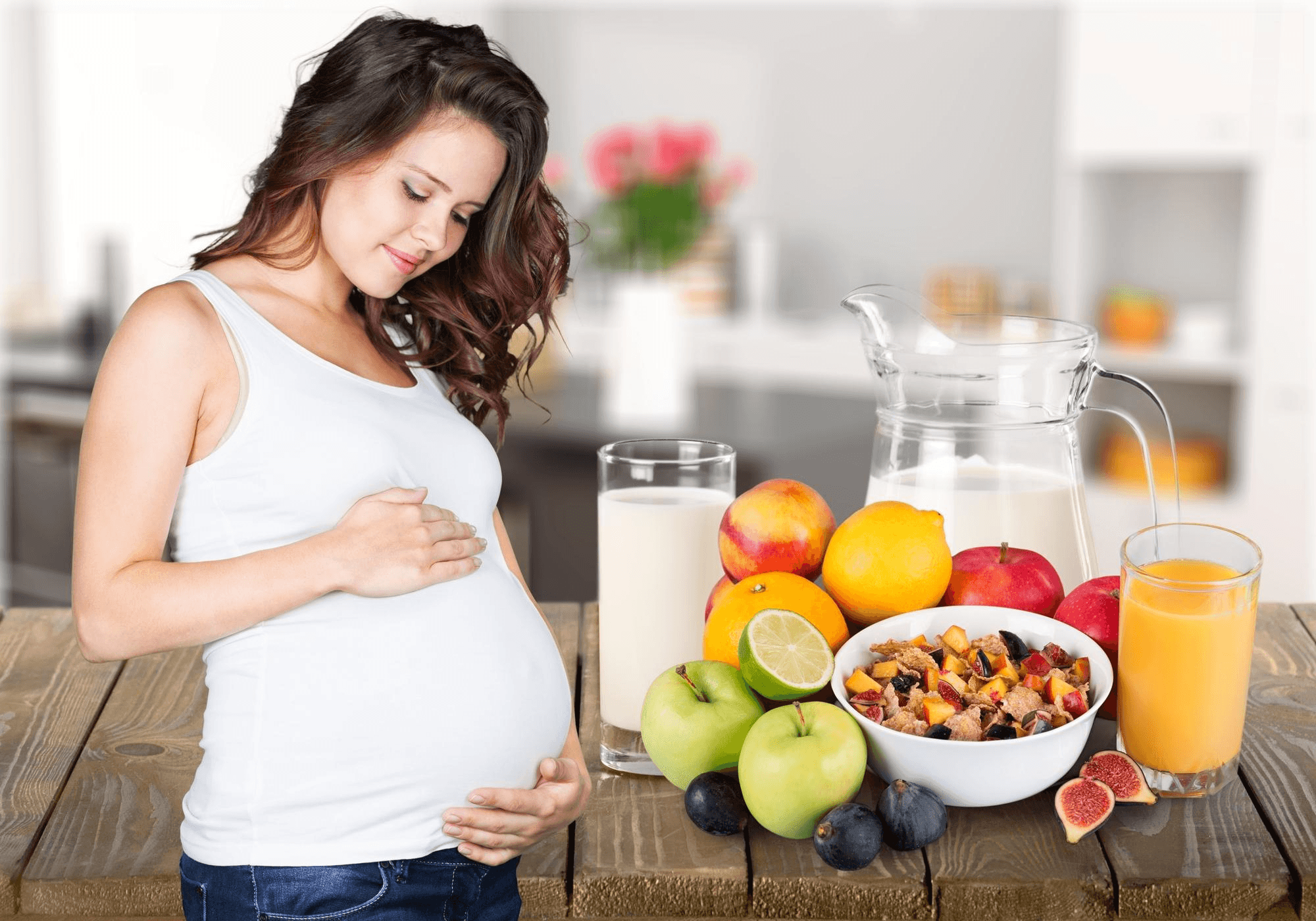
A pregnant woman embracing her belly, near a table exhibiting a collection of fruits, juice, and milk to signify nutrition and prenatal care at home.
The moment you see those two lines on a pregnancy test, food becomes complicated. Not because eating needs to be complicated — it genuinely does not — but because everyone suddenly has an opinion. Your mother says eat ghee. Your mother-in-law says avoid papaya. The internet gives you seventeen contradictory lists. And somewhere in the middle of all of it, you are just trying to figure out what to put on your plate tomorrow morning.
Here is the simple truth: a healthy pregnancy diet is not about expensive superfoods, imported supplements, or elaborate meal plans you will never actually follow. The Indian kitchen — with its dals, whole grains, seasonal vegetables, dairy, and spices — already contains most of what your baby needs to grow well. The work is knowing which nutrients matter most at which stage, and building meals around them consistently.
Dr. Shachi Singh, senior gynecologist and obstetrician at Prakash Hospital, Sector 33, Noida, has guided thousands of women across Noida and Greater Noida through pregnancy. This is the complete, India-grounded, trimester-wise guide to eating well through all nine months.
The Foundation: Why Pregnancy Nutrition Actually Matters
Whatever you eat is your baby's only source of nutrition. There is no alternative supply chain. Every gram of protein, every milligram of iron, every microgram of folate that your baby needs to build organs, grow bones, develop a brain, and form a circulatory system comes from what you eat.
This is not meant to be alarming — it is meant to be clarifying. Because once you understand this, food choices stop being about restrictions and start being about intention.
The other thing worth saying upfront: you do not need to "eat for two." The calorie increase during pregnancy is modest — roughly no extra calories in the first trimester, approximately 300 to 350 extra calories per day in the second trimester, and 400 to 450 extra in the third. That is the equivalent of one extra roti with dal and a glass of milk. The increase is about nutrition quality, not food volume.
The Key Nutrients — and the Indian Foods That Deliver Them
Before getting into trimester-specific plans, here are the nutrients that pregnancy demands most, and where to find them in an Indian kitchen.
1. Folic Acid (Folate) — The Neural Tube Protector
Folic acid is the single most important nutrient in early pregnancy. It prevents neural tube defects — conditions affecting the brain and spinal cord like spina bifida — that develop in the first four weeks, often before a woman even knows she is pregnant. Adequate folate reduces neural tube defect risk by up to 70%.
Daily need: 600 to 800 mcg. Hard to achieve through food alone — a supplement is almost always recommended alongside dietary sources.
Indian sources: Palak (spinach), methi (fenugreek), all dals and legumes, chole, peanuts (moongphali), oranges, mosambi.
2. Iron — For Blood, Energy, and the Baby's Brain
Blood volume increases by 40 to 50% during pregnancy. Every drop of that extra blood needs iron to carry oxygen. Meanwhile, your baby is building its own iron stores for the first six months of life. Iron deficiency — which affects over 50% of pregnant Indian women — causes anaemia, exhaustion, and in moderate to severe cases, affects fetal brain development and increases low birth weight risk.
Daily need: 27 mg.
Indian sources: Palak, rajma, chana, masoor dal, methi, dates (khajoor), jaggery (gur), ragi, sesame seeds (til), horse gram. Always pair iron-rich foods with Vitamin C (lemon, amla, tomato) to maximise absorption. Cook in cast-iron vessels where possible — this genuinely increases the iron content of food.
3. Calcium — For Bones That Won't Break Down Yours
Your baby's skeleton is built from calcium you consume. If your diet does not provide enough, your body pulls calcium from your own bones — a deficit that compounds with every subsequent pregnancy and worsens as you approach menopause. It is not a hypothetical risk; it is a documented physiological process.
Daily need: 1,000 mg.
Indian sources: Milk, dahi (curd), paneer, buttermilk (chaas), ragi (finger millet — one of the highest plant calcium sources available anywhere), sesame seeds, almonds. Two glasses of milk, a bowl of curd, and some paneer daily takes you a long way toward this.
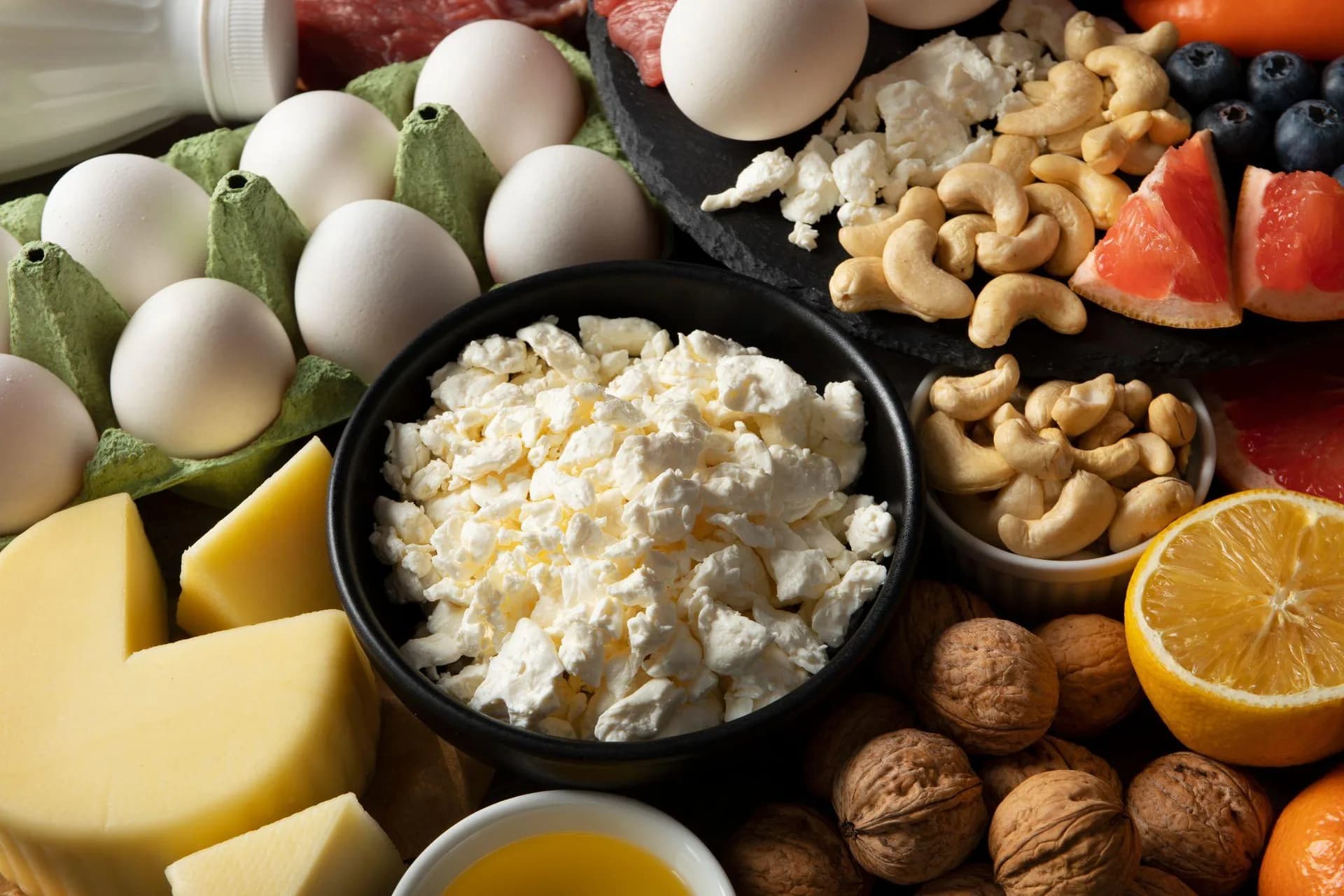
An illustration of Calcium rich foods like cottage cheese and eggs.
4. Protein — Every Cell Your Baby Has
Every cell in your baby's body — muscle, organ, skin — is built from protein. Your own blood volume expansion, the growth of the uterus, and breast tissue changes also demand protein. Indian vegetarian diets can absolutely meet pregnancy protein needs, but they require intentionality.
Daily need: Approximately 1.1g per kilogram of body weight.
Indian sources: All dals (moong, masoor, chana, toor), rajma, chole, paneer, curd, eggs, soya chunks, tofu, nuts and seeds. Combining a cereal with a pulse (rice + dal, roti + dal) provides complete amino acids from plant sources.
5. DHA (Omega-3) — For the Baby's Brain and Eyes
DHA is the structural fat of the brain and retina. Your baby's brain grows most rapidly in the third trimester — this is when DHA is most critical. Deficiency during this window has documented effects on the baby's cognitive development and visual acuity.
Daily need: At least 200 mg.
Indian sources: Walnuts (akhrot — richest plant source), flaxseeds (alsi), chia seeds, mustard oil, fatty fish for non-vegetarians (mackerel, sardines, rohu). Many doctors recommend a DHA supplement if dietary intake is uncertain.
6. Vitamin D — The Silent Deficiency
Most Indian women are Vitamin D deficient despite living in a sun-rich country. Dark skin, indoor lifestyles, and covered clothing all reduce natural synthesis. Vitamin D is essential for calcium absorption — without it, the calcium you eat is not fully absorbed. It also plays roles in immune function and placental health.
Daily need: 600 IU. Often needs supplementation.
Sources: Fortified milk, egg yolks, some mushrooms, morning sunlight (15 to 20 minutes before 10 AM on exposed skin).
Trimester-by-Trimester Diet Guide
1. First Trimester (Weeks 1–12): Survive First, Then Thrive
The first trimester is where most pregnancy nutrition advice breaks down — because most of it assumes you can eat normally. Many women cannot. Nausea, food aversions, fatigue, and morning sickness (which is very often all-day sickness) make maintaining a balanced diet genuinely difficult.
The priority in the first trimester is not perfection — it is folic acid, staying hydrated, and eating whatever you can keep down.
Your baby's calorie needs are minimal at this stage. What matters enormously is folate — for neural tube formation that happens in weeks 3 to 4 — and whatever nutrition you can access through the fog of nausea.
What helps with nausea:
- Eat before getting out of bed. Keep dry crackers, plain khakhra, or marie biscuits on your bedside table and eat them before standing.
- Small, frequent meals every 2 to 3 hours. An empty stomach worsens nausea significantly.
- Ginger tea (adrak chai), ajwain water, and lemon water are well-supported traditional remedies for pregnancy nausea.
- Bland, easy-to-digest carbohydrates — plain rice, roti with minimal spice, dalia, moong dal khichdi — are easier to keep down than heavy or oily food.
- Cold foods tend to be better tolerated than hot ones during nausea peaks.
Focus nutrients in the first trimester:
- Folic acid (from supplements + palak, dals, citrus)
- Vitamin B6 (from banana, potato, chickpeas, sunflower seeds — this vitamin specifically helps reduce nausea)
- Iron (from rajma, palak, dates — anaemia that begins here deepens progressively)
- Hydration above everything
Sample first trimester meal structure:
- Early morning: Dry crackers or soaked almonds (before getting up)
- Breakfast: Moong dal cheela or poha with vegetables, or plain dalia with jaggery
- Mid-morning: Banana or a small bowl of curd
- Lunch: Moong dal khichdi with ghee, or roti with light sabzi and dal
- Evening: Roasted makhana or fruit
- Dinner: Soft rice with dal, or vegetable soup with roti
- Bedtime: Warm haldi doodh
Weight gain expectation in first trimester: 1 to 2 kg in total. This is appropriate.
2. Second Trimester (Weeks 13–26): The Golden Period — Use It
This is what most pregnant women are waiting for. Nausea typically eases around week 14 to 16. Energy returns. Appetite comes back — sometimes dramatically. And the baby's growth accelerates significantly: bones are forming, brain cells are multiplying, organs are maturing.
This is the trimester to eat intentionally and well.
Calorie increase: Approximately 300 to 350 extra calories per day compared to pre-pregnancy — roughly one extra meal equivalent.
Focus nutrients in the second trimester:
- Calcium — Baby's skeleton is actively building. Prioritise dairy, ragi, til.
- Iron — Blood volume is expanding most rapidly. Anaemia deepens here if not addressed.
- Protein — Baby's muscle and organ tissue growth demands it at every meal.
- Vitamin D — Critical for calcium absorption. If not supplementing, discuss with your doctor.
What a good second-trimester day looks like:
- Early morning: Warm water with soaked almonds and 2 walnuts
- Breakfast: Palak paneer paratha with curd, or oats upma with vegetables and a boiled egg
- Mid-morning: Coconut water or fresh fruit (mango in season, guava, orange)
- Lunch: 2 rotis + masoor dal + palak sabzi + bowl of curd + small salad
- Evening snack: Roasted makhana or chaas with roasted chana
- Dinner: Brown rice or khichdi + rajma or dal + curd raita
- Bedtime: Glass of warm milk (full-fat)
Common second trimester issues and dietary solutions:
- Leg cramps: Increase calcium and magnesium. More dairy, more bananas, more nuts.
- Constipation: Increase fibre and water. More whole grains, vegetables, fruits with skin, 8 to 10 glasses of water daily.
- Heartburn: Smaller, more frequent meals. Avoid lying down after eating. Cold milk or curd can soothe acidity.
3. Third Trimester (Weeks 27–40): The Final Sprint
The baby gains most of its birth weight in the final three months. Simultaneously, the growing uterus presses on your stomach, making large meals genuinely uncomfortable. The solution is not eating less — it is eating more often in smaller quantities.
Calorie increase: Approximately 400 to 450 extra calories per day compared to pre-pregnancy.
Focus nutrients in the third trimester:
- DHA / Omega-3 — Brain development is most rapid now. Walnuts, flaxseeds, chia seeds daily. Consider a DHA supplement.
- Iron — You need iron stores for the blood loss of delivery. Anaemia going into labour increases postpartum complication risk.
- Protein — Maximum fetal tissue growth phase.
- Fibre — The growing uterus compresses the bowel severely. Constipation is at its worst without adequate fibre and water.
- Vitamin K — Important for blood clotting during delivery. Found in leafy greens, broccoli, coriander.
What a good third-trimester day looks like:
- 5 to 6 small meals instead of 3 large ones
- Early morning: Ginger lemon water or soaked nuts
- Breakfast: Ragi porridge with jaggery and banana, or idli with sambar
- Mid-morning: Fruit + curd
- Lunch: 2 phulkas + dal + sabzi (lighter, less oily than second trimester)
- Afternoon: Makhana, chana, or a glass of buttermilk
- Evening: Light soup or fruit
- Dinner: Khichdi with ghee, or dalia with vegetables (easy to digest)
- Bedtime: Warm milk
Managing third trimester challenges through diet:
- Severe heartburn: Avoid spicy, oily, and acidic food. Sit upright for 45 minutes after eating. Cold milk or a spoonful of curd offers quick relief.
- Swelling (oedema): Reduce salt intake. Increase potassium (bananas, coconut water). Stay hydrated — counterintuitively, adequate hydration reduces water retention.
- Constipation: This is at its most severe in the third trimester. Fibre from whole grains, fruits, vegetables, and 3 litres of fluids daily is genuinely necessary.
- Reduced appetite from pressure: Do not skip meals. Smaller portions more frequently. Dense, nutritious foods — nuts, dal, paneer — get more nutrition into less volume.
What to Always Have at Home During Pregnancy
Building a pregnancy-friendly pantry is simpler than it sounds. Stock these regularly:
- Grains: Whole wheat atta, ragi flour, oats, dalia, brown rice, jowar and bajra flour
- Dals: Moong, masoor, toor, chana dal, rajma, chhole
- Dairy: Full-fat milk, dahi, paneer
- Nuts and seeds: Almonds, walnuts, flaxseeds, sesame seeds, pumpkin seeds
- Dry fruits: Dates (khajoor), figs (anjeer), raisins
- Fresh produce: Palak, methi, seasonal vegetables, citrus fruits, pomegranate, guava, banana
- Spices: Ajwain (for gas), jeera, haldi, ginger — all safe and helpful during pregnancy
Key Rules for a Healthy Pregnancy Diet in India
- Eat 5 to 6 smaller meals rather than 3 large ones. This manages nausea, heartburn, and blood sugar more effectively.
- Never skip meals. An empty stomach worsens nausea and drops blood sugar.
- Combine a cereal with a dal at every meal. This ensures complete protein from plant sources.
- Pair iron-rich foods with Vitamin C. Lemon squeeze, amla chutney, tomato in dal — these small additions significantly improve iron absorption.
- Stay consistently hydrated. Aim for 8 to 10 glasses of water plus coconut water, buttermilk, and soups. Dehydration worsens constipation, headaches, and fatigue.
- Cook fresh, at home. Not every meal needs to be elaborate, but home-cooked food gives you control over hygiene and ingredients in a way outside food cannot.
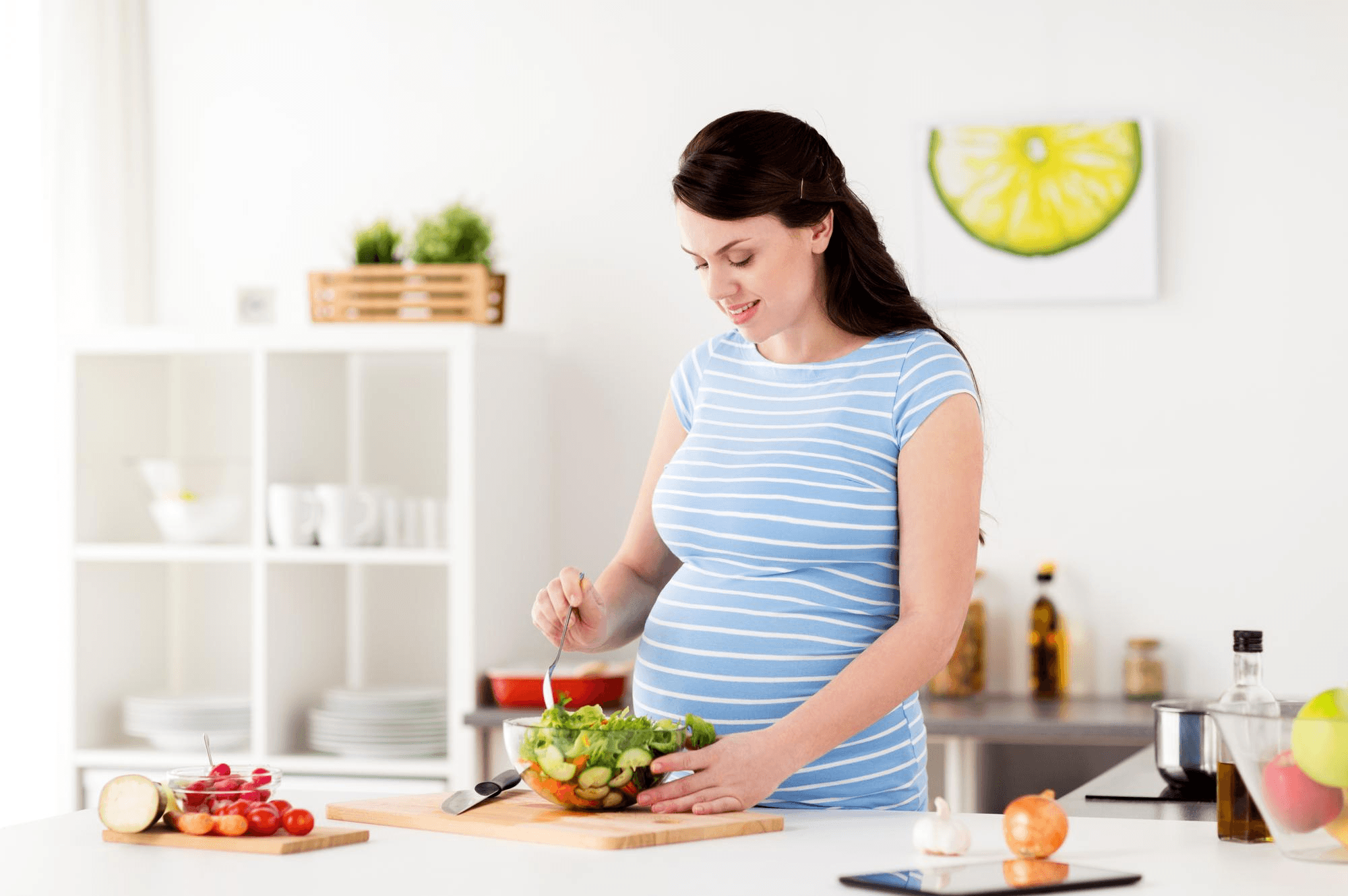
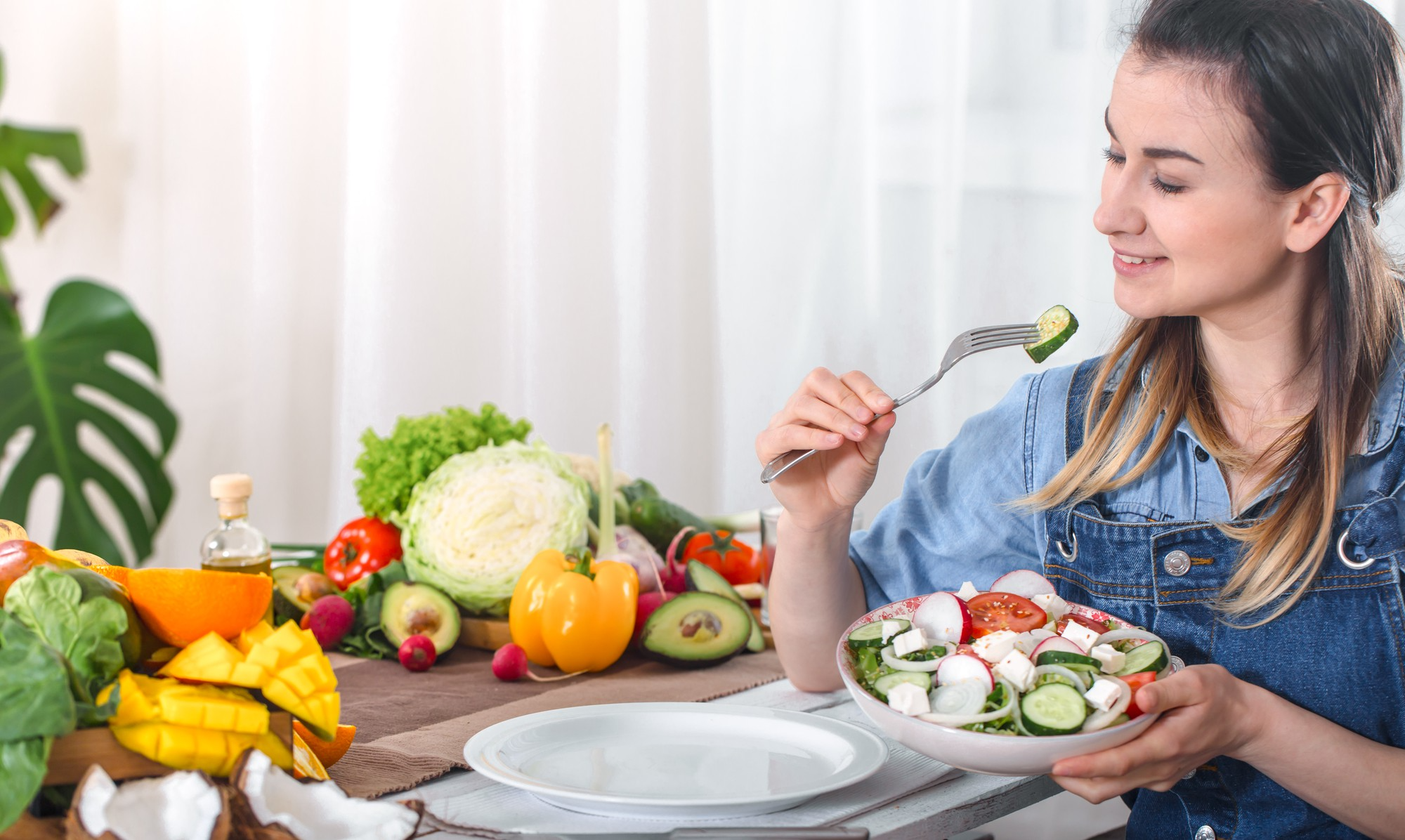
Pregnant woman eating fresh vegetable salad at home, highlighting healthy pregnancy nutrition, balanced diet, and maternal wellness lifestyle.
- Take your supplements. Even an excellent diet rarely fully meets the demands of folic acid (first trimester), iron, and Vitamin D during pregnancy. Supplements fill the gaps.
- Listen to your body, but don't only listen to your body. Cravings are real, food aversions are real — but the baby still needs certain nutrients whether you crave them or not. Your gynecologist can help you navigate persistent aversions.
Pregnancy Nutrition Support in Noida and Greater Noida
Nutrition questions come up at every antenatal appointment — and they should. Your gynecologist is the right person to personalise these guidelines based on your haemoglobin, your weight gain pattern, your blood sugar, and any conditions specific to your pregnancy.
Dr. Shachi Singh at Prakash Hospital, Sector 33, Noida, provides comprehensive antenatal care including nutrition guidance for women across Noida and Greater Noida. If you have questions about your pregnancy diet, specific supplements, or managing symptoms through food, bring them to your next appointment.
To book a consultation with Dr. Shachi Singh, call: +91 97023 46853
Clinic Hours: Monday to Saturday, 9 AM – 6 PM | Sunday, 10 AM – 2 PM
Clinic Address: D-12A, 12B, Sector-33, G.B. Nagar, Noida, Uttar Pradesh 201301
Frequently Asked Questions
1. Do I need to eat for two during pregnancy?
No. Calorie needs increase only modestly — zero extra in the first trimester, 300 to 350 extra in the second, 400 to 450 extra in the third. The focus is on nutritional quality, not volume. Overeating increases the risk of gestational diabetes and excessive weight gain.
2. Can a vegetarian diet meet all pregnancy nutritional needs?
Yes — with some intentionality. A well-planned Indian vegetarian diet with daily dals, dairy, nuts, seeds, and vegetables can provide adequate protein, iron, calcium, and most vitamins. Vitamin B12 (mostly animal-derived) and DHA may need supplementation, depending on dietary intake.
3. Is it safe to eat rice during pregnancy?
Yes. Rice is a perfectly fine part of a pregnancy diet. Opt for brown rice where possible for additional fibre and B vitamins, but white rice with dal is a nutritionally sound combination. Portion moderation is relevant for women managing blood sugar.
4. Should I take prenatal vitamins even if I eat well?
Yes. Folic acid, iron, and Vitamin D are difficult to meet through diet alone, particularly in Indian women where iron deficiency anaemia is extremely common. A prenatal supplement is not a replacement for a good diet — it is insurance alongside one.
5. Is ghee safe during pregnancy?
Yes, in reasonable cooking quantities. Ghee provides fat-soluble vitamins (A, D, E, K) and butyrate that supports gut health. The concern is excessive consumption — eating several tablespoons daily adds significant calories without proportional nutritional gain.
This blog is written for educational and informational purposes only. Every pregnancy is unique. Please consult Dr. Shachi Singh or a qualified gynecologist for personalised dietary guidance specific to your pregnancy and health needs.