10 Laparoscopic Surgery Myths Women in India Commonly Believe — Busted
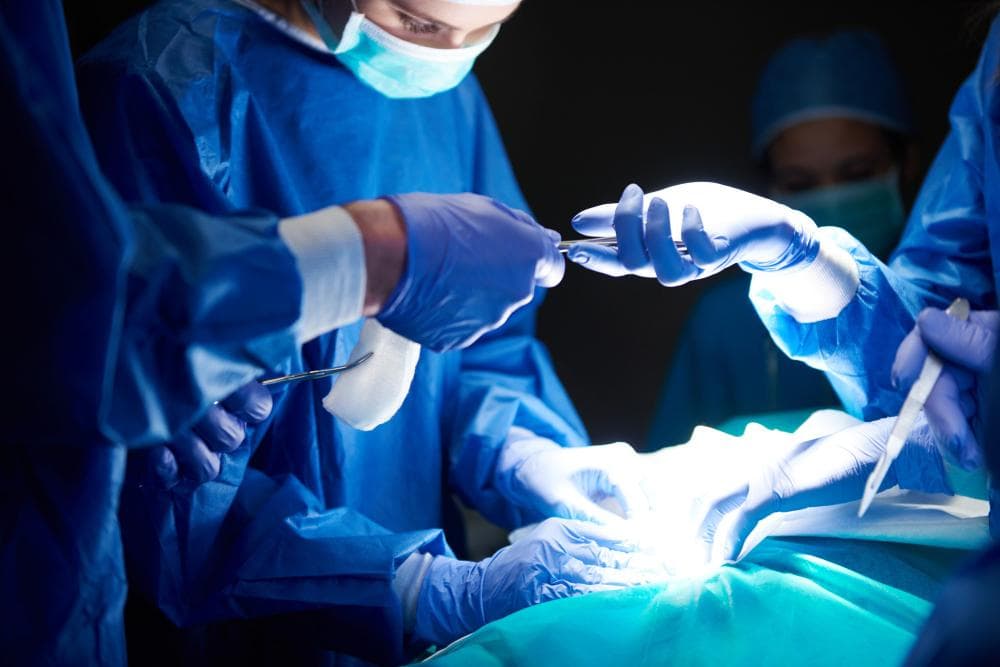
Surgeons conducting a laparoscopic hysterectomy operation on a patient.
When a woman in India is told she needs laparoscopic surgery, she typically does one thing before she does anything else: she asks someone who has had it. Or she asks someone who knows someone. And she receives a collection of accounts that range from accurate to wildly inaccurate — but all delivered with the confidence of personal testimony.
The result is that many women arrive at their pre-surgical appointment carrying misconceptions that create unnecessary fear, delay important treatment decisions, or set up unrealistic expectations in both directions. Some believe laparoscopy is trivial and are surprised by their need for rest. Others believe it is as serious as open surgery and are surprised by how quickly they recover.
Dr. Shachi Singh, consultant laparoscopic surgeon at Prakash Hospital, Sector 33, Noida, addresses the most common myths directly.
Myth 1: "The Camera Goes Inside and Takes Photos — That's All"
The reality: A diagnostic laparoscopy does involve a camera (laparoscope) being inserted to view the pelvic organs. But the term "just taking photos" dramatically undersells what happens. The surgeon conducts a systematic, thorough examination of the uterus, fallopian tubes, ovaries, pelvic peritoneum, Pouch of Douglas, and surrounding structures. Findings are documented in real time. And in the majority of cases, if a treatable condition is found — endometriosis deposits, adhesions, an ovarian cyst, blocked tubes — it is treated in the same sitting, in the same operation, through the same incisions.
What most patients call a "diagnostic" laparoscopy is often simultaneously both diagnostic and operative. The surgeon looks and treats in one procedure.
Myth 2: "Laparoscopy Is Not Real Surgery"
The reality: Laparoscopic surgery is major surgery performed under general anaesthesia. The instruments enter the abdominal cavity. The surgical procedures performed — removing an ovarian cyst, excising endometriosis, taking out fibroids, performing a hysterectomy — are complex procedures that require precisely the same surgical skill and clinical judgement as their open counterparts. The minimally invasive approach means smaller skin incisions, not less surgical intervention.
Laparoscopy is "minimally invasive" in terms of the access — the way the surgeon enters the body. It is not minimal in terms of the work done inside.
Myth 3: "Recovery Is the Same as Open Surgery"
The reality: Recovery from laparoscopic surgery is significantly shorter and less painful than from equivalent open surgery. Where an open myomectomy (fibroid removal) would require 4 to 6 weeks of recovery, the laparoscopic equivalent typically requires 1 to 2 weeks. Where an open hysterectomy requires 6 to 8 weeks, a laparoscopic hysterectomy requires 2 to 4 weeks.
The difference is in the abdominal access: open surgery requires a large incision through the abdominal wall, which itself needs to heal. Laparoscopic surgery uses 3 to 4 small incisions of 0.5 to 1 cm, causing far less muscle and tissue disruption.
Myth 4: "Laparoscopy Leaves Significant Scars"
The reality: Laparoscopic incisions are typically 0.5 to 1 cm in length. There are usually 3 to 4 of them — one at the navel and two or three in the lower abdomen. Once healed (4 to 6 weeks), they fade to small, pale, barely visible marks. The navel incision is hidden within the navel and typically invisible. Lower abdominal incisions fade to thin lines, often below the bikini line.
This is one of the most significant cosmetic advantages of laparoscopy over open surgery.
Myth 5: "You Can Go Back to Work the Next Day"
The reality: This misconception comes from the "keyhole" framing of laparoscopic surgery, which leads some women to expect it is comparable to a minor outpatient procedure. It is not.
For a straightforward diagnostic laparoscopy — where only inspection was performed — most women need 5 to 7 days before returning to desk work. Driving is typically restricted for 24 to 48 hours after anaesthesia at minimum, and longer if pain requires medication.
For operative laparoscopy (cyst removal, endometriosis excision, adhesiolysis, myomectomy), expect 1 to 2 weeks off work for desk jobs. Physical or manual work requires longer.
For laparoscopic hysterectomy: 2 to 4 weeks.
Recovery is faster than open surgery — but it is still surgery.
Myth 6: "Laparoscopy Affects Fertility Permanently"
The reality: Laparoscopic surgery, when performed correctly by an experienced surgeon, preserves fertility. Laparoscopy for endometriosis excision, ovarian cyst removal, adhesiolysis, tubal assessment, and LOD for PCOS are all performed specifically to improve fertility outcomes in women trying to conceive.
The key qualification is surgical skill and technique. Aggressive or poorly performed surgery on the ovaries can reduce ovarian reserve. This is why choosing an experienced laparoscopic surgeon matters — and why the surgical approach (careful, precise excision versus aggressive thermal ablation) matters for fertility-related procedures.
Myth 7: "The Gas Used in Laparoscopy Stays Inside Forever"
The reality: Carbon dioxide (CO2) gas is used to inflate the abdomen during laparoscopic surgery, creating the space the surgeon needs to work. After the surgery is complete, as much gas as possible is expelled. A small residual amount remains and causes the characteristic shoulder tip pain and upper abdominal discomfort that most women experience in the first 24 to 72 hours after laparoscopy.
This residual CO2 is completely absorbed by the body within 24 to 72 hours. It does not stay "inside" beyond this window and causes no lasting effects. The shoulder pain resolves completely as the gas is absorbed.
Myth 8: "If the Surgery Finds Nothing, Something Was Missed"
The reality: A normal laparoscopy — finding no pathology — is a meaningful and important result. It definitively excludes significant structural pelvic disease. For a woman being investigated for pelvic pain, a normal laparoscopy means endometriosis, adhesions, and ovarian pathology are not the cause, directing investigation toward other causes. For a woman being investigated for infertility, it means the pelvic factor of infertility has been excluded.
"Finding nothing" during laparoscopy is not a failure of the procedure — it is a result that has clinical value.
Myth 9: "You Can't Have Laparoscopy If You've Never Had Children"
The reality: There is no restriction on laparoscopic surgery based on whether a woman has had children. The procedure accesses the abdomen through the abdominal wall — it does not involve the cervix or vagina (except for the introduction of a uterine manipulator through the cervix, which does not require prior delivery). Nulliparous women (women who have not had children) undergo laparoscopy routinely for cyst removal, endometriosis, diagnostic assessment, and infertility investigation.
Myth 10: "Laparoscopy Is Only for Young Women"
The reality: Laparoscopic surgery is appropriate for women of all ages when the clinical indication is there. Postmenopausal women undergo laparoscopic surgery for ovarian cysts, uterine pathology, and other gynaecological conditions. Advanced age per se is not a contraindication — the surgical decision is based on overall health status, anaesthetic fitness, and the nature of the surgical problem, not age alone.
Laparoscopic Gynaecological Surgery in Noida and Greater Noida
Dr. Shachi Singh at Prakash Hospital, Sector 33, Noida, performs advanced laparoscopic gynaecological surgery for women across Noida and Greater Noida. If you have questions about whether laparoscopy is appropriate for your condition — or if you have heard something about laparoscopy that you are not sure about — a consultation is the right place to get accurate, personalised answers.
To book a consultation with Dr. Shachi Singh, call: +91 97023 46853
Clinic Hours: Monday to Saturday, 9 AM – 6 PM | Sunday, 10 AM – 2 PM
Clinic Address: D-12A, 12B, Sector-33, G.B. Nagar, Noida, Uttar Pradesh 201301
Frequently Asked Questions
1. Is laparoscopy painful?
The procedure itself is done under general anaesthesia — you feel nothing during it. Afterwards, most women have mild to moderate incision soreness for 3 to 5 days, and the CO2 shoulder discomfort for 24 to 72 hours. These are significantly milder than the pain of equivalent open surgery.
2. Can I have laparoscopy if I have had a previous abdominal surgery?
Previous surgery is a relevant factor that the surgeon considers — abdominal adhesions from previous operations can make laparoscopy more technically challenging. It is not an absolute contraindication. Experienced laparoscopic surgeons manage adhesions routinely.
3. How long is the waiting time before I can have a bath after laparoscopy?
Most surgeons allow showering from 24 to 48 hours after laparoscopy, with water flowing over the wound but no scrubbing. No submerging in water (bath, swimming pool) until incision healing is confirmed — typically 2 to 4 weeks.
This blog is written for educational and informational purposes only. Please consult Dr. Shachi Singh or a qualified laparoscopic surgeon for information specific to your surgical situation.