Laparoscopic Ovarian Cyst Removal: What to Expect Before, During, and After Surgery
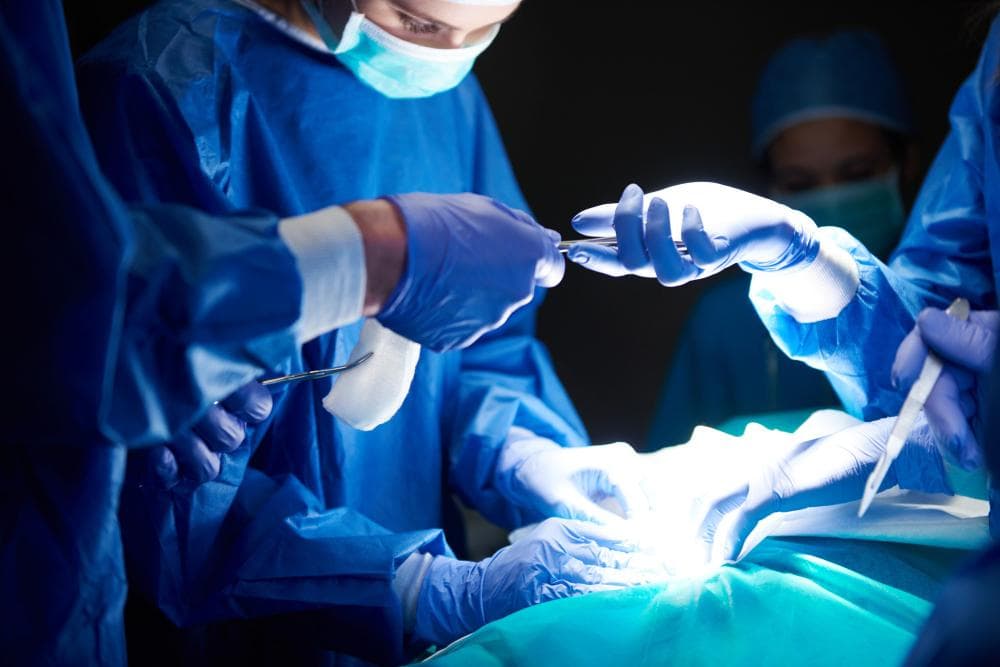
Surgeons conducting a laparoscopic hysterectomy operation on a patient.
Being told you have an ovarian cyst — and possibly need surgery to remove it — tends to produce a specific kind of anxiety. You have questions. How serious is this? Does it definitely need to come out? What does the surgery actually involve? Will it affect my ability to have children? How long will recovery take?
These are all legitimate questions, and they deserve clear answers.
Dr. Shachi Singh, consultant gynaecologist and laparoscopic surgeon at Prakash Hospital, Sector 33, Noida, operates on ovarian cysts regularly. This guide covers what you actually need to know — the types of cysts, when surgery is and is not needed, exactly what laparoscopic cyst removal involves, and what to expect during recovery.
Not All Ovarian Cysts Need Surgery
This is the most important thing to understand upfront. The majority of ovarian cysts in women of reproductive age are functional — they form as a normal part of the menstrual cycle and resolve on their own within 1 to 3 months without any intervention whatsoever.
An ovarian cyst is simply a fluid-filled sac that forms on or within the ovary. Finding one on an ultrasound is not, by itself, cause for alarm.
Types of cysts and how they are typically managed:
Follicular cysts: The most common type. A follicle that does not rupture at ovulation continues to grow. Usually less than 5 cm, asymptomatic, and resolves without treatment. Monitoring with a repeat ultrasound in 6 to 8 weeks is the usual recommendation.
Corpus luteum cysts: Form after ovulation when the corpus luteum (the structure that releases the egg) fills with fluid. Can grow up to 8 to 10 cm, sometimes causing discomfort. The majority resolve within a few weeks. If they rupture, internal bleeding can occur — this is when symptoms escalate suddenly and need urgent evaluation.
Dermoid cysts (teratomas): Contain hair, skin, or other tissue because they form from germ cells. They do not typically resolve on their own and generally require surgical removal — but they grow slowly and are almost always benign. Their tissue content means rupture, while rare, must be avoided during removal.
Endometriomas (chocolate cysts): Cysts filled with old blood that form when endometriosis involves the ovary. They do not resolve without treatment. They affect ovarian reserve (egg quantity) if left untreated, and they cause significant pelvic pain and fertility problems. Surgery is usually recommended, particularly for women wanting to conceive.
Cystadenomas: Develop from ovarian surface tissue and contain watery or mucous fluid. They can grow very large. Generally benign but require removal due to size and growth potential.
Complex or suspicious cysts: Any cyst with solid components, internal divisions (septa), or irregular walls is considered complex and requires more careful evaluation. Blood tests (CA-125, HE4) and MRI help assess malignancy risk. Complex cysts that cannot be confidently characterised as benign require surgical removal and tissue analysis.
When Surgery Is Recommended
Your gynaecologist will consider surgery for an ovarian cyst in these situations
The cyst is persistent — it has not resolved on repeat ultrasound after 2 to 3 menstrual cycles
The cyst is large — generally above 6 to 8 cm, though the threshold varies by cyst type and patient
The cyst is symptomatic — causing significant pelvic pain, pressure, bowel disturbance, or urinary frequency that affects daily life
The cyst appears complex on ultrasound — solid components, thick walls, internal septations, or irregular shape raise concern and require evaluation
Ovarian torsion is suspected — a cyst large enough to cause the ovary to twist on its blood supply is an emergency. Sudden severe one-sided pelvic pain with nausea is the warning sign. This needs urgent surgery.
The cyst is an endometrioma — particularly in a woman trying to conceive, as endometriomas impair egg quality and reduce ovarian reserve progressively
The woman has completed her family and has a persistent complex cyst — in this group, removal and pathological examination to definitively exclude malignancy are appropriate
Dermoid cysts of any size — because they do not resolve and carry a small but real rupture risk
Why Laparoscopic Surgery Is the Preferred Approach
For the vast majority of ovarian cysts requiring removal, laparoscopic ovarian cystectomy is the approach of choice. It removes the cyst while:
- Preserving as much healthy ovarian tissue as possible (critical for maintaining fertility and hormonal function)
- Using only 2 to 4 tiny incisions rather than a large abdominal opening
- Allowing same-day or overnight discharge in most cases
- Enabling return to normal activity within 1 to 2 weeks
Open surgery (laparotomy) is reserved for very large cysts, complex cases where malignancy cannot be excluded preoperatively, or situations where laparoscopic access is technically not feasible.
The goal throughout laparoscopic cystectomy is to remove the cyst completely and intact — preventing spillage of cyst contents into the abdomen — while leaving the normal ovarian tissue behind.
What Happens Before Surgery
Pre-operative assessment: Blood tests (complete blood count, coagulation, blood group), ECG if indicated, anaesthesia evaluation. Your surgeon will review the ultrasound reports and any previous blood tumour markers.
Discussion with your surgeon: Understand what type of cyst is being removed, what the planned surgical approach is, what will happen if findings at surgery differ from what was expected, and what the tissue will be sent for pathological analysis.
Consent: You will be asked to sign informed consent covering the procedure, its risks, and the possibility of extending the surgery if unexpected findings are made.
Fasting: Nothing to eat or drink for 6 to 8 hours before surgery.
Day of surgery: Arrive at the hospital at the advised time. An IV line is placed. You change into a surgical gown. The anaesthesia team will speak with you before you go to the operating theatre.
What Happens During the Surgery — Step by Step
Anaesthesia: General anaesthesia. You are completely asleep and feel nothing.
Positioning and preparation: You are positioned on the operating table. The abdomen is cleaned and draped.
Creating access: A small incision is made at or near the navel. The laparoscope — a thin instrument with a high-definition camera — is inserted. The abdomen is gently inflated with carbon dioxide gas to create working space. The surgeon examines the pelvis on the monitor screen.
Additional incisions: Two to three more small incisions are made in the lower abdomen for the surgical instruments.
Inspecting the cyst: The surgeon visualises the cyst, the ovary, the surrounding structures — the fallopian tube, uterus, opposite ovary, and pelvic peritoneum — to assess the full picture.
Cyst removal: Using fine laparoscopic instruments, the surgeon carefully separates the cyst from the surrounding ovarian tissue. The goal is to remove the cyst intact, without rupturing it. If the cyst ruptures during dissection — which can happen with some cyst types — the contents are carefully washed out.
Specimen extraction: The cyst is placed in a sterile bag and extracted through one of the small incisions. It is sent to the pathology laboratory for tissue analysis.
Haemostasis and inspection: The surgeon confirms there is no bleeding from the ovarian surface, examines the rest of the pelvis, and ensures the fallopian tube is intact. If endometriosis is found at the same time, this is typically treated in the same procedure.
Closure: The gas is released. Instruments are removed. The small incisions are closed with dissolving sutures or surgical adhesive. Dressings are applied.
Operating time: A straightforward laparoscopic cystectomy typically takes 30 to 60 minutes. Complex or large cysts may take longer.
Recovery — Week by Week
Day of surgery:
You will be in recovery as the anaesthesia wears off. Expect drowsiness, some nausea, and mild abdominal soreness. The shoulder and collarbone discomfort from residual CO2 gas is common — it resolves in 24 to 48 hours and is harmless. For most women undergoing laparoscopic cystectomy, discharge happens the same day once pain is controlled, and you can walk, urinate, and drink fluids.
Days 1 to 3:
Rest at home. Mild soreness at the incision sites — manageable with standard pain relief. Slight bloating from residual gas. Light walking is encouraged from the first day as it prevents blood clots and aids bowel function. No driving while on pain medication.
Days 4 to 7:
Most women are moving around the house comfortably, managing light tasks. Appetite returns to normal. Incision sites are healing. Showering is allowed — baths are usually delayed until sutures are confirmed sealed. The shoulder gas pain has resolved entirely.
Week 2:
Many women return to desk work, light office duties, or working from home. Driving is typically safe again once off strong pain medication and moving comfortably. Avoid lifting anything heavier than 2 to 3 kg. Sexual intercourse is usually advised to wait at least 2 weeks — your surgeon will confirm.
Weeks 3 to 4:
Return to most normal activities. Light exercise resumes. Specific restrictions on heavy lifting and intense physical exertion continue until the 4-week mark.
One month post-surgery:
Most women are fully recovered. A post-operative appointment checks healing and reviews the pathology result from the removed cyst.
What the Pathology Report Tells You
Every cyst removed during surgery is sent to a pathologist for microscopic examination. This is not optional — it is the only way to definitively determine the nature of the cyst.
In the vast majority of premenopausal women, the report confirms the cyst was benign. In a small percentage of cases — particularly in older women, those with complex ultrasound features, or elevated CA-125 — early malignant changes or borderline tumour findings may be identified. In these cases, further management is planned based on the findings.
This is why even cysts that look benign on ultrasound are always sent for pathology after removal.
Will Ovarian Cyst Removal Affect My Fertility?
This is one of the most common questions, and the answer depends on several factors
For simple cystectomy (cyst removed, ovary preserved): Fertility is generally preserved. The surgeon specifically attempts to remove the cyst wall while leaving the surrounding healthy ovarian cortex — where the follicles that develop into eggs are located.
For endometriomas: This is more nuanced. Endometrioma surgery carries a small but real risk of inadvertently removing some surrounding ovarian cortex containing primordial follicles, which can reduce ovarian reserve slightly. This risk must be balanced against the damage the endometrioma itself causes to the ovary over time. The decision is made individually based on cyst size, whether one or both ovaries are affected, the woman's age, and her ovarian reserve. A fertility specialist's input alongside the surgeon's assessment is valuable here.
For oophorectomy (entire ovary removed): If an ovary must be removed — for a very large or complex cyst where preservation is not possible — the remaining ovary continues to function. A woman with one healthy ovary retains fertility and hormonal function.
Gynaecological Surgical Care in Noida and Greater Noida
Dr. Shachi Singh at Prakash Hospital, Sector 33, Noida, performs laparoscopic ovarian cystectomy regularly for women across Noida and Greater Noida. If you have been diagnosed with an ovarian cyst and have been told surgery may be necessary — or if you have questions about a cyst on a recent ultrasound — a proper consultation will give you a clear, personalised picture of what is needed and why.
To book a consultation with Dr. Shachi Singh, call: +91 97023 46853
Clinic Hours: Monday to Saturday, 9 AM – 6 PM | Sunday, 10 AM – 2 PM
Clinic Address: D-12A, 12B, Sector-33, G.B. Nagar, Noida, Uttar Pradesh 201301
Frequently Asked Questions
Do all ovarian cysts need surgery?
No. The majority of ovarian cysts in reproductive-age women are functional cysts that resolve within 1 to 3 menstrual cycles without treatment. Surgery is considered for persistent cysts, large or complex cysts, symptomatic cysts, endometriomas, dermoids, and any cyst with features raising malignancy concern.
How long is recovery after laparoscopic ovarian cyst surgery?
Most women return to light daily activity within 3 to 5 days. Desk work resumes in 1 to 2 weeks. Full physical activity in 3 to 4 weeks. This is significantly faster than open surgery.
Will having a cyst removed affect my ability to have children?
For most cyst types with laparoscopic cystectomy preserving the ovary, fertility is maintained. Endometrioma surgery carries a small risk of reducing ovarian reserve. Your surgeon will discuss this specifically if relevant to your situation.
What is the risk of the cyst coming back?
Functional cysts can recur because they form as part of the normal menstrual cycle. Endometriomas have a known recurrence rate — hormonal suppression after surgery (contraceptive pill or other hormonal management) reduces this risk. Non-functional benign cysts like dermoids or cystadenomas rarely recur after complete removal.
What happens if the cyst ruptures during surgery?
Rupture of the cyst during dissection is a known possibility, particularly with certain cyst types. The surgeon manages this by thoroughly washing the abdominal and pelvic cavity. The cyst material is still collected for pathological analysis. Rupture during surgery does not typically represent a serious complication, but it is why surgeons take care to keep the cyst intact when possible.
This blog is written for educational and informational purposes only. Please consult Dr. Shachi Singh or a qualified gynaecological surgeon for an assessment specific to your condition.