Subchorionic Hematoma in Pregnancy: Is It Dangerous?

On ultrasound, a subchorionic hematoma shows as a crescent-shaped dark area next to the gestational sac.
Spotting in early pregnancy is frightening enough. Then comes the scan report, with a phrase you have never heard: "small subchorionic hematoma noted." Or the sonologist may say "there is a collection of blood near the sac." Many women go home, search the internet and read the worst possible stories before they have even had time to ask their own doctor.
Let me say at the outset what I tell my patients in clinic: most women with a subchorionic hematoma go on to have a healthy pregnancy and a healthy baby. It is one of the more common causes of bleeding in early pregnancy. It does need attention and follow-up, and in some situations it carries a higher risk, which I will explain honestly. If you are looking for a high-risk pregnancy doctor in Noida, or simply a second opinion, details are at the end.
What is a subchorionic hematoma?
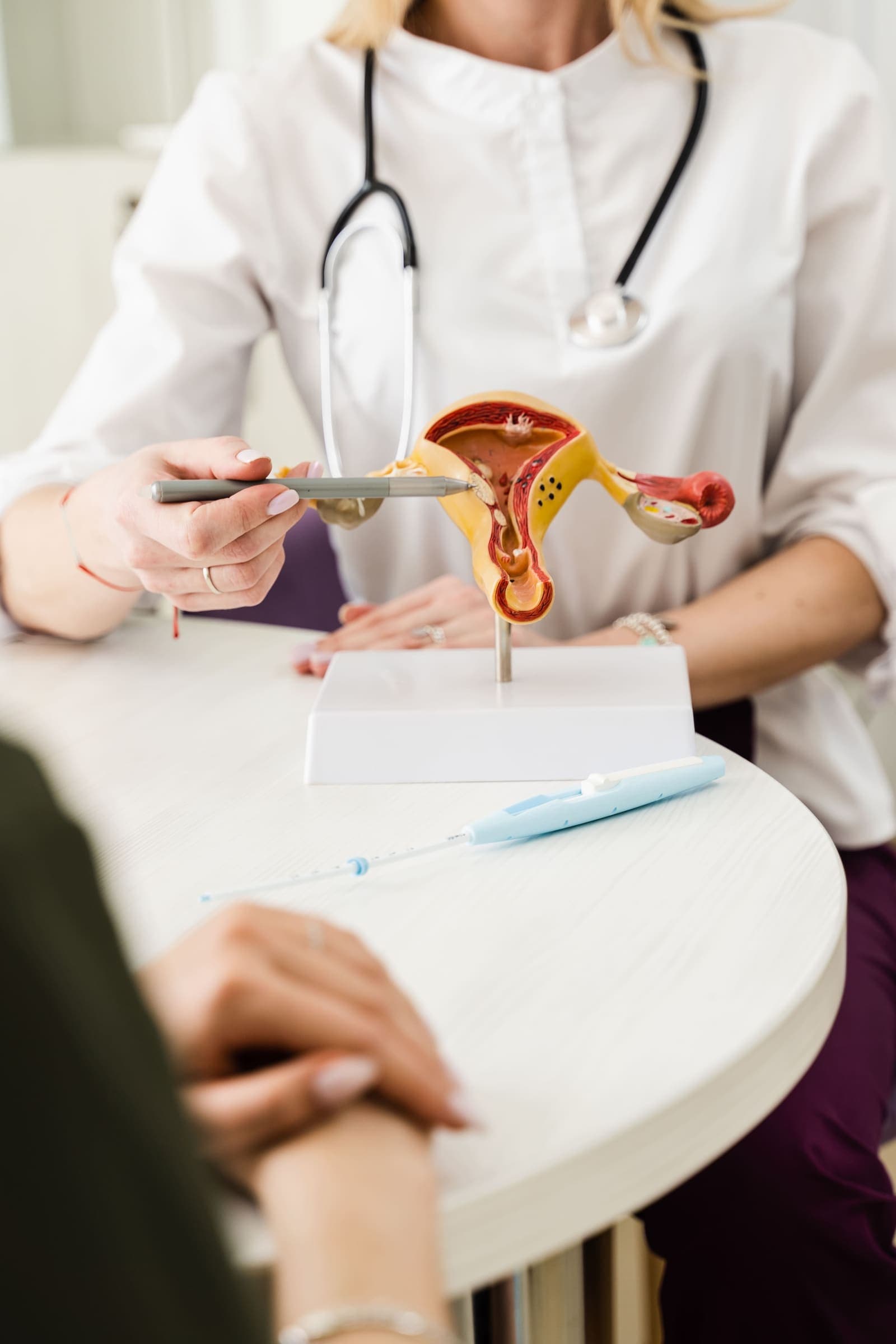
The chorion is the outer membrane that surrounds the gestational sac and later forms part of the placenta. A subchorionic hematoma (also called a subchorionic haemorrhage or subchorionic bleed) is a collection of blood between the chorion and the wall of the uterus. It is seen on ultrasound as a crescent-shaped dark (anechoic or hypoechoic) area next to the sac.
It is one of the commonest abnormal findings on a first-trimester scan in women who have bleeding, and it is sometimes found by chance in women who have no symptoms at all. Estimates suggest that it is present in a small percentage of pregnancies, and in a notable share of those with first-trimester bleeding.
It is not the same as the pregnancy "bleeding into the baby." The blood sits outside the sac, between the membranes and the uterine wall.
What causes it?
In many cases, there is no identifiable cause. Proposed mechanisms include:
- Partial separation of the edge of the developing placenta or membranes from the uterine wall, possibly at the time of implantation, when blood vessels from the embryo invade the lining
- Changes in the uterine lining or blood vessels
- Trauma, such as a fall, a blow to the abdomen or vigorous activity, though in most women no trauma has occurred
- Conditions that increase bleeding or clotting problems, for example thrombophilias or antiphospholipid syndrome, in selected cases
- Pregnancy after fertility treatment (IVF, ICSI), where subchorionic hematomas appear to be more common
- Previous uterine surgery or abnormalities such as fibroids or a uterine septum
- Smoking and some medicines that thin the blood
It is rarely caused by something a woman did. Lifting a bag, climbing stairs, having sex, travelling or feeling stressed does not cause a subchorionic hematoma.
Symptoms
Some women have none at all. When there are symptoms, they include:
- Vaginal spotting or bleeding, which may be pink, red or brown. It can be light or heavy, intermittent or continuous.
- Mild cramping or lower abdominal discomfort
- Passing small clots
- Occasionally, a dull ache in the lower back
The colour of the blood is a clue to timing. Brown blood is older blood draining slowly. Bright red blood is fresh. Neither colour alone tells you how serious it is.
Bleeding can continue on and off for days or weeks, which is very distressing but does not necessarily mean the pregnancy is failing. Many hematomas gradually shrink and are reabsorbed.
How is it diagnosed?
- Ultrasound is the key test, preferably a transvaginal scan in early pregnancy. The sonologist will describe the hematoma's size, location and the status of the pregnancy: the sac, the yolk sac, the embryo and, importantly, the heartbeat.
- The size is reported in millimetres or as a percentage of the size of the gestational sac (for example, "less than 20 percent of the sac" for a small hematoma and "more than 50 percent" for a large one).
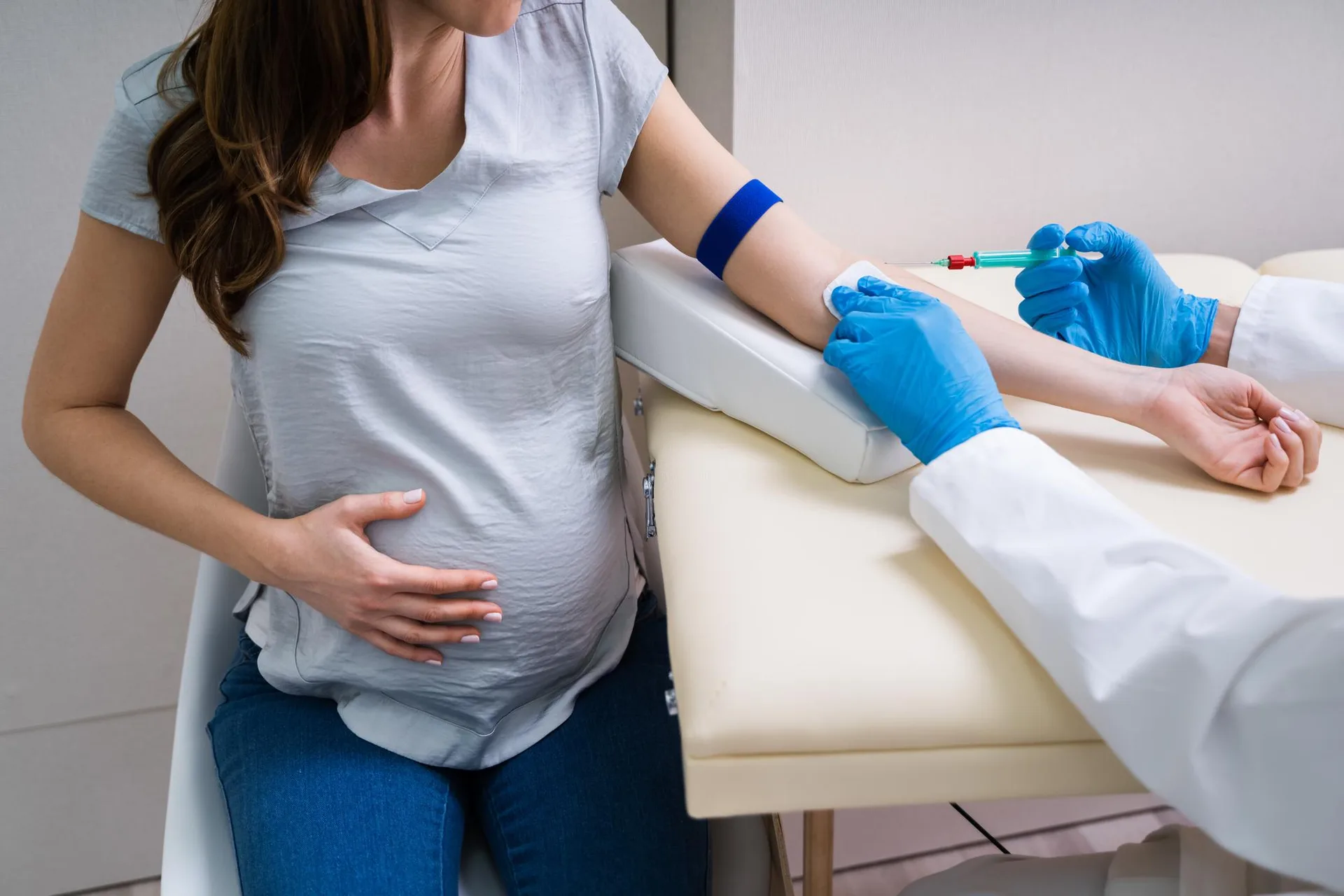
- Your doctor may also check your blood group (Rh), haemoglobin, and in some cases tests for thyroid, clotting or infection.
- Follow-up scans in 1 to 2 weeks are usual to see whether the hematoma is shrinking, stable or growing.
Is it dangerous? What do the studies show?
The honest answer is that outcomes depend on several factors.
Reassuring points:
- When a fetal heartbeat is present, and the hematoma is small, the large majority of pregnancies continue normally.
- Many hematomas resolve on their own, often within a few weeks.
- Most babies are born healthy.
Factors linked to a higher risk of complications:
- Larger hematomas. Some studies suggest that larger collections, for example those more than about one-third to one-half of the sac, are linked with a higher risk of miscarriage.
- Earlier gestational age at diagnosis, particularly in the first trimester
- Older maternal age
- Heavier or ongoing bleeding
- A hematoma located close to or below the sac, near the cervix
- Presence of other risk factors, such as recurrent miscarriage
Possible associations with later pregnancy problems have been reported in some studies, though the data are mixed and the absolute risks are modest. They include:
- Miscarriage, particularly with large hematomas in the first trimester
- Preterm birth or preterm premature rupture of membranes
- Placental abruption (separation of the placenta later in pregnancy)
- Fetal growth restriction or pre-eclampsia in some analyses
- Stillbirth, rarely
It is important to keep these in proportion. An association in a study does not mean it will happen to you. It does explain why your doctor may suggest closer follow-up, including growth scans in the later trimester.
What is the treatment?
There is no proven medicine that dissolves a subchorionic hematoma or guarantees that it will resolve. Management is mostly watchful and supportive.
What your doctor may do
- Repeat ultrasound to monitor size and the baby's heartbeat
- Check your Rh status. If you are Rh negative, anti-D immunoglobulin may be needed after bleeding in pregnancy.
- Treat other causes of bleeding if found, such as infection or a cervical polyp
- Progesterone support in selected women, for example those with recurrent miscarriage or with a short cervix. The evidence for routine progesterone in subchorionic hematoma is limited, so this is an individual decision.
- Review of medicines. Avoid unnecessary blood-thinners unless required for a specific condition, and discuss any you use.
- Continue folic acid and routine antenatal care
Rest: what is sensible?
Many women are told to lie in bed for weeks. The evidence that strict bed rest improves outcomes is lacking, and prolonged bed rest carries its own downsides, including clots in the legs, muscle loss and low mood. Practical, moderate advice is generally:
- Take it easy while you are bleeding. Avoid heavy lifting, strenuous exercise and long travel until bleeding settles.
- Normal light activity such as walking around the house or doing light chores is generally fine.
- Avoid intercourse until the bleeding has stopped and your doctor says it is safe. It does not cause a hematoma but can provoke more bleeding.
- Do not use tampons or douches. Use pads so you can monitor bleeding.
- Stay hydrated, eat well and avoid constipation. Straining can add to discomfort.
- Avoid smoking and alcohol.
Your doctor may advise more or less rest depending on how much you bleed and your history.
Warning signs: when to call or go to hospital
Seek immediate medical attention if you have:
- Heavy bleeding, soaking a pad every hour or passing large clots
- Severe abdominal pain or pain on one side, especially with dizziness or fainting (an ectopic pregnancy must be excluded in early pregnancy)
- Fever or chills, or foul-smelling discharge
- Leaking fluid
- Tissue passing from the vagina
- Reduced baby movements later in pregnancy
- Any bleeding in the second or third trimester, since this needs prompt evaluation
Call your doctor if the colour or amount of bleeding changes, even if it seems minor.
Emotional impact
Bleeding in early pregnancy is deeply frightening. Many women say the hardest part is the waiting between scans, and being unable to do anything. Some practical thoughts:
- Know that a hematoma is common, and that most go on to have good outcomes.
- Ask your doctor what specific findings (size, heartbeat, location) mean for you.
- Limit internet searching. Statistics from large studies do not tell you your own odds.
- Share your worries with your partner or a trusted person.
- If anxiety is overwhelming your day, talk to your doctor or a counsellor.
Later in pregnancy: what to expect
If the hematoma resolves, you can usually continue with routine care. If you have had one, your doctor may suggest:
- An anomaly scan at 18 to 20 weeks
- A growth scan in the third trimester, and in some cases a Doppler study to check blood flow
- Attention to blood pressure and any signs of pre-eclampsia
- A discussion on delivery planning, including when to seek help if you bleed again
Most women with a resolved subchorionic hematoma can plan a normal delivery.
Myths about subchorionic hematoma
"It means the baby is bleeding." No. The blood is outside the sac.
"You must stay in bed for the whole pregnancy." Not proven, and not required.
"It always causes miscarriage." No. Most pregnancies continue.
"Eating papaya or pineapple caused it." No.
"Sex caused it." No, though sex may be avoided while bleeding continues.
"Once it's gone, it can't come back." Occasionally another bleed occurs, so continue to report symptoms.
Common questions
How long does it take to go away? Most shrink over days to several weeks, though the timeline varies.
Is it the same as a threatened miscarriage? A subchorionic hematoma is one of the causes of a threatened miscarriage, which means bleeding with a closed cervix and a continuing pregnancy.
Can I travel? Discuss with your doctor. In general, avoid long journeys while bleeding continues.
Can I exercise? Light walking is usually fine. Avoid strenuous workouts until bleeding stops.
Will I need a caesarean section? Not because of the hematoma alone.
Does it affect my baby's development? In most pregnancies, no.
Support and follow-up matter
If you have been told you have a subchorionic hematoma, regular follow-up and clear communication with your doctor are the best things you can do. I see pregnant women from Noida, Greater Noida, Ghaziabad and Delhi NCR at Prakash Hospital, Sector 33. To book a consultation, call +91 97023 46853.
Related reading
- Threatened miscarriage: signs and management
- Placenta previa
- Bleeding in early pregnancy: causes
- Pregnancy scans and tests schedule
- High-risk pregnancy: when to see a specialist
This article is for general education and does not replace a medical examination. If you are bleeding in pregnancy, contact your doctor promptly.