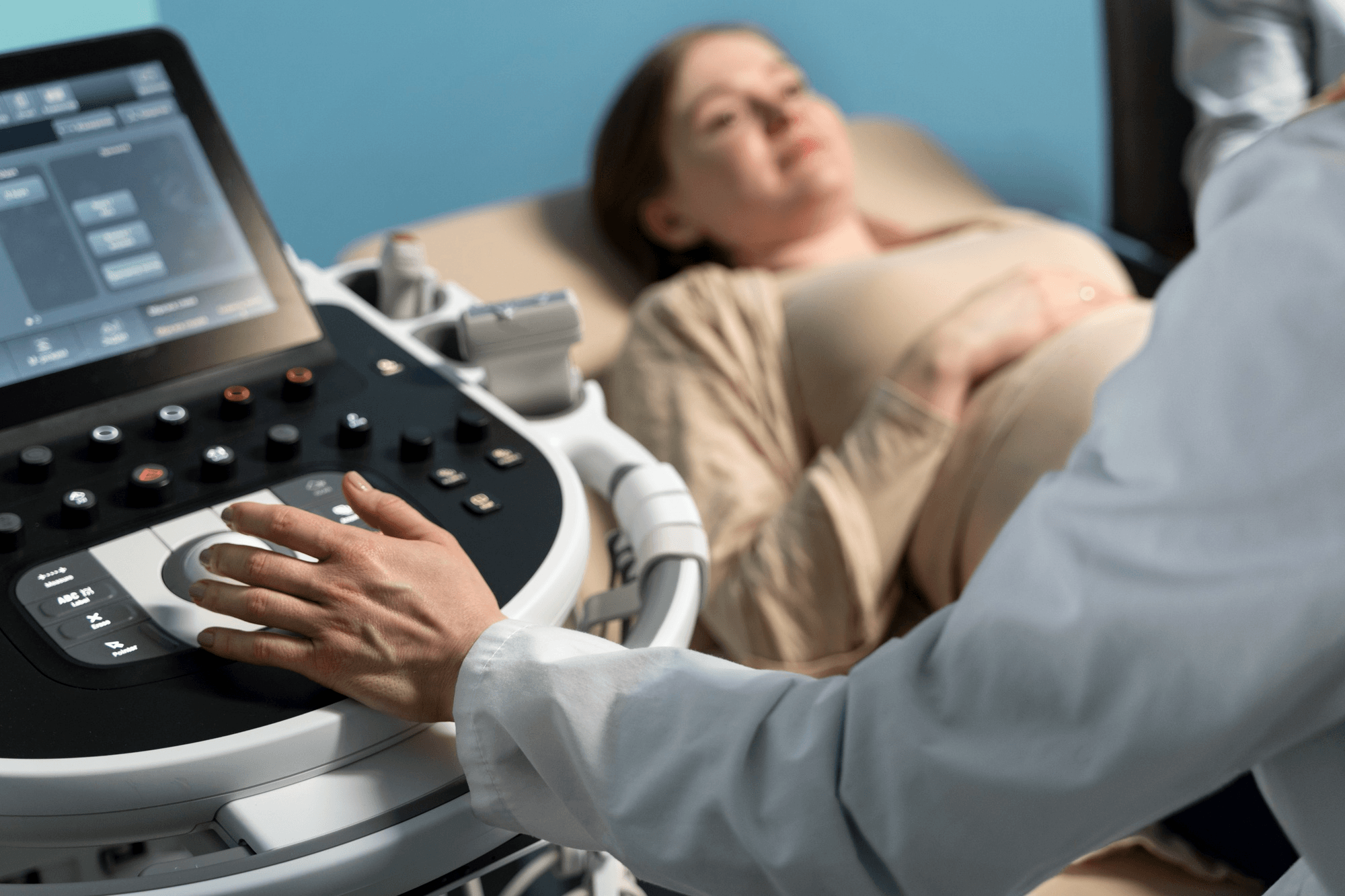
Pregnancy Scans and Tests: A Month-by-Month Schedule

A low-risk pregnancy typically needs four or five well-timed scans.
One of the most common things I hear in the first antenatal visit is, "Doctor, how many scans will I need? And which tests are essential?" The question is reasonable. Between the blood tests, ultrasounds, glucose tests and special screenings, the list can feel long and confusing. Different clinics follow slightly different schedules, family members offer their own ideas, and the internet adds more.
In this guide, I will lay out a typical schedule of antenatal scans and tests, month by month, explain what each is for, and mention how the plan changes when a pregnancy is high risk. It is a general framework. Your own doctor will adapt it to your health, age, history and how the pregnancy is going.
If you are looking for a gynaecologist in Noida for antenatal care, details are at the end.
The big picture
Most healthy pregnancies involve:
- 3 or 4 key ultrasounds: early dating scan, NT scan, anomaly scan and one or two growth scans
- Routine blood and urine tests in each trimester
- Screening tests for chromosomal conditions and gestational diabetes
- Vaccinations
- Regular check-ups of blood pressure, weight, fundal height and fetal heartbeat
Extra tests are added when there is a reason, and are not needed for every woman. More scans do not equal better care. The aim is the right test at the right time.
Before pregnancy (pre-conception)
If you are planning a pregnancy, a visit beforehand lets us check:
- Blood group, haemoglobin, blood sugar, thyroid function
- Rubella and chickenpox immunity, and hepatitis B status
- Pap smear if due
- Review of medicines and chronic conditions
- Start folic acid
Month 1 to 2 (weeks 4 to 8)
First visit. A detailed history, examination, blood pressure, weight and height (BMI).
Blood tests:
- Complete blood count (haemoglobin)
- Blood group and Rh factor
- Fasting or random blood sugar
- Thyroid function (TSH)
- HIV, hepatitis B (HBsAg), hepatitis C and syphilis (VDRL)
- Urine routine and culture
- Rubella and other infections as needed
- Vitamin D and vitamin B12 in many practices
Dating / viability scan (6 to 9 weeks). A transvaginal or abdominal ultrasound to confirm the pregnancy is in the uterus (ruling out an ectopic pregnancy), count the babies, see the fetal heartbeat and estimate the due date. It's especially important if you have bleeding, pain or a history of miscarriage or ectopic pregnancy.
Supplements. Folic acid, and others as prescribed.
Month 3 (weeks 9 to 13)
First trimester screening (11 weeks to 13 weeks 6 days):
- NT scan. Measures the fluid at the back of the baby's neck and checks early anatomy. See our NT scan guide.
- Double marker blood test. Free beta hCG and PAPP-A, which together with the NT scan and your age give a risk estimate for Down syndrome, trisomy 18 and 13. See our double marker guide.
- NIPT (optional). A blood test analysing the baby's DNA fragments. Considered when the risk is higher, when you want a more accurate screening, or for twins and IVF pregnancies in selected cases, as advised by your doctor.
Other: Review of earlier blood results, and a plan for the rest of the pregnancy.
Month 4 (weeks 14 to 17)
Quad marker test (15 to 20 weeks), if the first trimester screening was missed.
Amniocentesis is offered from 15 weeks if screening shows high risk.
Routine visit. Blood pressure, weight, urine, and listening to the baby's heartbeat.
Tetanus vaccine (Td/Tdap). Usually given in the second trimester, with a second dose in some schedules.
Month 5 (weeks 18 to 22)
Anomaly scan / TIFFA (18 to 20 weeks). The most detailed scan of pregnancy, checking the baby's brain, face, spine, heart, abdomen, kidneys, limbs, cord and placenta, and the fluid. See our TIFFA guide.
Cervical length measurement. For women with a history of preterm birth, late miscarriage or a suspected short cervix. This can be done at the anomaly scan.
Fetal echocardiography (18 to 22 weeks). Recommended for women at higher risk of a baby with a heart defect: those with diabetes, a family history of congenital heart disease, IVF conception, increased NT, an abnormal heart view on the routine scan or certain medicines.
Uterine artery Doppler (selected women). Used to assess the risk of preeclampsia and growth restriction, particularly with risk factors.
Iron and calcium. Supplements usually continue.
Month 6 (weeks 23 to 27)
Gestational diabetes test (24 to 28 weeks). The oral glucose tolerance test (OGTT), usually with a 75 g glucose drink, measured fasting, at 1 hour and at 2 hours. Women with risk factors (obesity, family history of diabetes, PCOS, previous gestational diabetes, age) may be tested earlier. Indian guidance often recommends testing at the first visit and again at 24 to 28 weeks.
Repeat haemoglobin to check for anaemia.
Routine visits continue monthly.
Month 7 (weeks 28 to 31)
Anti-D injection (28 weeks) if you are Rh negative and the baby's father is Rh positive or unknown. A second dose may be given after delivery.
Growth scan (28 to 32 weeks). Assesses the baby's size, amniotic fluid, placental position and presentation. It's commonly done for all women in many practices, and specifically for those with risk factors such as diabetes, hypertension, twins, a small or large baby on examination or reduced movements.
Vaccines. Td/Tdap between 27 and 36 weeks (Tdap is recommended in many guidelines in every pregnancy). Influenza vaccine is advised in any trimester during flu season. Your doctor may suggest other vaccines depending on the situation.
Kick counts. Begin monitoring baby movements.
Visits become every two weeks.
Month 8 (weeks 32 to 35)
Growth scan (34 to 36 weeks), if needed, with a Doppler study (umbilical artery and other vessels) when growth restriction or other complications are a concern.
Group B streptococcus (GBS) screening. In some centres, a vaginal and rectal swab is taken at 35 to 37 weeks. Practices differ in India, and your doctor will advise.
Repeat blood tests if needed (haemoglobin, sugar).
Birth planning, hospital registration and discussion about the mode of delivery.
Month 9 (weeks 36 to 40)
Weekly visits. Blood pressure, urine protein, baby's position, heart rate and fundal height.
Ultrasound for position, fluid and weight if needed, especially close to term.
CTG / non-stress test (NST) in high-risk pregnancies or when movements are reduced.
Membrane sweep and induction discussions from 39 to 41 weeks as appropriate.
Overdue pregnancy (beyond 40 weeks). Closer monitoring with CTG and fluid assessment. Induction is typically offered between 41 and 42 weeks.
Summary table
| When | Key tests |
|---|---|
| First visit (4 to 8 weeks) | Blood group, CBC, sugar, thyroid, infection screen, urine |
| 6 to 9 weeks | Dating / viability scan |
| 11 to 13+6 weeks | NT scan, double marker, ± NIPT |
| 15 to 20 weeks | Quad marker (if first trimester missed); amniocentesis if needed |
| 18 to 20 weeks | Anomaly scan (TIFFA); ± fetal echo |
| 24 to 28 weeks | OGTT, repeat haemoglobin |
| 28 weeks | Anti-D if Rh negative |
| 28 to 32 weeks | Growth scan |
| 34 to 36 weeks | Growth/Doppler if indicated |
| 36 to 40 weeks | Weekly check-ups, CTG if needed |
When the schedule changes: high-risk pregnancies
You may need more scans and tests, and earlier, if you have:
- Hypertension or preeclampsia risk
- Diabetes or gestational diabetes
- Twins or multiples
- Previous stillbirth, preterm birth or miscarriages
- Thyroid disease, kidney disease, heart disease or autoimmune conditions
- IVF or fertility treatment
- Age over 35
- Obesity or low weight
- Bleeding, low-lying placenta or growth concerns
- Rh negative blood group with antibodies
For example, women with diabetes or twins often need growth scans every 3 to 4 weeks from the late second trimester, while those with preeclampsia may need Doppler studies and fetal monitoring weekly or more. Our article on high-risk pregnancy care explains this.
Choosing between screening tests: a quick comparison
- Double marker + NT: Combined first trimester screening. Detection of about 85 to 90 percent for Down syndrome, with some false alarms.
- NIPT: Higher accuracy for Down syndrome (over 99 percent detection in many studies), can be done from 10 weeks, but is not diagnostic.
- Amniocentesis / CVS: Diagnostic, with a small miscarriage risk.
- Anomaly scan: Looks for structural problems and is recommended for everyone.
Each answers a different question. Your doctor can help you decide which are right for you.
How to avoid unnecessary or missed tests
- Keep a pregnancy file with all reports and scan images. Bring it to each visit.
- Know your timings. Many tests have narrow windows (NT, anomaly scan, OGTT).
- Ask why each test is being done and what the result will change.
- Don't skip a recommended scan because everything feels fine. Many problems have no symptoms.
- Avoid unnecessary "entertainment" scans. Ultrasound is safe when used medically, but each scan should have a reason.
- Use certified centres. In India, scanning centres are registered under the PCPNDT Act, and sex disclosure is prohibited.
Common questions
How many scans are normal? For a low-risk pregnancy, around 4 to 5 well-timed scans are typical. High-risk pregnancies need more.
Are scans harmful? No evidence of harm with diagnostic ultrasound used appropriately.
Can I have a scan every month? Not routinely. It is not necessary in low-risk pregnancies.
What if I missed the NT scan? The quad marker and anomaly scan still give valuable information.
Is the OGTT really necessary? Yes. Gestational diabetes is common in Indian women and often has no symptoms. Treatment protects you and the baby.
Do I need all vaccines? The tetanus-containing vaccine is strongly recommended. Others depend on season and risk. Ask your doctor.
A schedule built around you
A good antenatal plan is both thorough and sensible. I look after expectant mothers from Noida, Greater Noida, Ghaziabad and Delhi NCR at Prakash Hospital, Sector 33. To book a consultation, call +91 97023 46853.
Related reading
- Pregnancy week by week
- Double marker test explained
- NT scan: timing and normal values
- TIFFA scan
- High-risk pregnancy care
This schedule is general guidance. Follow your own doctor's recommendations.