Double Marker Test in Pregnancy: Normal Range, Timing and How to Read Your Results
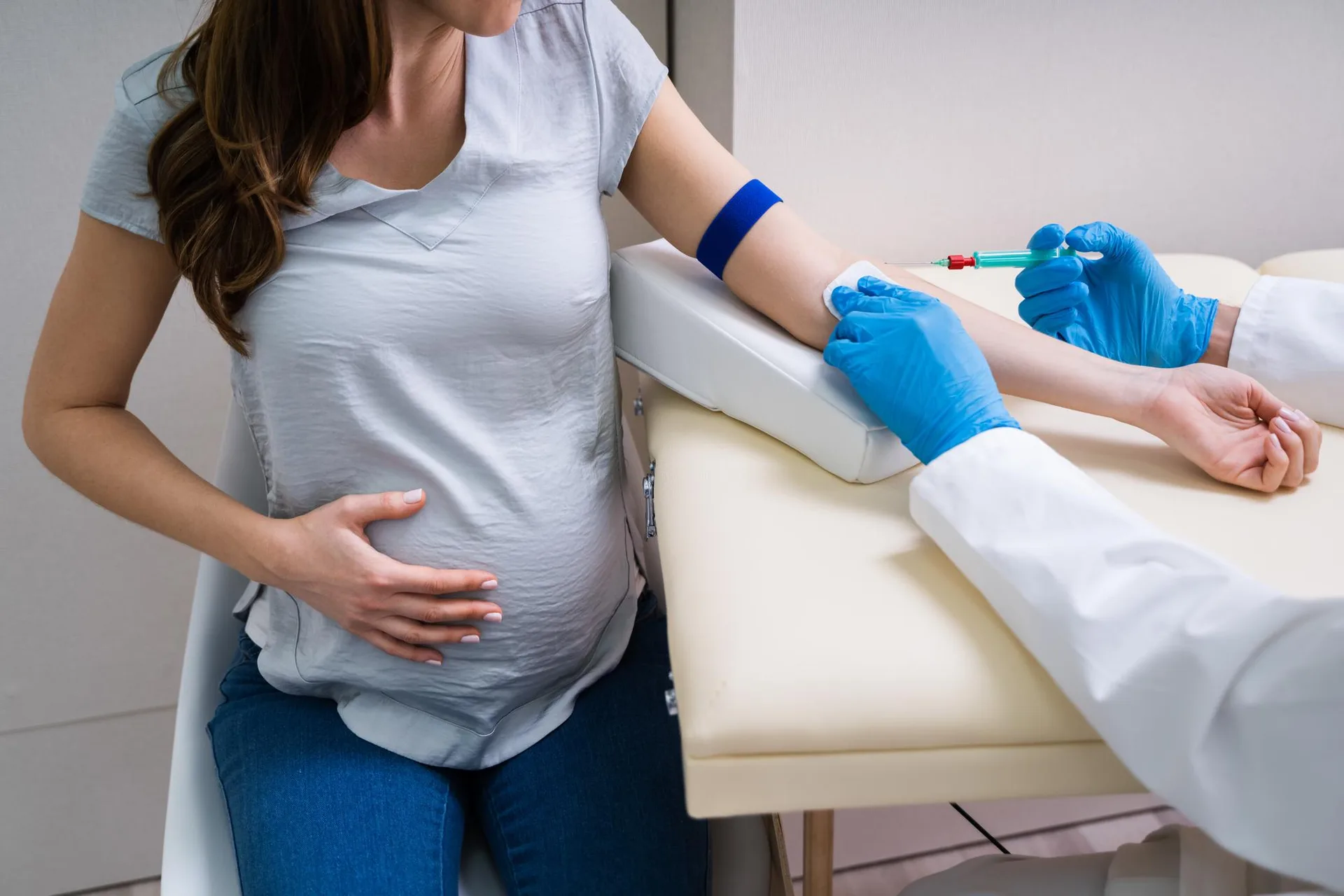
The double marker is a simple blood test, best done between 11 weeks and 13 weeks 6 days.
A report lands in your inbox. It says "screen positive" or "high risk 1:120" in bold. Your stomach drops, and you probably search the phrase double marker test at midnight before anyone from the clinic calls you back.
I see this almost every week in my practice, so let me say the most important thing first. A double marker report is a screening result. It is not a diagnosis. It estimates a probability, and most women who get a "high risk" result go on to have healthy babies. Understanding what the numbers mean takes a lot of the fear out of the process.
This guide explains what the test is, when to take it, what the normal range looks like, how to read a report line by line, and what happens next. If you are looking for a gynaecologist in Noida to walk you through your own report, I explain how at the end.
What is the double marker test?
The double marker test, also called the first trimester screening or dual marker test, is a blood test done in early pregnancy. It measures two substances that the placenta makes:
- Free beta hCG (human chorionic gonadotropin, the "pregnancy hormone")
- PAPP-A (pregnancy-associated plasma protein A)
The levels of these two substances can be a little higher or lower than average when the baby has certain chromosomal conditions. The lab combines the two results with your age, weight, gestational age and the baby's NT scan (nuchal translucency, a measurement of fluid at the back of the baby's neck) to calculate a risk figure.
The test looks mainly for three conditions:
- Trisomy 21 (Down syndrome): an extra copy of chromosome 21
- Trisomy 18 (Edwards syndrome): an extra copy of chromosome 18
- Trisomy 13 (Patau syndrome): an extra copy of chromosome 13, which some labs include
It does not screen for every genetic or structural condition. It will not detect most heart defects, neural tube defects or single-gene diseases. Those are looked for in other ways, mainly the anomaly scan at 18 to 20 weeks.
When should you take the test?
The standard window is 11 weeks to 13 weeks and 6 days of pregnancy, counted from the first day of your last period or from an early dating scan. Most labs and doctors in India aim for 11 to 13 weeks.
The timing is tied to the NT scan. The NT measurement is only reliable when the baby's crown-rump length is between about 45 and 84 mm, which corresponds to that same window. If you miss it, there is a second-trimester option called the quadruple (quad) marker test, usually done at 15 to 20 weeks. It is a little less accurate but still useful.
Many women ask whether the blood test and the scan must be done on the same day. They do not. Some labs take blood at 9 or 10 weeks and combine it with the NT scan later, but the interpretation is best when the blood sample is from the same week as the scan. Your doctor will guide you on the plan that suits the lab you use.
Who should have it?
In practice, offered to all pregnant women, whatever their age. The older recommendation to screen only women over 35 has changed, because most babies with Down syndrome are born to younger mothers simply because younger women have more pregnancies overall.
You have a stronger reason to get it if:
- You are 35 or older
- You have had a previous pregnancy with a chromosomal condition
- There is a family history of genetic disease
- You conceived through IVF or ICSI (the lab needs this information to interpret the result)
- An early scan shows something unusual
It is your choice. Some couples prefer not to screen at all, and that is a valid decision. Whatever you decide, I ask that you make it knowing what the test can and cannot do.
How is it done?
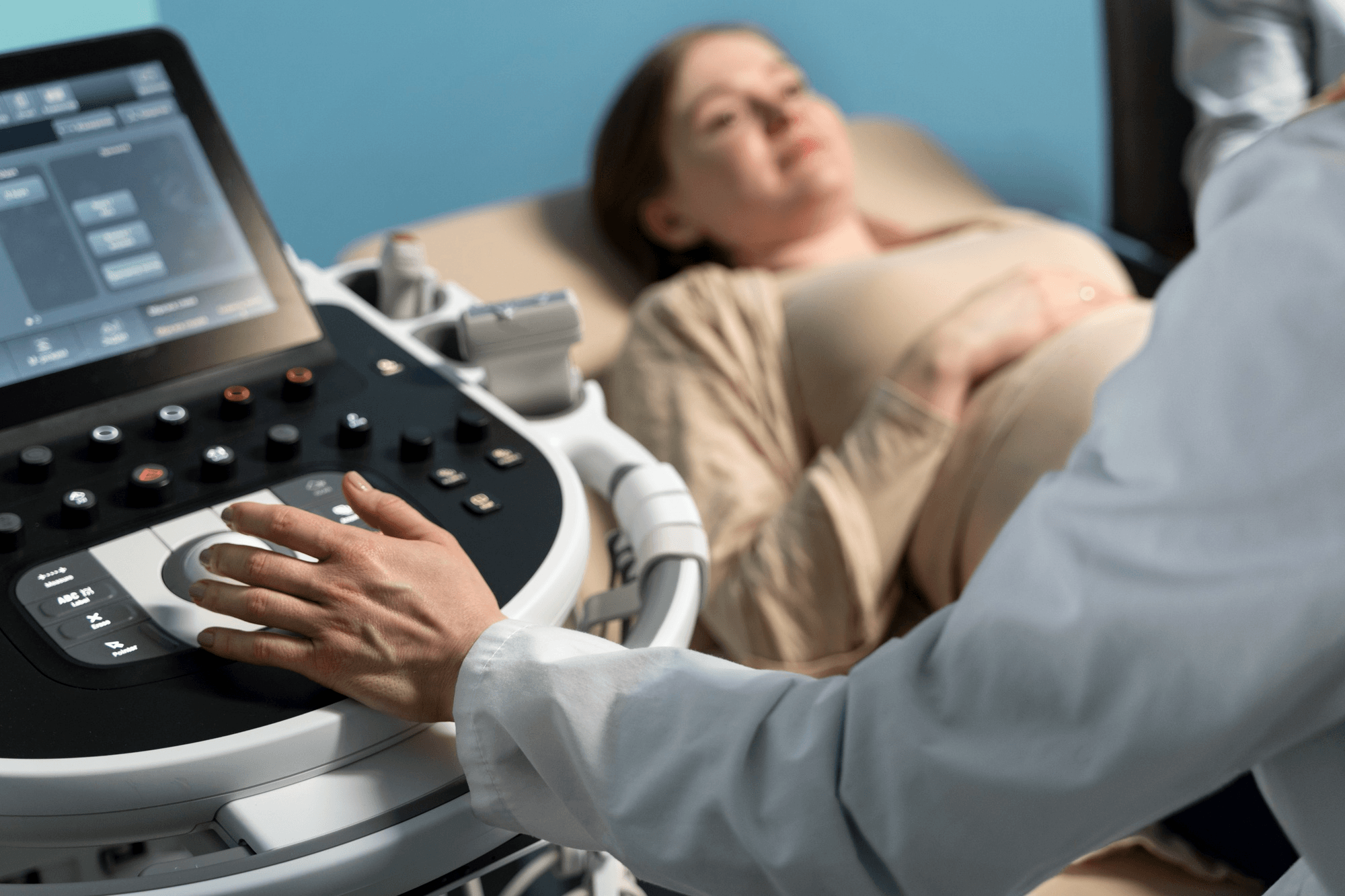
There is nothing to prepare. You do not need to fast. A nurse draws a small sample of blood from your arm. The result usually takes 1 to 3 days. The NT scan is a normal ultrasound over the abdomen and takes around 20 to 30 minutes, performed by a sonologist trained and certified for NT measurement. Ask whether the sonologist holds an FMF (Fetal Medicine Foundation) certification, because accurate measurement depends on skill.
What are the normal values?
Here is where reports confuse people. The lab does not simply say "your hCG is 40 ng/mL, normal range 20 to 60." Both hormones change a lot from week to week of pregnancy, so a raw number means very little by itself. Instead, labs convert your result into MoM (multiples of the median).
A MoM compares your value with the median (middle) value for women at the same gestational age. A MoM of 1.0 means exactly average.
Typical reference range: 0.5 to 2.5 MoM for both markers, though exact limits vary a little between labs.
Here is how to read it:
- Free beta hCG: About 1.0 MoM is average. A higher value (for example 2.5 MoM or above) is more often seen when the baby has Down syndrome. A very low value is more often seen with trisomy 18.
- PAPP-A: About 1.0 MoM is average. A lower value (for example below 0.5 MoM) is seen more often with Down syndrome and trisomy 18.
The classic Down syndrome pattern is high free beta hCG with low PAPP-A. The classic pattern for trisomy 18 is both markers low.
Please remember that these are patterns in groups of women. A single MoM that falls outside the typical range does not tell you what your baby has. Plenty of healthy pregnancies have a PAPP-A of 0.4 or an hCG of 2.8.
Reading the risk figure
The final line of your report gives a risk, written as a ratio such as 1:2500 or 1:90. This means "1 in 2500" or "1 in 90."
- 1 in 2500 means that of 2500 women with the same results, one would have a baby with the condition. That is a low risk.
- 1 in 90 means that of 90 women with those results, one would. That is a higher risk.
Most Indian labs use a cut-off of 1 in 250 (some use 1 in 300). A risk lower than that cut-off (for example 1:1000) is labelled screen negative (low risk). A risk higher than that cut-off, for example 1:120, is screen positive (high risk).
Two points are worth underlining.
First, "screen positive" does not mean "your baby has Down syndrome." Say the risk is 1:120. That means 119 out of 120 women with that result have an unaffected baby. It also means we should offer you a more definite test, because 1 in 120 is a high enough chance that many families want certainty.
Second, "screen negative" is reassuring but not a guarantee. The combined first trimester screening, with NT scan, picks up roughly 85 to 90 out of 100 Down syndrome pregnancies, with about 5 in 100 women getting a false alarm. It means that about 1 in 10 affected pregnancies can still slip through. If anything on your anomaly scan or later scans looks unusual, we investigate it regardless of the earlier screening result.
What can change the result?
The software adjusts for many factors, which is why the form you fill out matters. Wrong information leads to wrong risk figures. The lab should record:
- Your exact age (or date of birth) and weight
- Accurate gestational age (preferably from an early ultrasound)
- Whether you smoke
- Whether you have diabetes requiring insulin
- IVF or donor egg conception
- A twin pregnancy (hormone levels run higher, so interpretation is different)
- Any previous affected pregnancy
I have seen patients receive a high-risk result simply because the dates were off by a week. If your result surprises you, ask for the report to be rechecked against your dating scan.
What if the result is screen positive?
First, take a breath. Then book an appointment, ideally within a few days. Here are the usual next steps.
1. Review the numbers and dates. I check the dating, the NT measurement and the report details.
2. Consider NIPT (non-invasive prenatal testing). This is a blood test that analyses fragments of the baby's DNA circulating in your blood. It is more accurate than the double marker for Down syndrome, with detection above 99 percent in most studies, though it is still a screening test and not a diagnosis. It carries no risk to the pregnancy.
3. Consider a diagnostic test. If the risk is high, or if NIPT is also positive, a diagnostic test gives a definite answer.
- CVS (chorionic villus sampling) takes a tiny sample of placental tissue, usually at 11 to 14 weeks.
- Amniocentesis takes a small amount of amniotic fluid, usually from 15 weeks onward. You can read more in our separate guide on amniocentesis.
Both are done by an expert under ultrasound and carry a small risk of pregnancy loss, which your doctor will discuss with you before you choose.
4. Get counselling. Whichever path you choose, you deserve unrushed time to ask questions. If a diagnosis is confirmed, genetic counselling and a discussion of your options are part of good care.
Other things the double marker can reveal
A very low PAPP-A, even with a normal chromosome risk, is linked in studies to a higher chance of poor fetal growth, preterm birth and preeclampsia later. This does not mean those things will happen. It does mean I may suggest closer growth scans and blood pressure checks, and in some cases low-dose aspirin, in line with current guidelines. I would only recommend this after assessing your whole picture.
Common myths about the double marker test
"The test can harm the baby." No. It uses a simple blood sample and an external ultrasound.
"A high-risk result means you will have to terminate." Absolutely not. What you do with the information is entirely your decision. Many families use it simply to prepare.
"If the double marker is normal, no other tests are needed." The anomaly scan at 18 to 20 weeks is still recommended for every pregnancy, because it looks for structural problems that the double marker cannot see.
"The test reveals the baby's sex." No. In India, determining or disclosing the sex of the baby is prohibited by law under the PCPNDT Act, and prenatal tests are never used for that purpose.
Questions I am asked in clinic
Can I take the test at 14 weeks? The standard double marker should be done by 13 weeks 6 days. After that, we switch to the quad marker.
Is it needed after IVF? Yes, and it is fine. Tell the lab you conceived through IVF because hormone levels differ slightly.
My report says PAPP-A is 0.45 MoM. Is that bad? It is slightly low, and it can be completely normal. We look at the whole risk figure and your scan together.
Does stress or what I ate affect the result? No. Normal day-to-day diet and emotional stress do not change these markers.
When to see your doctor
Bring your report to a doctor who can sit with you and go through it, rather than searching the internet at night. If your result is screen positive, if you are unsure about the numbers, or if you simply want to plan your antenatal tests, book a consultation with Dr. Shachi Singh at Prakash Hospital, Sector 33, Noida. To book a consultation, call +91 97023 46853.
Related reading
- NT scan: timing and normal values
- TIFFA scan at 18 to 20 weeks
- Amniocentesis: when it is advised
- Pregnancy after 35: what to expect
- High-risk pregnancy care in Noida
This article is for education only. Screening results must always be interpreted by a doctor who knows your full history.