Stages of Labour: What Happens and How Long Each Takes

Labour has three stages, and a first labour often lasts 12 to 18 hours from regular contractions to birth.
"How will I know it is real labour?" and "How long will it take?" are the two questions I hear most from first-time mothers in the last weeks of pregnancy. The honest answers are "you will usually know, though not always at the start" and "it varies a great deal." Labour is not a stopwatch event. But it does follow a recognisable pattern, and understanding that pattern makes it far less frightening.
This guide walks through each stage of labour: what is happening in your body, what you may feel, how long it typically lasts and when to call your doctor or head to the hospital. If you are looking for care from a gynaecologist in Noida for pregnancy and delivery, details are at the end.
What is labour?
Labour is the process by which your uterus contracts regularly and powerfully to open (dilate) the cervix, push the baby down the birth canal and deliver the baby and placenta. It is divided into three stages, with the first stage further split into early (latent) and active phases. Some texts also describe a fourth stage, the first hour or two of recovery after birth.
Every labour is different. First labours tend to be longer than later ones. The stages below describe typical ranges, not rules.
Before labour starts: signs it is near
In the days or weeks before labour, you might notice:
- Lightening: the baby "drops" lower into the pelvis. Breathing may get easier, but the pressure on your bladder increases.
- Braxton Hicks contractions: irregular, usually painless tightening that comes and goes, and often settles with rest, a drink of water or a change of position.
- Increased vaginal discharge, sometimes with a thicker mucus.
- Loose stools and a burst of energy ("nesting") in some women.
- The "show": a plug of pink or blood-tinged mucus from the cervix. It may come hours or days before labour begins.
None of these means you must rush to the hospital, but do mention any bleeding, leaking fluid or reduced baby movements to your doctor.
First stage: dilation of the cervix
The first stage starts with regular contractions and ends when the cervix is fully open at about 10 centimetres. This is the longest stage.
Early (latent) phase
- What is happening: the cervix softens, thins out (effaces) and opens gradually, up to about 4 to 6 cm.
- What you feel: contractions that are mild to moderate, often 5 to 20 minutes apart at first, each lasting 30 to 45 seconds. They may feel like period cramps, backache or pressure. They can start and stop.
- How long: it can last many hours. In a first labour, the early phase often lasts 8 hours or more, and sometimes more than a day. In later labours, it is generally shorter.
- What to do: stay at home if you are well, your waters have not broken and the baby is moving normally. Eat light food, drink fluids, rest, shower, walk, use a birthing ball, sway, lean on a pillow or have your partner press your lower back.
Active phase
- What is happening: the cervix opens more quickly, from about 6 cm to 10 cm.
- What you feel: contractions are stronger, longer (about 60 seconds), closer together (every 3 to 5 minutes) and more demanding. It becomes harder to talk through them. Many women feel focused and inward.
- How long: commonly 4 to 8 hours, though it varies. Dilation is often assumed to proceed at a rate of about one centimetre per hour in a first labour, but modern studies suggest that normal labour can be slower at first and then speed up.
- What to do: this is the time to be at the hospital. Use whatever helps: breathing, movement, warm water, massage, supportive people. Discuss pain relief options if you wish (see below).
Transition
At the end of the first stage, as the cervix approaches full dilation (about 8 to 10 cm), you reach transition. It is the shortest but often the most intense part, lasting from a few minutes to an hour or so. You might feel:
- Very strong, close contractions with little rest between them
- Shaking, chills or hot flushes
- Nausea or vomiting
- Irritability, panic or a feeling that you cannot continue
- Pressure in the bottom and an urge to push
That moment of "I can't do this" is common, and usually means the baby is close. Tell your birth team how you feel. It helps to know that transition is brief.
When to go to the hospital
Your doctor will give you personal instructions. Common guidance is to come in when:
- Contractions are regular, strong and about 5 minutes apart (or sooner if you have had a previous quick labour or live far away)
- Your waters break, whether as a gush or a steady trickle, even without contractions. Note the colour. Green or brown fluid needs prompt attention.
- You have vaginal bleeding more than a show
- The baby is moving less than usual
- You have severe constant pain, a severe headache, visual disturbance or swelling of the face and hands
- You are less than 37 weeks and think you are in labour
- You feel something is wrong. Trust your instincts.
If you live in Noida, Greater Noida or Ghaziabad, think ahead about traffic and distance, and keep your hospital bag and documents ready by 36 weeks.
Second stage: pushing and birth
The second stage begins when the cervix is fully dilated and ends with the birth of your baby.
- What is happening: the baby descends through the pelvis, rotates and is pushed out by contractions and your bearing-down effort.
- What you feel: an urge to push, similar to the need to pass stool; strong pressure; a stretching or burning sensation as the baby's head crowns; and then relief when the head is born. Contractions may space out a little, giving you short rests.
- How long: commonly up to 2 hours in a first labour (a bit longer if you have an epidural) and up to 1 hour in later labours. It can be much quicker. Longer durations may be acceptable if you and the baby are both well, but your doctor will watch progress and the baby's heart rate closely.
- What helps: positions such as squatting, kneeling, side-lying or semi-sitting, which can open the pelvis. Pushing with the contractions, with guidance from your midwife or doctor. Do not exhaust yourself with pushing before you feel the urge, unless advised.
- Perineal care: warm compresses and slow, controlled delivery of the head help reduce tearing. In some situations an episiotomy (a small cut) may be needed, which your doctor will explain.
- Assistance: if labour does not progress, or the baby's heart rate shows concern, your doctor may use a vacuum or forceps to help, or recommend a caesarean section.
When the baby is born, he or she is usually placed on your chest for skin-to-skin contact, dried and kept warm. The cord is clamped and cut, often after a short delay of a minute or so if mother and baby are well.
Third stage: delivery of the placenta
The third stage runs from the birth of the baby until the placenta and membranes are delivered.
- What is happening: the uterus contracts, the placenta separates from the wall and is expelled.
- What you feel: mild contractions, a sense of fullness and then a gush as the placenta slides out. Many women hardly notice it, because they are focused on the baby.
- How long: usually 5 to 30 minutes. If it takes longer than about 30 minutes, doctors usually intervene.
- Active management: an injection of oxytocin is commonly given just after the baby is born to help the uterus contract and reduce bleeding (postpartum haemorrhage). The cord is gently pulled while the uterus is supported. This lowers the risk of heavy bleeding.
- Check: your doctor will examine the placenta to make sure it is complete, check for tears and stitch any that need repair.
Fourth stage: recovery
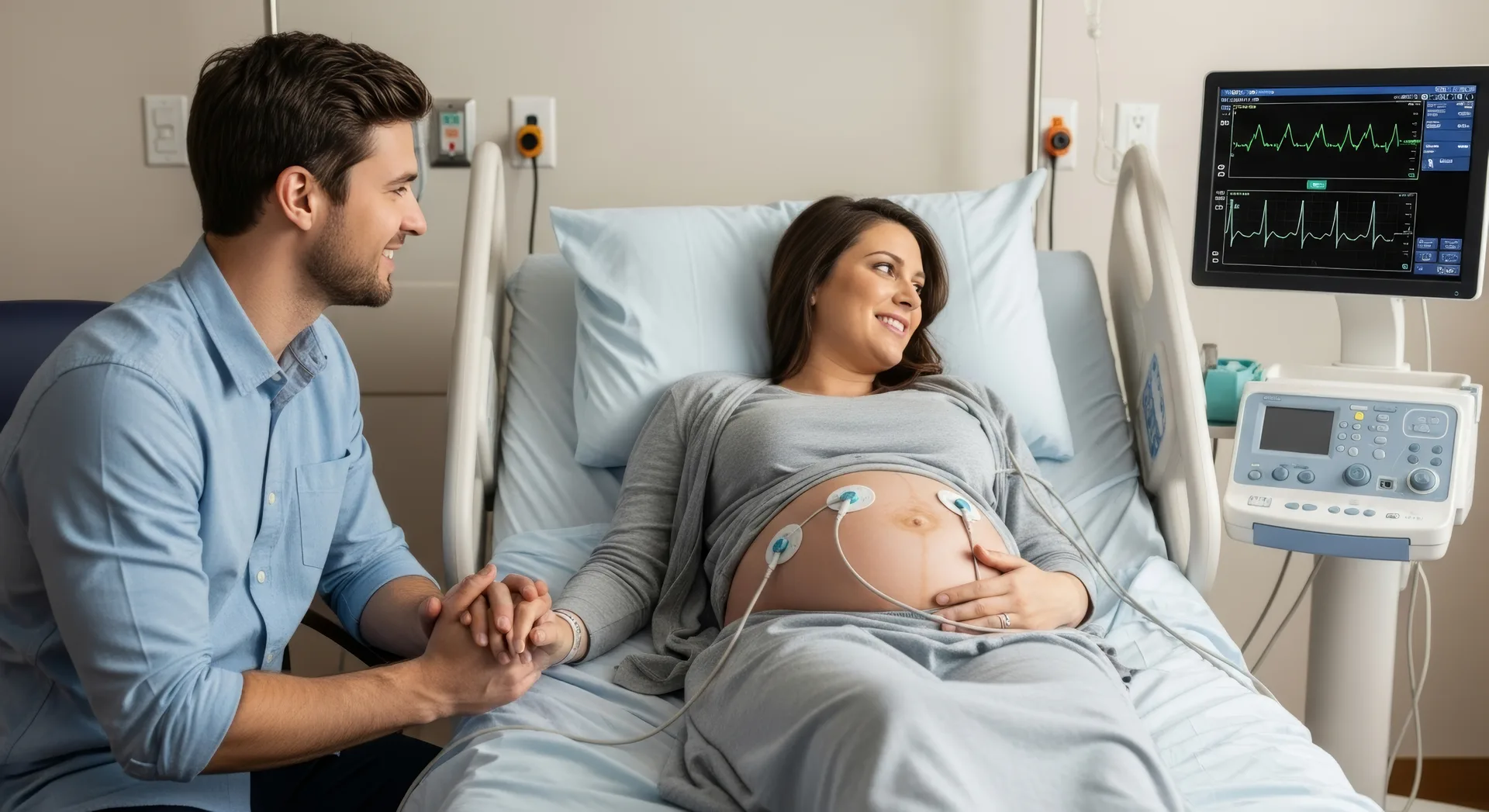
For the first one to two hours after birth, you are closely watched for bleeding, blood pressure, pulse and uterine firmness. This is also when you can begin breastfeeding, if you plan to. Expect:
- Afterpains (cramps) as the uterus shrinks, stronger with later babies
- Shivering, thirst and hunger
- Soreness at the perineum
- A flood of emotions: joy, relief, tears or exhaustion
How long does labour last overall?
There is no single answer. As a rough guide, from the start of regular contractions to birth:
- First baby: often 12 to 18 hours or more, and sometimes longer
- Later babies: often 6 to 8 hours, but sometimes just a few hours
Labour that is unusually slow, or prolonged, is evaluated by your doctor. Causes include weak contractions, a large baby, a baby in an unfavourable position or pelvic issues. Treatment may include rest, fluids, changing position, rupturing the membranes, oxytocin to strengthen contractions or, if necessary, a caesarean.
Pain relief options
You are entitled to discuss pain relief at any point. Options include:
- Non-drug: movement, breathing, massage, warm water, a supportive birth partner, music
- Nitrous oxide (gas and air) where available
- Injectable pain relief such as opioids, with effects on drowsiness
- Epidural analgesia, which numbs the lower body and is very effective. See our article on painless delivery for details.
Choosing pain relief does not make you any less of a mother, and not choosing it does not make you braver. The best plan is the one you feel comfortable with, adjusted as labour unfolds.
How your birth partner can help
- Stay calm and reassure you
- Keep you hydrated and rested
- Massage your back, hold your hand, breathe with you
- Speak up for your wishes with the medical team
- Remember that they may feel anxious too, and that is fine
Warning signs during labour
Let your team know straight away if you notice:
- Heavy bleeding
- Greenish or foul-smelling fluid
- Severe continuous pain
- Reduced baby movements
- Fever or shivering
- Fits, severe headache or blurred vision
When labour is not straightforward
Sometimes the plan changes. Induction of labour, instrumental delivery or caesarean section may become the safest option for you or your baby. That is not a failure. It is the system working to protect you both. Our blogs on normal delivery versus C-section and induction explain these situations further.
Common questions
Can labour start without contractions? Yes, if your waters break first.
Is it safe to eat in labour? Light foods and fluids are often fine in low-risk labour. Follow your hospital's policy, especially if an epidural or surgery is possible.
Do contractions always get closer together? Generally yes, but not always evenly.
Can I walk during labour? Yes. Upright positions and movement often help, unless you have been advised otherwise.
How do I tell Braxton Hicks from real contractions? Real contractions become regular, stronger and longer, and do not go away with rest or a change of position.
What if I cannot feel my baby move in labour? Tell your team immediately.
Prepare, and know you are supported
Understanding labour does not mean you can control it, but it does reduce fear. I see pregnant women from Noida, Greater Noida, Ghaziabad and Delhi NCR at Prakash Hospital, Sector 33, and I am glad to help you plan your delivery and answer questions. To book a consultation, call +91 97023 46853.
Related reading
- Labour contractions vs cramps
- Normal delivery vs C-section
- How to have a normal delivery
- Painless delivery and epidural
- Induction of labour
This article is for general education. Your own labour will be guided by your doctor's assessment.