Bloating During Periods: Why Your Abdomen Swells Before Your Period and What Actually Helps
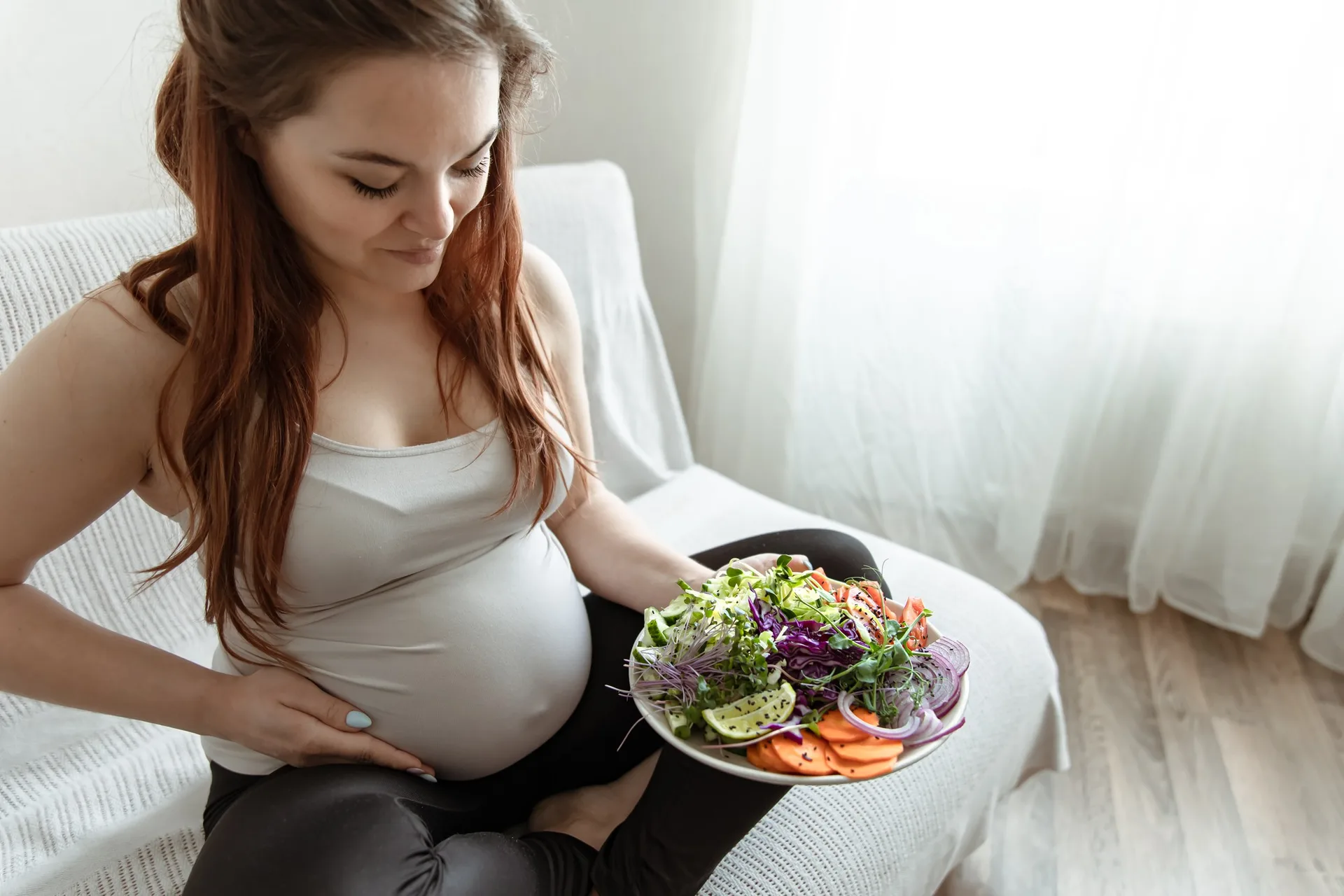
A visibly tired pregnant woman sits on a couch, cradling her abdomen, to portray the common effects of bloating during pregnancy.
The week before your period, your jeans fit differently. Your abdomen feels full, heavy, and distended in a way that has nothing to do with what you have eaten. You might have gained a kilo overnight — and then it disappears in the first day or two of bleeding as if it was never there.
This is period bloating. It is real, it is hormonal, and it is one of the most consistently reported premenstrual symptoms — affecting a large proportion of women who menstruate. It is also one of the most mismanaged, partly because people reach for antacids and digestive remedies that address the wrong mechanism, and partly because the correct explanation is rarely shared.
Dr. Shachi Singh, consultant gynaecologist at Prakash Hospital, Sector 33, Noida, explains the physiology behind menstrual bloating, which factors make it worse, and what genuinely relieves it.
What Is Actually Happening: The Hormonal Mechanism
Period bloating is not primarily a digestive problem, though digestion plays a role. It is fundamentally a hormonal fluid regulation problem.
Throughout the menstrual cycle, oestrogen and progesterone rise and fall in a coordinated sequence. In the luteal phase — the two weeks between ovulation and the start of your period — progesterone rises significantly. Then, in the days just before menstruation, both progesterone and oestrogen drop sharply.
This drop in progesterone causes two things that produce bloating
Water and sodium retention. High oestrogen relative to falling progesterone causes the body to retain sodium. Where sodium goes, water follows. The fluid accumulates in tissues throughout the body — the abdomen, the breasts, the fingers, the ankles. This is premenstrual water retention, and it accounts for the physical weight gain (typically 1 to 2 kg) that some women notice before their period.
Slowed bowel motility. Progesterone relaxes smooth muscle — including the smooth muscle of the intestinal wall. During the luteal phase, digestion slows. Food moves through the bowel more slowly, and gas accumulates. When progesterone drops before menstruation, this effect reverses — but not before the gas has been building for a week or two.
The combination of fluid retention in the abdominal tissues and slowed digestion with increased gas gives the characteristic sensation of period bloating. Both resolve quickly once menstruation begins and hormones stabilise.
The timing is consistent: most women notice bloating beginning 5 to 7 days before their period, peaking in the day or two before bleeding starts, and easing within the first day or two of the period itself. Some women notice it only for 2 to 3 days; others feel it for a full week or longer.
Why It Is Worse for Some Women Than Others
Bloating severity varies considerably. Several factors amplify the hormonal baseline
Diet in the premenstrual week: High-sodium foods cause more water retention than the hormones alone would produce. Processed foods, packaged snacks, pickles, papads, salty chutneys, and restaurant food all contain significant sodium that compounds hormonal fluid retention. This is why adjusting diet specifically in the 5 to 7 days before the period has a real impact.
Caffeine: Caffeine causes blood vessels to constrict and then dilate, which can worsen fluid retention. Some women find that cutting back on chai and coffee in the premenstrual week reduces bloating.
Carbonated drinks: The gas in carbonated beverages — cola, soda water, fizzy drinks — directly adds to the gas accumulation already happening from slowed bowel motility. Not the main cause, but a contributor.
Constipation: The progesterone-related slowing of the bowel is more pronounced in women who already have sluggish digestion. If constipation develops premenstrually, it adds a physical component to the bloating that can be quite uncomfortable.
Stress: Stress affects gut motility through the gut-brain axis — chronic stress disrupts bowel function and worsens premenstrual digestive symptoms.
PMS: Women with significant premenstrual syndrome (PMS) experience more severe fluid retention as part of the broader hormonal disruption. Bloating in PMS can be more pronounced and last longer than in women without significant PMS.
Endometriosis: Women with endometriosis sometimes experience what is called "endo belly" — severe abdominal bloating premenstrually and during menstruation, more pronounced than typical period bloating. If your bloating is extreme, very painful, or associated with significant menstrual pain, endometriosis should be considered.
What Helps: Evidence-Based Strategies
1. Reduce Sodium Intake Before Your Period
The single most effective dietary change. Start reducing salty foods 5 to 7 days before your period is expected. In practical Indian terms: reduce pickles, papads, packaged namkeen, restaurant food, processed snacks, and added salt. This directly reduces premenstrual sodium retention and the fluid accumulation that follows.
This does not mean eating bland food for a week every month. It means being mindful of high-sodium additions and choosing home-cooked food over restaurant and packaged options during the premenstrual window.
2. Increase Potassium
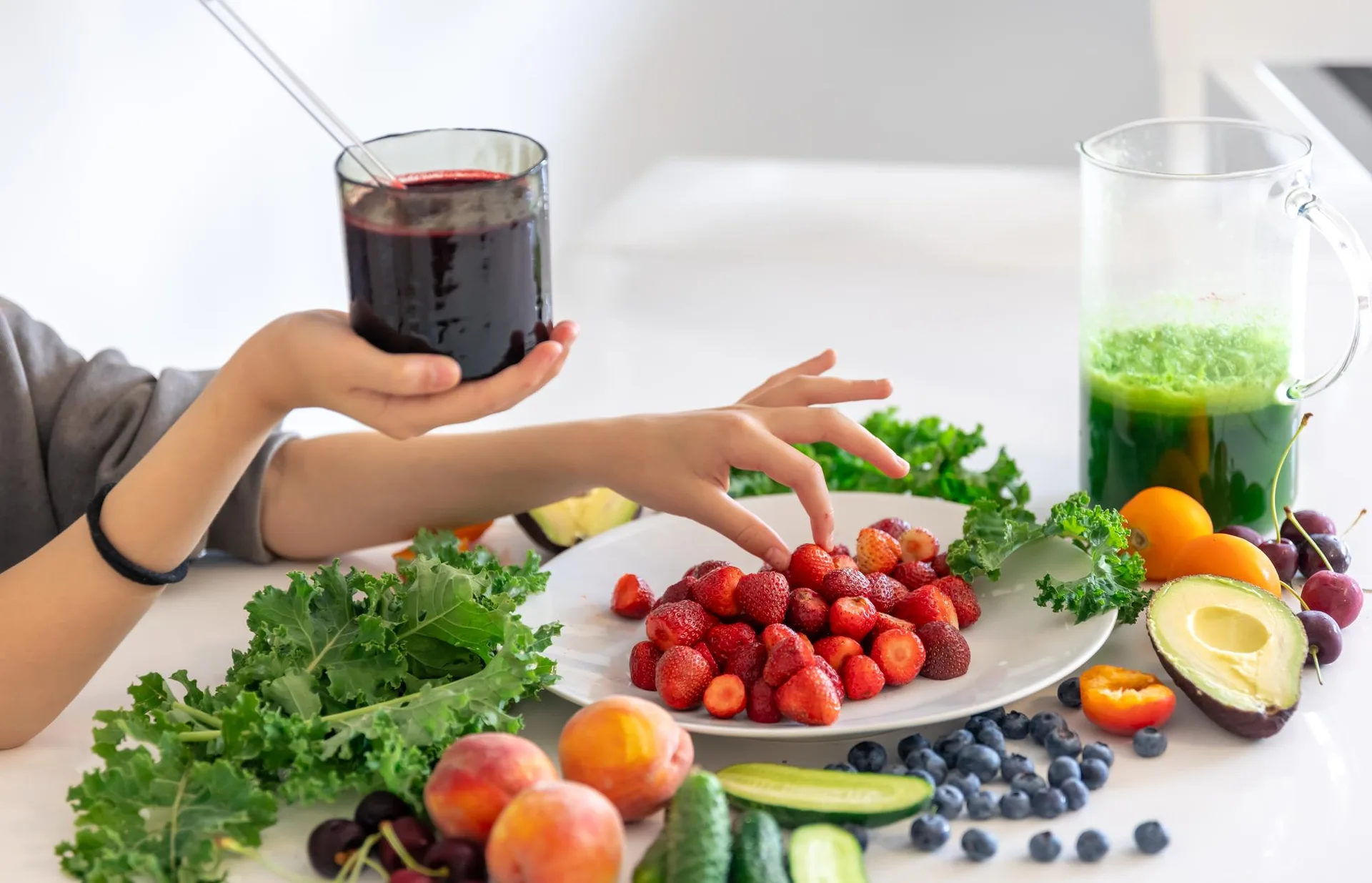
Potassium has the opposite effect to sodium on fluid retention — it helps the kidneys excrete excess sodium and reduce fluid accumulation. Increasing potassium-rich foods in the premenstrual week counteracts the sodium effect.
Good Indian sources of potassium: bananas, coconut water (nariyal pani), curd (dahi), moong dal, palak, tomatoes, rajma, and potatoes. Adding these to the premenstrual week's diet has a practical, measurable effect.
3. Stay Well Hydrated
Counterintuitively, drinking more water helps with fluid retention, not less. When the body is dehydrated, it retains water more aggressively as a protective response. Adequate hydration — 8 to 10 glasses of water daily — signals the body that water is available and reduces the retention response. It also helps with constipation.
4. Gentle Exercise
Walking, yoga, and light stretching during the premenstrual phase genuinely help — exercise reduces water retention through sweat, stimulates bowel movement, and triggers endorphin release that reduces pain perception. Vigorous exercise during the worst of period bloating may feel impossible, but a 20 to 30-minute walk most days in the premenstrual week makes a real difference.
Specific yoga poses that help with period bloating: apanasana (knees-to-chest), supta baddha konasana (reclined bound angle), child's pose (balasana), and cat-cow stretches — all of which gently compress and release the abdominal region and aid gas movement.
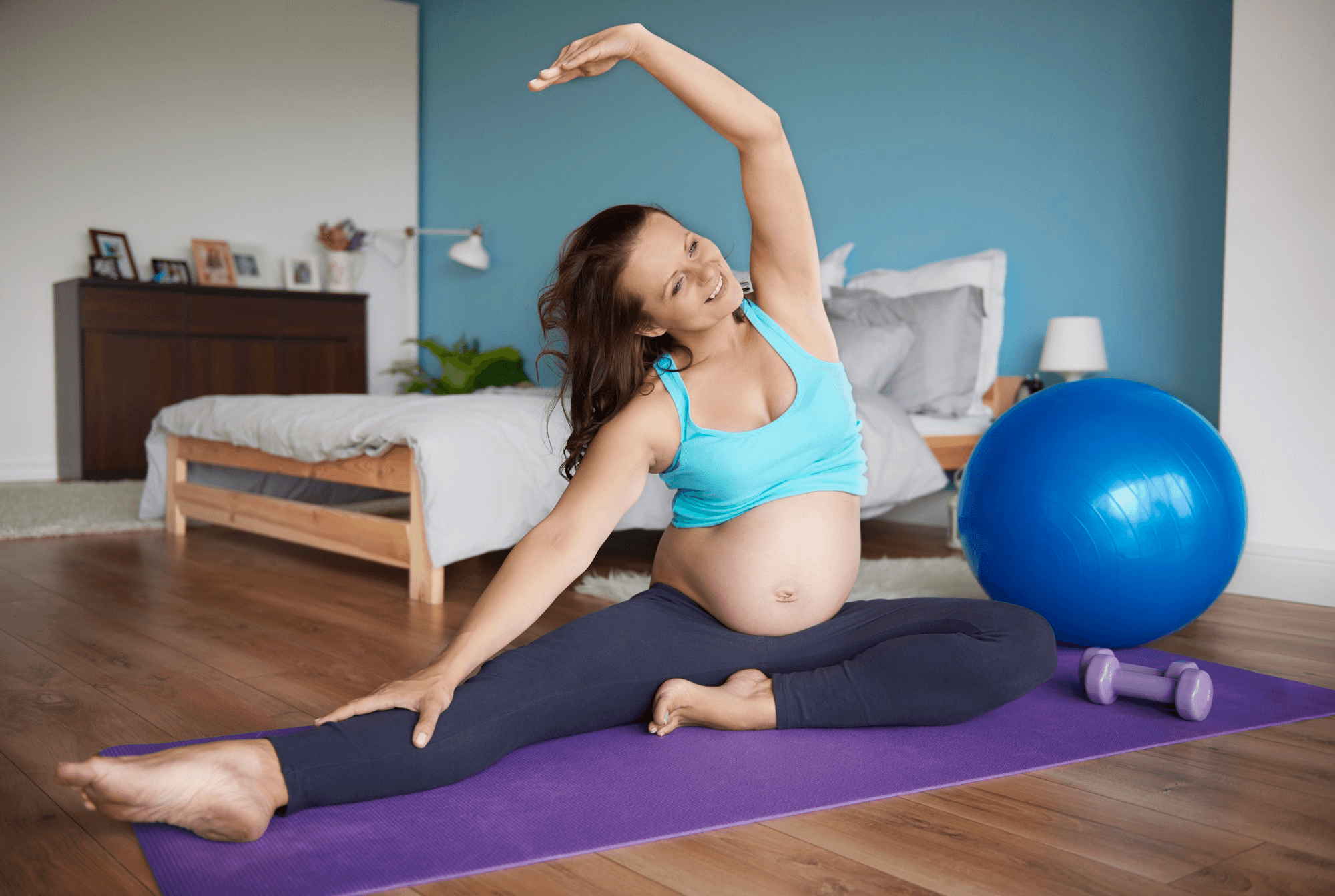
Pregnant woman exercising on a yoga mat with an exercise ball and dumbbells beside her, with a happy expression.
5. Heat
A warm water bottle or heating pad on the lower abdomen provides direct muscle relaxation and reduces the cramping that compounds the bloating discomfort. This is a comfort measure rather than something that addresses the fluid mechanism, but it is genuinely helpful for the physical discomfort.
6. Jeera (Cumin) Water
A traditional Indian remedy that has genuine evidence behind it. Cumin has carminative (gas-reducing) properties — boiling jeera in water and drinking it warm helps with the digestive gas component of period bloating. It is safe, inexpensive, and available in every Indian kitchen.
Similarly, ajwain (carom seeds) in warm water, saunf (fennel) tea, and ginger chai (adrak chai) all have mild carminative effects that help with the digestive component.
7. Magnesium
Magnesium supplementation has modest evidence for reducing premenstrual water retention and mood symptoms. Sources in the Indian diet: bananas, dark chocolate (in small amounts), nuts and seeds, whole grains, coconut water. Supplementation (200 to 400 mg daily) is generally safe for most women — discuss with your doctor before starting.
8. Vitamin B6
Vitamin B6 (pyridoxine) has some evidence for reducing premenstrual bloating and fluid retention. Sources: bananas, chickpeas, potato, sunflower seeds, fortified cereals.
Medications When Lifestyle Is Not Enough
For women with severe premenstrual bloating that significantly affects quality of life
NSAIDs (mefenamic acid, ibuprofen): Primarily for pain, but by reducing prostaglandins they also reduce the inflammatory component of bloating.
Diuretics: A short course of a diuretic prescribed by your doctor in the premenstrual week can address the fluid retention directly in women with severe symptoms. Not a self-managed strategy — requires medical guidance.
Combined oral contraceptive pill: Regulates the hormonal cycle and significantly reduces premenstrual symptoms including bloating in many women.
GnRH analogues / hormonal management: For women with severe PMS or PMDD where bloating is part of a broader picture — specialist management is appropriate.
When Bloating Is Not Just Period Bloating
Period bloating follows a predictable hormonal cycle — it begins before the period and resolves once bleeding starts. Bloating that does not follow this pattern deserves evaluation:\
- Persistent bloating throughout the month (not just premenstrually) — possible digestive causes including IBS, coeliac disease, or ovarian pathology
- Severe bloating with significant pain — possible endometriosis ("endo belly"), ovarian cysts, or adenomyosis
- Bloating with early satiety, urinary urgency, or visible abdominal distension — should be evaluated for ovarian pathology including ovarian cancer (see the gynaecological cancer warning signs blog)
The test is timing. True period bloating reliably improves within the first 1 to 2 days of menstruation. If it does not, the cause needs proper investigation.
Gynaecological Care in Noida and Greater Noida
Dr. Shachi Singh at Prakash Hospital, Sector 33, Noida, provides assessment and management of premenstrual symptoms — including bloating, pain, and mood changes — for women across Noida and Greater Noida. When period symptoms are significantly affecting quality of life, a proper gynaecological evaluation identifies whether an underlying condition (endometriosis, PCOS, adenomyosis) is contributing.
To book a consultation with Dr. Shachi Singh, call: +91 97023 46853
Clinic Hours: Monday to Saturday, 9 AM – 6 PM | Sunday, 10 AM – 2 PM
Clinic Address: D-12A, 12B, Sector-33, G.B. Nagar, Noida, Uttar Pradesh 201301
Frequently Asked Questions
1. Why do I gain weight before my period?
The weight gain is primarily water retention from hormonal fluid regulation changes in the premenstrual phase. It is not fat gain — it is fluid accumulation in tissues. This is why it appears quickly (in days) and resolves quickly once menstruation begins. The typical premenstrual water weight gain is 0.5 to 2 kg.
2. How long does period bloating last?
It typically begins 5 to 7 days before menstruation and peaks in the day or two before bleeding starts. It usually resolves within the first 1 to 2 days of the period. Some women experience it for only 2 to 3 days; those with significant PMS may feel it for up to 2 weeks.
3. Does period bloating get worse with age?
It can — particularly as women approach perimenopause and oestrogen fluctuations become less predictable. Women with conditions like endometriosis or adenomyosis may notice worsening bloating over years as the underlying condition progresses.
4. Can I use antacids or digestive medicines for period bloating?
Antacids address stomach acidity and are not particularly useful for period bloating, which is driven by fluid retention and intestinal gas from hormonal bowel slowing. Carminative remedies (jeera water, ajwain, saunf tea) help the gas component. Reducing sodium helps the fluid component. Neither antacids nor digestive enzymes address the underlying hormonal mechanism.
This blog is written for educational and informational purposes only. Please consult Dr. Shachi Singh or a qualified gynaecologist for assessment specific to your symptoms.