Adult Acne in Women: When It's Hormonal and What a Gynaecologist Can Do
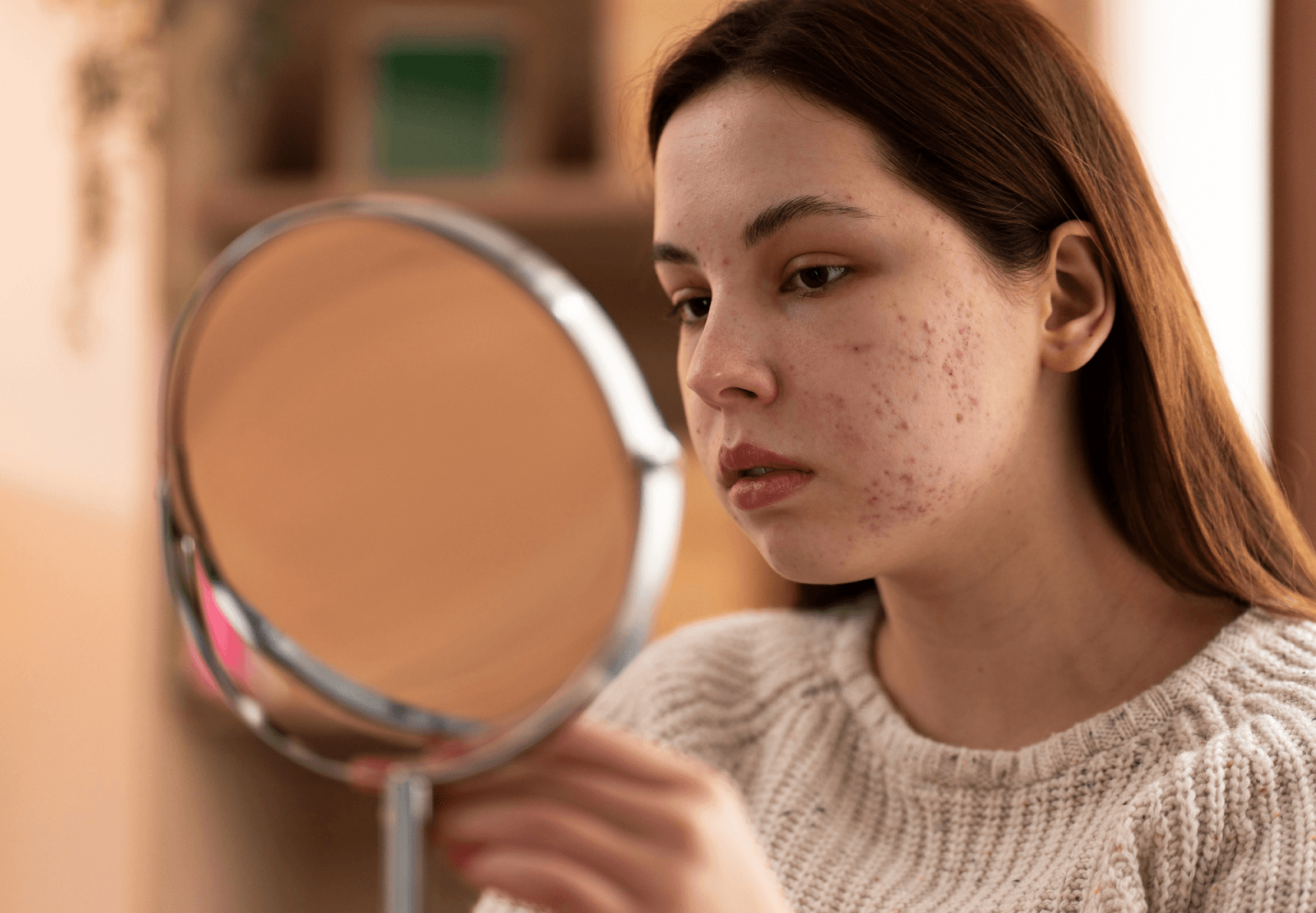
Woman with acne looking in the mirror with a somber facial expression.
Acne in adult women — particularly when it is persistent, cyclical (worse premenstrually), or concentrated on the lower face, jaw, and chin — has a strong hormonal component that standard dermatological acne treatments often fail to adequately address. Understanding the gynaecological dimension of adult female acne opens a different and often more effective treatment pathway.
Dr. Shachi Singh, consultant gynaecologist at Prakash Hospital, Sector 33, Noida, explains.
What Makes Adult Female Acne Different from Teenage Acne
Teenage acne is driven by the generalised surge in sex hormones at puberty — it affects the forehead, nose, and cheeks, and typically improves after the mid-20s. Adult female acne is different in distribution (lower face, jawline, chin, neck), timing (cyclical, worse in the week before menstruation), and persistence (does not "grow out" without addressing the hormonal driver).
The hormonal trigger is androgen — testosterone and DHT stimulating sebaceous (oil) gland activity in androgen-sensitive skin areas. The lower face is the most androgen-sensitive facial skin zone in women — which explains the characteristic distribution of hormonal acne.
Hormonal Causes of Adult Female Acne
PCOS: The most common cause of severe adult hormonal acne in women. Elevated androgens from PCOS overstimulate sebaceous glands, producing excess sebum. This feeds the acne bacterium Cutibacterium acnes and drives inflammatory acne lesions.
Premenstrual acne (cyclical acne): In many women without PCOS, acne worsens specifically in the 1 to 2 weeks before menstruation. The mechanism involves: rising progesterone increasing sebum production in the luteal phase, a relative drop in oestrogen premenstrually (oestrogen counters androgen action on the skin), and prostaglandin-driven inflammation. These are androgenic-sensitive responses that can be managed hormonally.
Insulin resistance: Elevated insulin stimulates both androgen production and IGF-1 (insulin-like growth factor 1) — both of which directly increase sebum production. This is why dietary interventions reducing insulin spikes improve hormonal acne.
Stopping the OCP: Many women who were on the combined pill find that acne appears or worsens after stopping — because the pill was suppressing androgen-driven acne (and this suppression is removed when it is stopped).
Investigation
When adult female acne has a hormonal pattern, relevant blood tests include: testosterone (total and free), DHEAS (elevated suggests adrenal androgen excess), fasting insulin and glucose (insulin resistance assessment), prolactin, LH:FSH ratio, and pelvic ultrasound for PCOS assessment.
Gynaecological Treatment Options for Hormonal Acne
Combined oral contraceptive pill: Suppresses androgen production by the ovaries, increases SHBG (binding free testosterone), and reduces sebum production. All combined OCPs have some anti-androgenic benefit; those with anti-androgenic progestins (cyproterone acetate — Diane-35, drospirenone — Yasmin/Yaz) have the most pronounced effect on acne. Typically 3 to 6 months of consistent use before the full acne benefit is apparent.
Anti-androgens (spironolactone): Low to moderate dose spironolactone (25 to 100 mg daily) is highly effective for hormonal acne — reducing sebum production by directly blocking androgen receptors at the skin level. Effective for women who cannot use OCPs or want an additional treatment. Requires contraception (teratogenic). A very well-tolerated treatment for hormonally driven acne.
Metformin: For women with PCOS and insulin resistance, Metformin reduces insulin and therefore reduces IGF-1 and androgen-driven sebum production. Improvement in acne takes 3 to 6 months.
Inositol supplements: Myo-inositol and D-chiro-inositol reduce insulin resistance and androgen levels in PCOS — producing documented improvement in acne as a secondary benefit.
These gynaecological treatments address the underlying driver of the acne rather than just treating the skin surface, and often produce more durable results than antibiotics or topical treatments alone in women with genuine hormonal acne.
Gynaecological Care in Noida and Greater Noida
Dr. Shachi Singh at Prakash Hospital, Sector 33, Noida, investigates and manages hormonal acne for women across Noida and Greater Noida.
To book a consultation with Dr. Shachi Singh, call: +91 97023 46853
This blog is for informational purposes only.