Hair Loss in Women: The Hormonal and Gynaecological Causes Behind Excessive Hair Fall
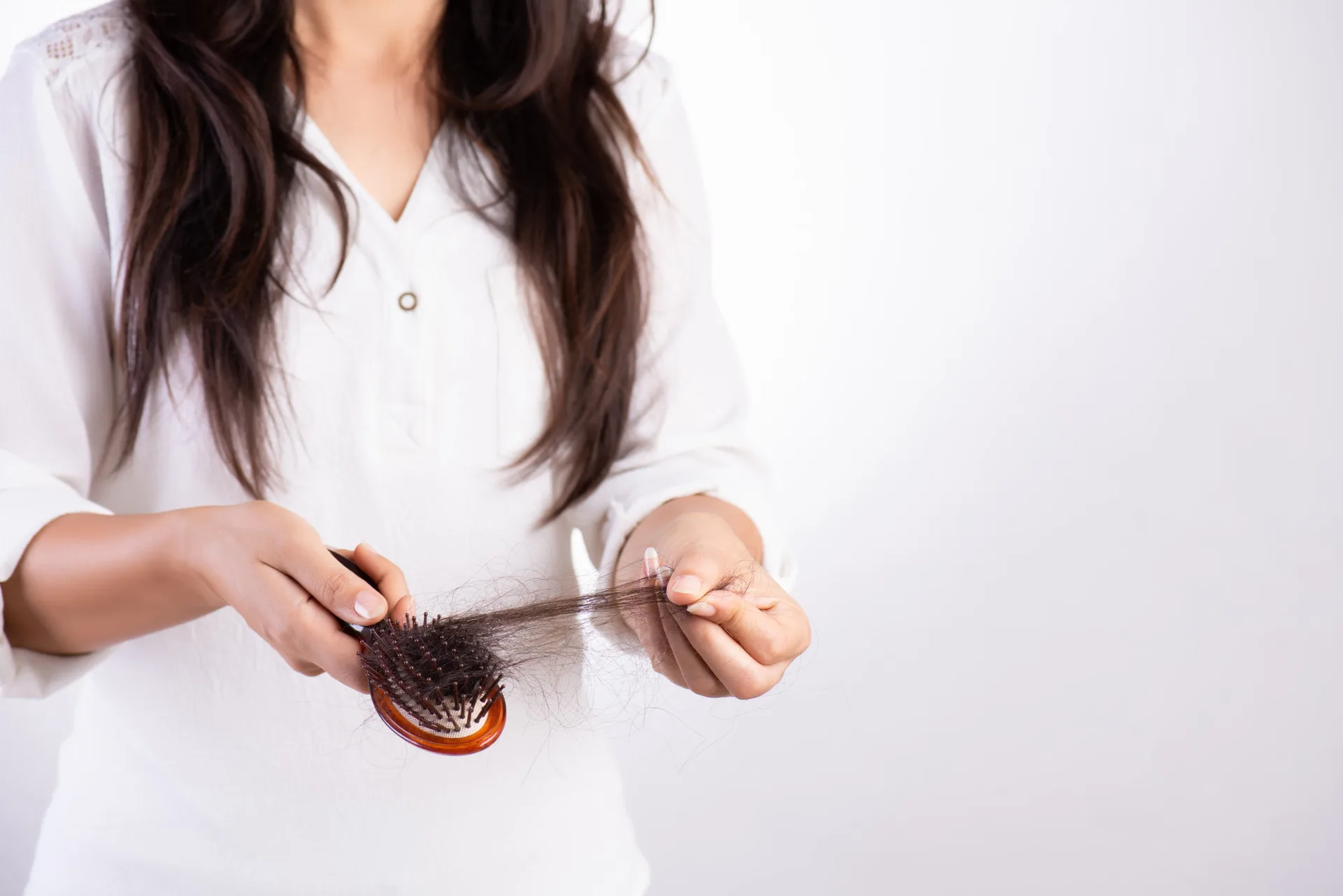
Excessive hair loss visible on comb, sign of postpartum hair shedding
Hair fall in Indian women is one of the most common complaints in gynaecology clinics — and one of the most emotionally distressing. Watching hair thin on the temples, the parting widening, or more hair than usual on the pillow and in the shower drain produces real anxiety. What is often not explained is that female hair loss is usually not primarily a "hair problem" — it is a systemic signal, and identifying the cause determines the treatment.
Dr. Shachi Singh, consultant gynaecologist at Prakash Hospital, Sector 33, Noida, explains the hormonal and gynaecological causes.
Understanding the Hair Growth Cycle
Hair follicles cycle through three phases:
- Anagen (growth): 2 to 7 years — the follicle is actively growing hair
- Catagen (transition): 2 to 3 weeks — growth stops, follicle involutes
- Telogen (resting and shedding): 2 to 3 months — the hair is shed and the follicle prepares for the next anagen phase
At any given time, approximately 85 to 90% of hairs are in anagen and 10 to 15% in telogen. Normal shedding is 50 to 100 hairs daily. Hair loss becomes clinically significant when more hairs than normal shift into the telogen phase simultaneously (telogen effluvium) or when the anagen phase shortens progressively (androgenic alopecia).
Telogen Effluvium: The Shedding Surge
Telogen effluvium is the most common cause of acute hair shedding in women. A significant physiological or hormonal stress causes a large number of follicles to simultaneously shift from anagen to telogen — and 2 to 3 months later, the telogen hairs shed in large numbers.
Common triggers:
Post-pregnancy (postpartum telogen effluvium): During pregnancy, elevated oestrogen prolongs the anagen phase — many women notice thicker, richer hair in pregnancy. After delivery, oestrogen falls sharply, and the follicles that were held in extended anagen transition to telogen simultaneously. Two to four months postpartum, significant shedding begins. This is normal, almost universal, and self-resolving — hair returns to the pre-pregnancy pattern by 12 to 18 months postpartum. No treatment is needed except reassurance (and addressing any associated iron or thyroid deficiency).
Post-illness, post-surgery, significant physical stress: Any major physiological stressor 2 to 3 months before a shedding episode.
Crash dieting / severe caloric restriction: Protein deficiency directly impairs hair follicle function — hair is not a priority tissue when nutrition is inadequate.
Emotional stress: Significant psychological stress — though the mechanism is complex and less direct than the physiological triggers.
PCOS: Androgenic Alopecia
In PCOS, elevated androgens — particularly DHT (dihydrotestosterone) produced from testosterone via 5-alpha-reductase — bind to androgen receptors in genetically susceptible follicles and shorten the anagen phase progressively. The follicles miniaturise — producing thinner, shorter hairs with each cycle — until they stop producing visible hair entirely.
The pattern in women is different from the classic "male baldness" pattern. Female androgenic alopecia typically produces:
- Thinning of the central scalp — the parting becomes wider
- Diffuse thinning at the crown
- Relative preservation of the frontal hairline (unlike men)
- Sometimes recession at the temples
PCOS-related hair loss is gradual and worsens over years without treatment. Addressing the underlying androgen excess is essential:
- Anti-androgens: spironolactone, cyproterone acetate — reduce androgen action at the follicle
- Combined OCP with anti-androgenic progestin component (e.g., Diane-35 / ethinylestradiol-cyproterone)
- Minoxidil (topical or oral) — increases anagen duration; used alongside hormonal treatment
Thyroid Disease: Both Hypothyroidism and Hyperthyroidism
Thyroid hormones regulate the hair growth cycle. Both hypothyroidism and hyperthyroidism cause diffuse hair thinning — though through different mechanisms.
Hypothyroidism: Slows the hair growth cycle. Hairs spend less time in anagen and more in telogen. Hair becomes coarse, dry, and slow-growing before significant shedding begins.
Hyperthyroidism: Hair loss is also diffuse, but hair may be fine and straight rather than coarse. Also associated with telogen effluvium.
Both conditions are treated by correcting the thyroid abnormality — hair recovers over 6 to 12 months after thyroid function normalises. Thyroid testing (TSH at minimum) should be done in every woman presenting with hair loss.
Iron Deficiency
Iron is essential for DNA synthesis in the rapidly dividing cells of hair follicles. Iron deficiency — even before frank anaemia — significantly impairs hair growth and increases shedding. Women with heavy periods, vegetarian diets, or recurrent pregnancies are particularly vulnerable.
Ferritin below 30 ng/mL is associated with hair loss — even if haemoglobin is normal. Correcting ferritin to above 70 ng/mL is typically needed before hair improvement is seen (improvement lags iron correction by 3 to 6 months).
Other Hormonal Causes
Perimenopausal hormone changes: The gradual decline of oestrogen in the years around menopause changes the oestrogen-to-androgen ratio — relatively higher androgen exposure produces androgenic alopecia in genetically susceptible women.
Hyperprolactinaemia: Elevated prolactin (from a pituitary microadenoma or medications) causes hair loss through androgen-related mechanisms.
Polycystic ovaries with adrenal androgen excess (elevated DHEA-S): Some women with hyperandrogenism have a primarily adrenal source of excess androgens — contributing to hair loss.
What Investigation Is Needed
For a woman presenting with significant hair loss, the initial assessment includes:
- Full blood count (FBC)
- Ferritin
- Thyroid function (TSH, free T4)
- Hormonal panel: LH, FSH, oestradiol, testosterone (total and free), DHEA-S, prolactin
- Pelvic ultrasound if PCOS is suspected
- Scalp examination (to assess the pattern and rule out scarring alopecia)
Gynaecological Care in Noida and Greater Noida
Dr. Shachi Singh at Prakash Hospital, Sector 33, Noida, investigates hormonal causes of female hair loss as part of comprehensive women's health management for women across Noida and Greater Noida.
To book a consultation, call: +91 97023 46853
Clinic Hours: Monday to Saturday, 9 AM – 6 PM | Sunday, 10 AM – 2 PM
Address: D-12A, 12B, Sector-33, G.B. Nagar, Noida, UP 201301
This blog is for educational purposes only.