Hair Loss in Women: The Hormonal Causes and What to Do About Them
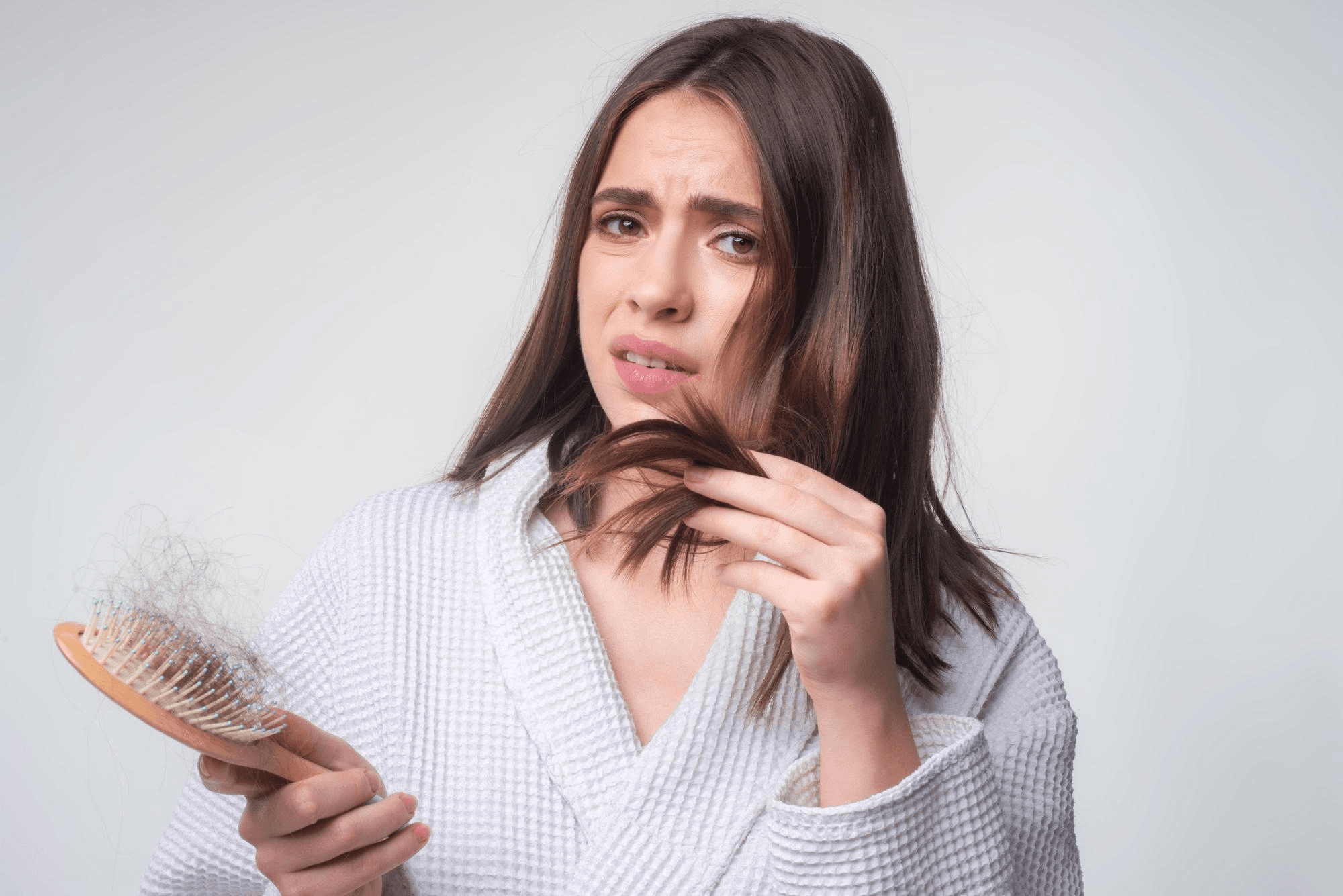
Woman examining strands of hair and hairbrush showing hair loss.
Female hair loss is significantly more common than most women realise — and significantly more distressing than most clinicians appreciate. Unlike male pattern baldness, which is culturally visible and accepted, female hair loss is concealed, shameful, and frequently dismissed. "It will grow back" or "it's stress" are common clinical responses that leave the underlying hormonal cause unaddressed for years.
Several hormonal conditions directly cause or contribute to hair loss in women. Identifying which is causing it is the first step to treating it effectively.
Dr. Shachi Singh, consultant gynaecologist at Prakash Hospital, Sector 33, Noida, explains.
Understanding Female Hair Loss Patterns
Female pattern hair loss (FPHL) / androgenetic alopecia: The most common cause of progressive hair thinning in women. Hair thins diffusely over the crown and top of the scalp, with the frontal hairline typically maintained (unlike male pattern baldness). Androgen-sensitive hair follicles miniaturise progressively. In women, this is driven by a combination of genetic susceptibility and androgen levels — elevated androgens (from PCOS, for example) accelerate the process.
Diffuse telogen effluvium: A sudden increase in hair shedding — noticed as hair loss in the shower, on the pillow, and in the comb — occurring 2 to 4 months after a trigger event. The trigger causes an abnormally high proportion of hairs to enter the resting (telogen) phase simultaneously, with mass shedding occurring when the new growth cycle restarts. Common triggers: childbirth, severe illness, surgery, crash dieting, nutritional deficiency, thyroid dysfunction, starting or stopping hormonal contraception.
Hormonal Causes of Hair Loss in Women
PCOS and elevated androgens: Androgens shorten the hair growth cycle and miniaturise androgen-sensitive follicles. Women with PCOS may have FPHL pattern thinning and/or diffuse thinning from the same mechanism as hirsutism — both driven by elevated DHT acting on scalp follicles. Paradoxically: while androgens cause excess hair in androgen-dependent skin areas (face, body), they reduce hair in the scalp.
Thyroid disorders: Both hypothyroidism and hyperthyroidism cause diffuse hair shedding (telogen effluvium pattern). Hypothyroidism additionally causes hair to become dry, coarse, and brittle. Thyroid-related hair loss reverses with normalisation of thyroid levels — but can take 6 to 12 months to fully recover.
Iron deficiency: The most overlooked cause of hair loss in Indian women. Ferritin (stored iron) is the key measure — not just haemoglobin. Hair follicles are highly metabolically active and among the first to be affected by suboptimal iron stores. A ferritin below 30 to 40 ng/mL is significantly associated with hair shedding even when haemoglobin is normal. Iron supplementation in deficient women consistently produces meaningful improvement in hair loss.
Postpartum hair loss (postpartum telogen effluvium): Extremely common — affecting approximately 50% of women, typically starting 3 to 4 months after delivery and peaking at 4 to 6 months. During pregnancy, elevated oestrogen keeps hairs in the growth phase; after delivery, oestrogen drops precipitously and all those retained hairs enter telogen simultaneously. The result is dramatic shedding — alarming but self-limiting. Hair returns to baseline by 12 months in most women.
Starting or stopping the OCP: Hormonal contraceptives containing anti-androgenic progestins can improve FPHL; those with androgenic progestins (levonorgestrel) can worsen it. Stopping the OCP can trigger a transient telogen effluvium (the hormonal shift triggers mass telogen entry), typically lasting 3 to 6 months.
Investigation
Blood tests for hair loss in women: TSH (thyroid), ferritin (not just haemoglobin), full blood count, serum iron, vitamin B12, folic acid, zinc, testosterone, DHEAS, prolactin, fasting glucose. Pelvic ultrasound if PCOS is suspected.
Treatment
Treatment is cause-specific:
- Iron deficiency: iron supplementation to normalise ferritin above 40 to 70 ng/mL
- Thyroid disorder: treat the thyroid condition
- PCOS-related: anti-androgen treatment (OCP with anti-androgenic progestin, spironolactone), Metformin if insulin resistance is contributing
- FPHL: Minoxidil topical solution (2% for women) — the most evidence-based topical treatment for female pattern loss. Requires consistent use; results evident at 4 to 6 months
- Nutritional deficiency: address the specific deficiency
Gynaecological Care in Noida and Greater Noida
Dr. Shachi Singh at Prakash Hospital, Sector 33, Noida, investigates and manages hormonal causes of hair loss in women across Noida and Greater Noida.
To book a consultation with Dr. Shachi Singh, call: +91 97023 46853
This blog is for informational purposes only.