Baby Gender Prediction: Which Old Wives' Tales Are True and Which Are Myths
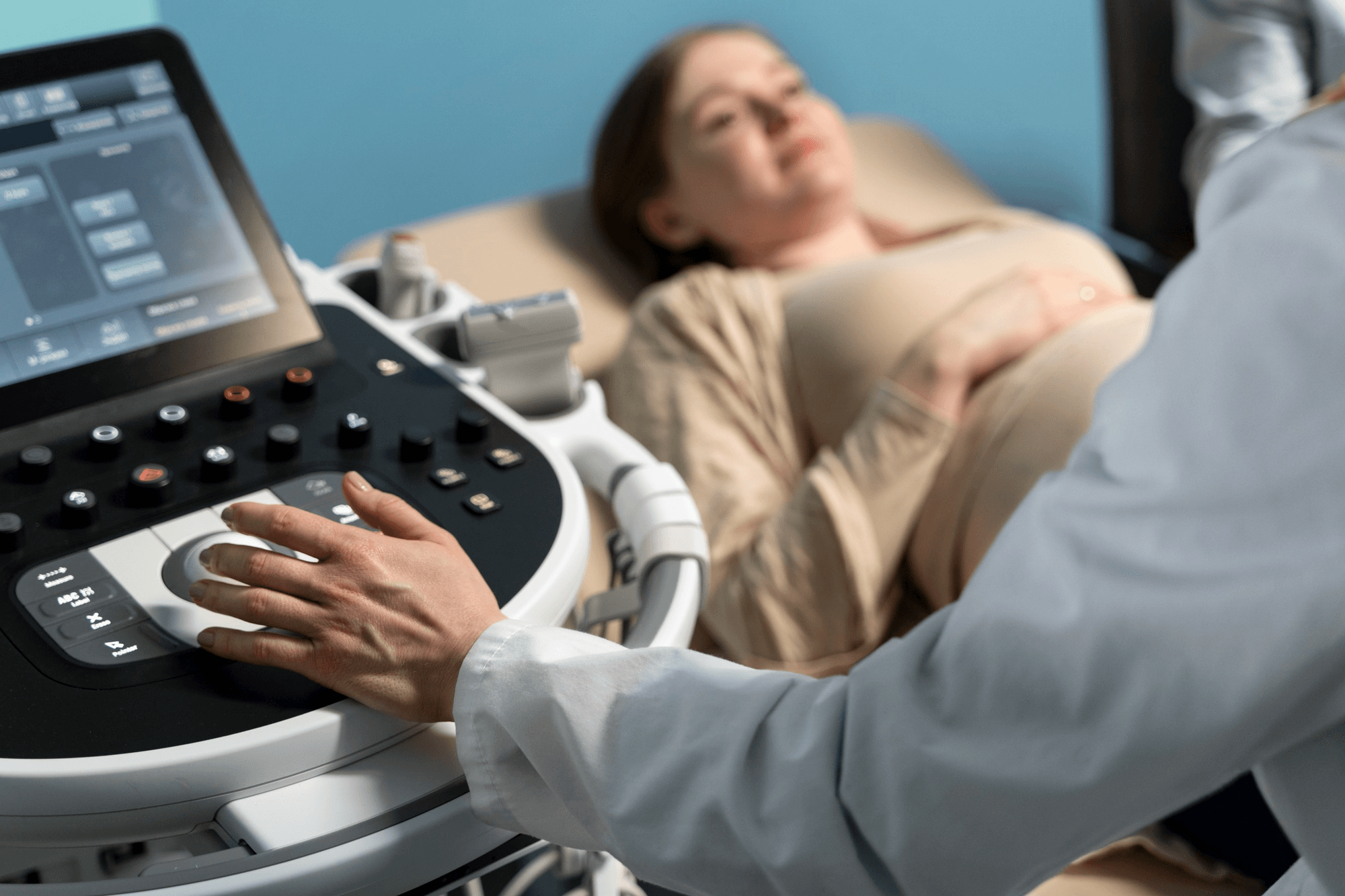
A doctor uses an ultrasound machine to examine a pregnant patient during a first-trimester check-up.
Every pregnant woman in India encounters them — the relatives who study her belly shape, the neighbour who asks whether she is craving sweet or salty food, the grandmother who checks whether she is carrying high or low. Everyone has a theory. Everyone is confident.
Gender prediction by observation is one of the most ancient and most universal of human pregnancy traditions. It also has a 50% success rate — which is roughly what you would get by flipping a coin.
Dr. Shachi Singh, consultant obstetrician at Prakash Hospital, Sector 33, Noida, goes through the most common Indian gender prediction beliefs, explains what the science actually says, and clarifies when and how fetal sex can actually be determined.
First: Why Gender Prediction Myths Persist
The human mind is exceptionally good at finding patterns and remembering confirmations. When someone predicts "it's a boy" and a boy is born, the prediction is remembered and the theory is reinforced. When the prediction is wrong, it is forgotten or attributed to unusual circumstances. With a 50-50 baseline probability, any prediction method will be "right" half the time — and that is enough to keep the belief alive across generations.
The Most Common Indian Gender Prediction Beliefs — and the Evidence
1. "Carrying high means a girl, carrying low means a boy" (and vice versa — the claim varies by region)
Verdict: Myth. The shape and position of a pregnant belly is determined by the mother's abdominal muscle tone, the position of the baby (whether the baby is anterior or posterior, and the presenting part), the amount of amniotic fluid, the mother's body type, and the number of previous pregnancies — all of which have nothing to do with fetal sex. First-time mothers with tight abdominal muscles tend to carry higher. Women who have had several children tend to carry lower. The baby's sex does not determine any of this.
2. "Round belly means a girl, pointed belly means a boy"
Verdict: Myth. Belly shape is determined by the same factors listed above — muscle tone, baby's position, body type. There is no biologically plausible mechanism by which fetal sex would determine whether the belly is round or pointed. Studies that have examined this claim have consistently found it performs at chance level.
3. "More morning sickness means a girl"
Verdict: Partially supported — but weak and unreliable. This is one of the oldest and most studied of the gender prediction beliefs, and unusually for this category, there is some biological basis to explore.
Girls produce slightly higher levels of hCG (the pregnancy hormone) in early pregnancy. Severe nausea (hyperemesis gravidarum) is statistically more common in female pregnancies than male, and several studies have found a modest association between the severity of morning sickness and female fetal sex. However — this association is statistical, not deterministic. Many women with severe nausea are carrying boys. Many women carrying girls have very little nausea. The correlation is too weak to be a reliable predictor for any individual.
4. "Craving sweet food means a girl, craving salty or savoury food means a boy"
Verdict: Myth. Food cravings in pregnancy are driven by nutritional needs, hormonal effects on taste perception, and individual palatability changes — none of which correlate with fetal sex in any study that has tested this. The belief exists across many cultures (with the specific foods varying by culture) and consistently fails when studied.
5. "Fetal heart rate above 140 bpm means a girl, below 140 means a boy"
Verdict: Myth. Normal fetal heart rate is 110 to 160 bpm throughout most of pregnancy, with variation related to fetal activity and gestational age — not fetal sex. Multiple studies have examined the fetal heart rate-sex relationship and found no significant correlation. This one has been thoroughly tested and consistently disproved.
6. "Skin glowing and hair growing faster means a boy, skin getting worse and dull means a girl"
Verdict: Myth. Skin and hair changes in pregnancy are driven by oestrogen, progesterone, and other hormonal changes — all of which occur in every pregnancy regardless of fetal sex. There is no biological mechanism by which a female fetus would cause worse maternal skin than a male fetus.
7. "The Chinese Gender Calendar"
Verdict: No better than chance. The Chinese gender prediction chart correlates the mother's age and the month of conception to predict fetal sex. When subjected to rigorous scientific testing, it performs at approximately 50% accuracy — exactly what random chance would produce.
8. "Linea nigra extending above the navel means a boy"
Verdict: Myth. The linea nigra's length and darkness are determined by the same hormonal factors that produce it in every pregnancy — the extent has no correlation with fetal sex.
9. "Ring on a string swinging in circles means a girl, back and forth means a boy" (or vice versa)
Verdict: Myth. The pendulum test produces results driven by ideomotor movement — unconscious micro-movements of the hand. It has been studied and performs at exactly chance level.
What Actually Determines Fetal Sex
Fetal sex is determined at the moment of fertilisation. Every egg from the mother carries an X chromosome. Sperm from the father carry either an X chromosome (producing a girl — XX) or a Y chromosome (producing a boy — XY). Whether an X-bearing or Y-bearing sperm reaches and fertilises the egg determines whether the baby is chromosomally female or male. Nothing that happens after conception changes this.
How and When Fetal Sex Can Actually Be Determined

Smiling pregnant woman holding ultrasound photos as she relaxes on a couch in her living room.
1. Ultrasound
The most reliable non-invasive method for determining fetal sex after the first trimester.
- 11 to 13 weeks: An experienced sonographer can make a tentative assessment based on the angle of the genital tubercle (the structure that becomes either the penis or clitoris), but accuracy at this stage is approximately 70 to 75% — better than chance but far from definitive.
- 18 to 20 weeks: The standard anatomy scan. With a cooperative baby in a good position, an experienced sonographer can identify the sex with approximately 95% accuracy.
- After 20 weeks: With increasing baby size and clearer genital anatomy, accuracy approaches 99% when the baby's position allows visualisation.
Important note: In India, determination and disclosure of fetal sex by any means is prohibited by the Pre-Conception and Pre-Natal Diagnostic Techniques (PC-PNDT) Act, 1994. This law exists to prevent sex-selective abortion. Registered ultrasound facilities in India do not disclose fetal sex, and asking healthcare providers to do so is not appropriate.
2. NIPT (Non-Invasive Prenatal Testing)
From 10 weeks of pregnancy, NIPT analyses cell-free fetal DNA in maternal blood and can determine fetal sex as part of chromosomal screening. The sex chromosome information (whether the fetus has XX or XY chromosomes) is reported as part of the chromosomal profile. NIPT is primarily a chromosomal abnormality screening test — fetal sex determination is a secondary result.
3. Amniocentesis and CVS
Diagnostic procedures that examine fetal chromosomes directly — done for medical indications, not for sex determination.
A Note on Sex-Selective Practices
India's PC-PNDT Act and its enforcement reflect the serious issue of female foeticide — the termination of pregnancies specifically because the fetus is female. This remains a significant problem in parts of India. Any medical professional who determines and discloses fetal sex for non-medical reasons — or who performs sex-selective termination — is acting illegally and unethically. Dr. Shachi Singh strictly adheres to PC-PNDT Act requirements.
Antenatal Care in Noida and Greater Noida
Dr. Shachi Singh at Prakash Hospital, Sector 33, Noida, provides comprehensive, ethical antenatal care for women across Noida and Greater Noida.
To book a consultation with Dr. Shachi Singh, call: +91 97023 46853
Clinic Hours: Monday to Saturday, 9 AM – 6 PM | Sunday, 10 AM – 2 PM
Clinic Address: D-12A, 12B, Sector-33, G.B. Nagar, Noida, Uttar Pradesh 201301
Frequently Asked Questions
1. Is there any reliable way to predict a baby's sex before the anatomy scan?
No non-invasive method before the mid-trimester anatomy scan is reliably accurate. The old wives' tales perform at approximately chance level (50%). NIPT from 10 weeks can identify the sex chromosomes as part of chromosomal screening. Ultrasound at 18 to 20 weeks by an experienced sonographer is the most reliable standard method.
2. Does fetal heart rate indicate the baby's sex?
No. This is one of the most studied and consistently disproved gender prediction beliefs. Normal fetal heart rate varies with gestational age and fetal activity — not fetal sex.
3. Is severe morning sickness a sign of a girl?
There is a weak statistical association between severe nausea (hyperemesis gravidarum) and female fetal sex — based on slightly higher hCG levels in female pregnancies. However, the association is too weak to be a reliable predictor for any individual pregnancy. Many women with severe nausea are carrying boys.
This blog is written for educational and informational purposes only. Fetal sex determination and disclosure are regulated under the PC-PNDT Act in India. Please consult Dr. Shachi Singh for comprehensive antenatal care.