Pregnancy Cramps vs Labour Contractions: How to Tell the Difference

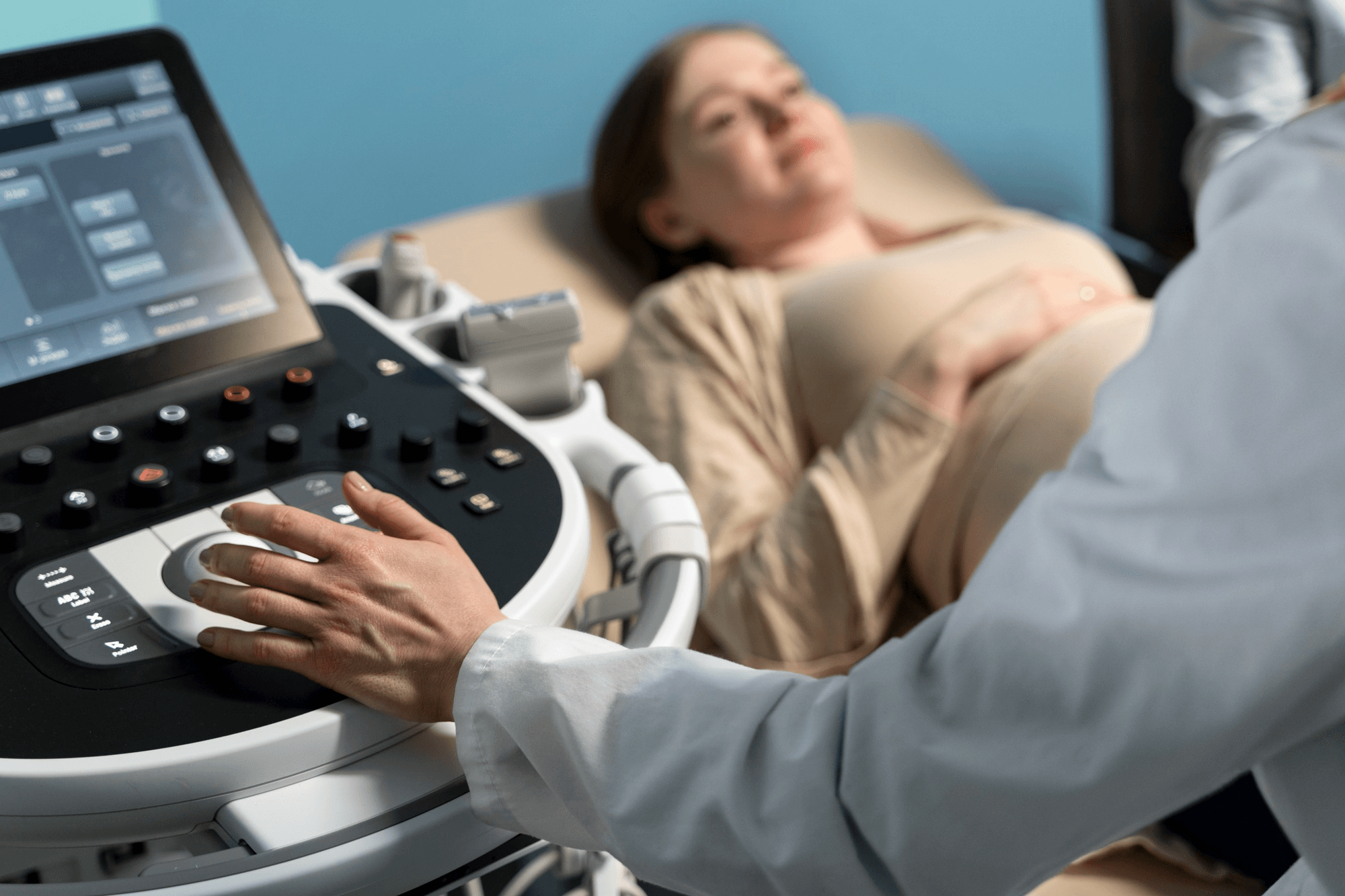
Doctor inspecting a pregnant patient in a clinic room during a checkup.
Few questions generate more anxiety in late pregnancy than this one: is this the real thing, or not? Pregnancy produces a variety of cramps, tightenings, and aches — many of which are completely normal and unrelated to labour. But some require prompt attention. Knowing the difference prevents both unnecessary panic and dangerous delay.
Dr. Shachi Singh, consultant obstetrician at Prakash Hospital, Sector 33, Noida, explains the types of cramps and tightening that occur in pregnancy, how to distinguish them from true labour, and exactly when to go to the maternity unit.
Types of Pregnancy Cramps and Tightening
1. Braxton Hicks Contractions
Braxton Hicks are the most common source of confusion. They are painless or mildly uncomfortable uterine tightenings that occur from as early as 6 to 7 weeks (though most women don't feel them until the second trimester) and become more frequent toward term.
How they feel: A hardening or tightening of the whole uterus — you may see and feel the abdomen become very firm for 30 to 60 seconds and then relax. Usually painless, or only mildly uncomfortable. Not associated with low back pain.
Pattern: Irregular. No predictable interval. They do not progressively intensify. They often stop when you change position, walk around, rest, or drink water.
Triggers: Dehydration, physical activity, a full bladder, sexual intercourse, stress.
What to do: Drink water, change position, rest. They should ease. If they don't — or if they become regular and increasing in intensity — contact your obstetrician.
2. Round Ligament Pain
The round ligaments support the uterus and stretch as it grows. Rapid movement — turning over in bed, getting up quickly, sneezing, coughing — can cause a sudden sharp, stabbing or pulling pain in the lower abdomen or groin, typically on one side.
How it feels: Sharp, stabbing, brief — lasting seconds. Not a sustained cramp.
Pattern: Triggered by movement. Resolves quickly. Not repetitive without trigger.
What to do: Move more slowly. Not a concern.
3. Growing Pains / Stretching
A dull, generalised achiness in the lower abdomen from the uterus and surrounding structures stretching and growing. More common in the first and early second trimester. Not concerning.
4. Gas and Constipation Cramps
Progesterone slows bowel motility throughout pregnancy. Gas accumulation and constipation cause cramping that can be mistaken for uterine contractions. Typically colicky — coming and going in relation to bowel function.
5. Urinary Tract Infection
UTI in pregnancy can cause lower abdominal pain and cramping that mimics contractions, alongside the urinary symptoms (burning, urgency, frequency). If lower abdominal pain is present with urinary symptoms — particularly fever — UTI needs assessment and treatment urgently.
6. Preterm Contractions (Before 37 Weeks)
Any regular uterine tightening before 37 weeks of pregnancy deserves prompt evaluation. Preterm labour is contractions that cause cervical change — dilation or effacement — before 37 weeks.
When to go immediately (before 37 weeks):
- Regular contractions (every 5 to 10 minutes) lasting at least 30 to 60 seconds each
- Lower back pain that comes and goes in a regular pattern
- Pelvic pressure — a feeling that the baby is pushing down
- Fluid from the vagina (possible membrane rupture)
- Vaginal bleeding
Preterm labour can sometimes be slowed or stopped with medication (tocolytics) if caught early. Steroids (betamethasone) can be given to accelerate fetal lung maturity if delivery before 34 weeks is likely. Time matters — go immediately.
True Labour Contractions: What They Feel Like
True labour contractions are different from all of the above in several ways:
1. Pain
Real contractions are painful — not just tightening. The pain is felt in the lower abdomen and often also in the lower back. The classic description is that the pain is like a very strong menstrual cramp that builds to a peak and then eases.
2. Regular pattern
Labour contractions become progressively more regular, more frequent, longer, and stronger. The classic rule for when to go to the maternity unit: contractions every 5 minutes, lasting 60 seconds each, for at least 1 hour — the "5-1-1 rule."
3. They do not stop
Unlike Braxton Hicks, true labour contractions do not ease with hydration, change of position, or rest. They continue and intensify regardless.
4. Show
Some women notice the bloody show — a small amount of mucus tinged with blood — as the cervical mucus plug dislodges when the cervix begins to dilate. This is a sign labour is beginning.
5. Membrane rupture
The waters breaking — either a dramatic gush or a steady trickle of clear or slightly yellow fluid. If membranes rupture, go to the maternity unit regardless of whether contractions have started.
When to Go to the Maternity Unit: Clear Guidelines
A woman visiting a doctor after noticing contractions during pregnancy.
Go immediately, regardless of contraction pattern, if:
- Your waters have broken (any fluid from the vagina)
- You have vaginal bleeding more than light spotting
- The baby has stopped moving or is moving much less than usual
- You have severe abdominal pain that does not ease between contractions
- You have fever, chills, or feel systemically very unwell
- You have a severe headache with visual changes (preeclampsia warning)
- You are before 37 weeks and having regular cramps or contractions
Go when contractions are:
- Every 5 minutes, lasting 60 seconds, for 1 hour (first baby)
- Every 10 minutes, lasting 45 seconds, progressively stronger (subsequent baby — second babies often progress faster)
If you are uncertain — call. Your maternity team would always rather receive a call about something that turns out not to be labour than have a woman delay when she is in active labour. There is no such thing as calling too early.
First Baby vs Subsequent Babies
First labours are typically longer — the cervix dilates more slowly, and the first stage of labour takes more time. The 5-1-1 rule (contractions every 5 minutes, 60 seconds, for 1 hour) is appropriate guidance for most first-time mothers.
Women having their second or subsequent baby often have faster labours. The cervix has dilated before, and the second stage can move very quickly once established. For a second baby, do not wait for contractions to reach 5 minutes apart — contact your maternity team when contractions are regular and building in intensity, even if still 8 to 10 minutes apart.
Obstetric Care in Noida and Greater Noida
Dr. Shachi Singh at Prakash Hospital, Sector 33, Noida, provides antenatal care and intrapartum management for women across Noida and Greater Noida. When in doubt about whether you are in labour — call. Do not wait.
To book a consultation with Dr. Shachi Singh, call: +91 97023 46853
Clinic Hours: Monday to Saturday, 9 AM – 6 PM | Sunday, 10 AM – 2 PM
Clinic Address: D-12A, 12B, Sector-33, G.B. Nagar, Noida, Uttar Pradesh 201301
Frequently Asked Questions
1. How do I know if contractions are real labour?
Real labour contractions are painful (not just tight), regular (following a predictable interval that shortens over time), progressively intensifying, and do not stop with rest or hydration. Braxton Hicks are irregular, typically painless, and ease with rest.
2. Should I go to hospital immediately when my waters break?
Yes. Whether or not contractions have started, ruptured membranes should be assessed at the maternity unit promptly. There is a risk of infection and cord prolapse once membranes have ruptured.
3. What is the mucus plug and what does it mean when it comes out?
The mucus plug seals the cervical opening during pregnancy. As the cervix begins to soften and dilate in late pregnancy, the plug comes away — sometimes as a lump of mucus, sometimes mixed with a little blood (the "bloody show"). This signals that labour is approaching — it may begin within hours or within days.
4. I am 37 weeks and having contractions. When should I go?
At 37 weeks you are at term. Follow the 5-1-1 guidance for a first baby (contractions every 5 minutes, lasting 60 seconds, for 1 hour), or contact your maternity team earlier if you are uncertain, have any other concerning symptoms, or this is not your first baby.
This blog is written for educational and informational purposes only. Please consult Dr. Shachi Singh or a qualified obstetrician for guidance specific to your pregnancy and labour situation.