BRCA Gene Mutation: What It Means, What Your Risk Is, and What You Can Do

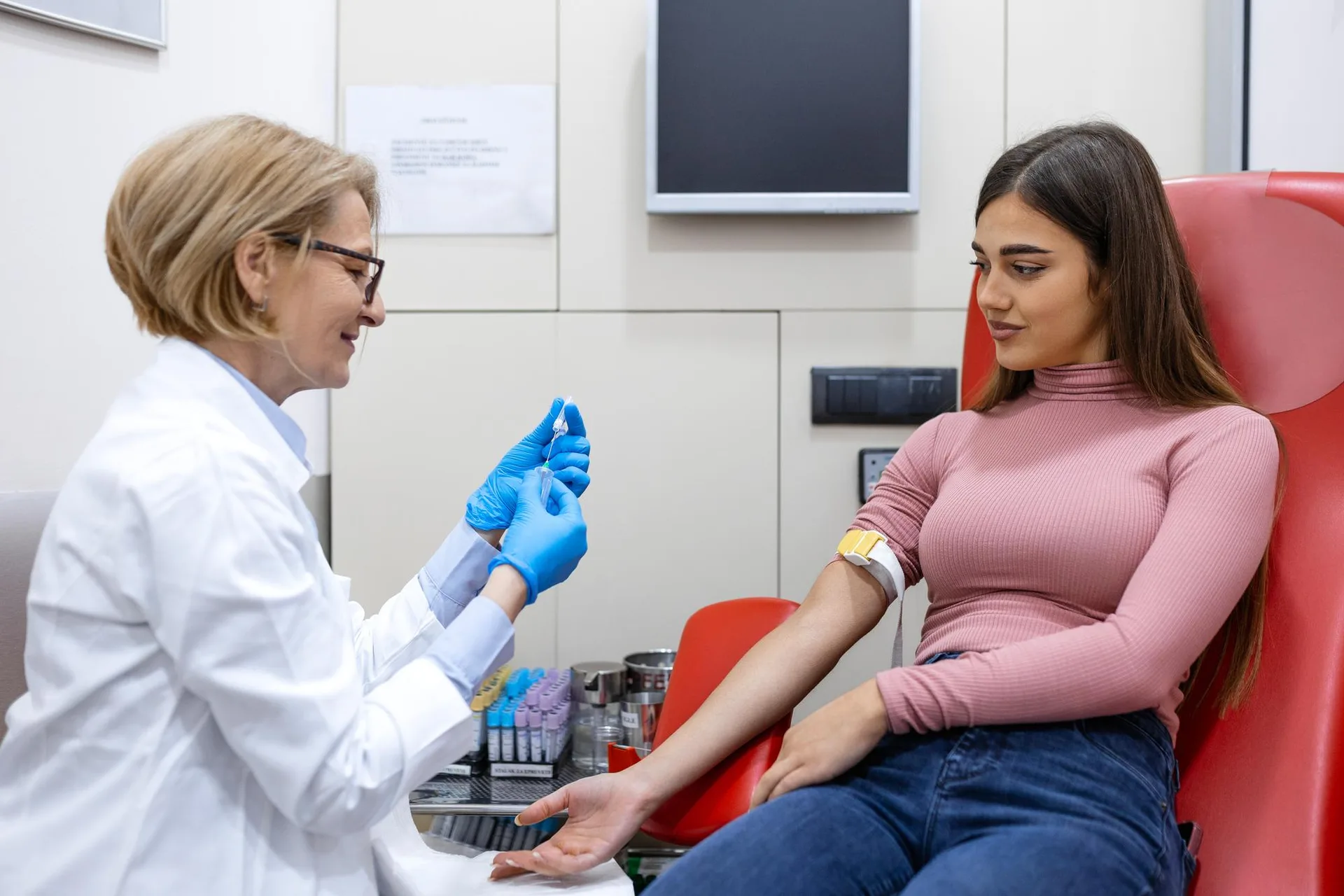
Doctor monitoring breast lumps and breast health.
The BRCA1 and BRCA2 genes are tumour suppressor genes — their normal function is to repair DNA damage and prevent uncontrolled cell growth. When a mutation disrupts this function, the risk of breast and ovarian cancer rises substantially. Understanding what carrying a BRCA mutation means — and what can be done — is among the most important pieces of genetic health information a woman can have.
Dr. Shachi Singh, consultant gynaecologist at Prakash Hospital, Sector 33, Noida, explains.
What BRCA1 and BRCA2 Do
In healthy cells, BRCA1 and BRCA2 proteins participate in repairing double-strand DNA breaks — one of the most dangerous types of DNA damage. When these proteins function normally, damaged DNA is repaired before the cell divides. When a BRCA mutation disrupts this repair function, DNA damage accumulates, mutations in other genes compound, and the eventual result is cancer.
The Risk Numbers
BRCA1 mutation:
- Lifetime risk of breast cancer: approximately 55 to 72% (vs 12% in the general population)
- Lifetime risk of ovarian cancer: approximately 44 to 46% (vs 1.3% in the general population)
BRCA2 mutation:
- Lifetime risk of breast cancer: approximately 45 to 69%
- Lifetime risk of ovarian cancer: approximately 17 to 23%
Additional elevated risks: BRCA2 carriers have elevated risk of pancreatic cancer and melanoma. BRCA1 and BRCA2 mutations in men elevate the risk of breast cancer and prostate cancer.
Who Should Consider BRCA Testing
Genetic testing is appropriate — and should be actively considered — for:
- Personal history of breast cancer diagnosed before age 50
- Personal history of ovarian cancer (epithelial, fallopian tube, or primary peritoneal)
- Two or more first-degree relatives (mother, sister, daughter) with breast cancer
- First-degree relative with ovarian cancer
- First-degree relative known to carry a BRCA mutation
- Ashkenazi Jewish ancestry (BRCA mutation prevalence is approximately 1 in 40 in this population vs 1 in 400 in the general population; specific founder mutations are common)
- Male relative with breast cancer
- Personal or family history of triple-negative breast cancer (particularly under 60)
- Family history suggestive of hereditary breast-ovarian cancer syndrome
In India, population-level BRCA testing is not standard, but high-risk individuals are increasingly being identified and referred for genetic counselling.
The Process: Genetic Counselling First
Before BRCA testing, genetic counselling provides:
- Accurate assessment of pre-test probability based on personal and family history
- Explanation of what a positive, negative, or variant-of-uncertain-significance (VUS) result means
- Discussion of the implications for the individual and their family members
- Psychological support and informed consent
Testing is done on a blood sample. Results typically take 2 to 4 weeks.
What a Positive Result Means
A positive BRCA test result confirms a significantly elevated lifetime risk. It does not mean cancer is present or certain. It means the risk is high enough to justify active surveillance and potentially preventive intervention.
Importantly, BRCA mutations are inherited — each first-degree relative (parent, sibling, child) has a 50% chance of carrying the same mutation. Informing relatives so they can consider testing themselves is a difficult but important aspect of a positive result.
What Women With BRCA Mutations Can Do
Enhanced surveillance:
- Annual breast MRI from age 25 (more sensitive than mammography in dense breast tissue of younger women)
- Annual mammogram from age 30 (alternating with MRI, 6-monthly imaging overall)
- Transvaginal ultrasound and CA-125 every 6 to 12 months from age 30 to 35 (for ovarian cancer — though this has not been proven to reduce mortality, it is offered as surveillance while the woman considers or awaits surgical options)
Chemoprevention:
- Tamoxifen or raloxifene for 5 years reduces breast cancer risk by approximately 30 to 50% in high-risk pre- and postmenopausal women respectively
- Combined oral contraceptive pill reduces ovarian cancer risk by approximately 50% with 5+ years of use (even in BRCA carriers) while modestly increasing breast cancer risk — a risk-benefit discussion for individual women
Risk-reducing surgery:
- Risk-reducing mastectomy (bilateral prophylactic mastectomy): Reduces breast cancer risk by approximately 90 to 95%. A deeply personal decision involving surgical, cosmetic, and psychological considerations. Reconstruction options are discussed alongside the surgical decision.
- Risk-reducing bilateral salpingo-oophorectomy (RRSO): Removes both ovaries and fallopian tubes. Reduces ovarian cancer risk by approximately 80%. Also reduces breast cancer risk by approximately 50% if performed before menopause (by reducing oestrogen). Recommended typically at age 35 to 40 for BRCA1 carriers and 40 to 45 for BRCA2 carriers, after completing childbearing. Causes surgical menopause — HRT is recommended until natural menopause age.
Genetic Services and Gynaecological Care in Noida and Greater Noida
Dr. Shachi Singh at Prakash Hospital, Sector 33, Noida, assesses family history risk, provides referral for genetic counselling and BRCA testing, coordinates enhanced surveillance, and manages risk-reducing gynaecological surgery for women across Noida and Greater Noida.
To book a consultation with Dr. Shachi Singh, call: +91 97023 46853
Clinic Hours: Monday to Saturday, 9 AM – 6 PM | Sunday, 10 AM – 2 PM
Clinic Address: D-12A, 12B, Sector-33, G.B. Nagar, Noida, Uttar Pradesh 201301
This blog is written for educational and informational purposes only. Please consult Dr. Shachi Singh or a qualified genetic counsellor for assessment specific to your family history.