Ovarian Dermoid Cyst: Symptoms, Risks and Laparoscopic Removal
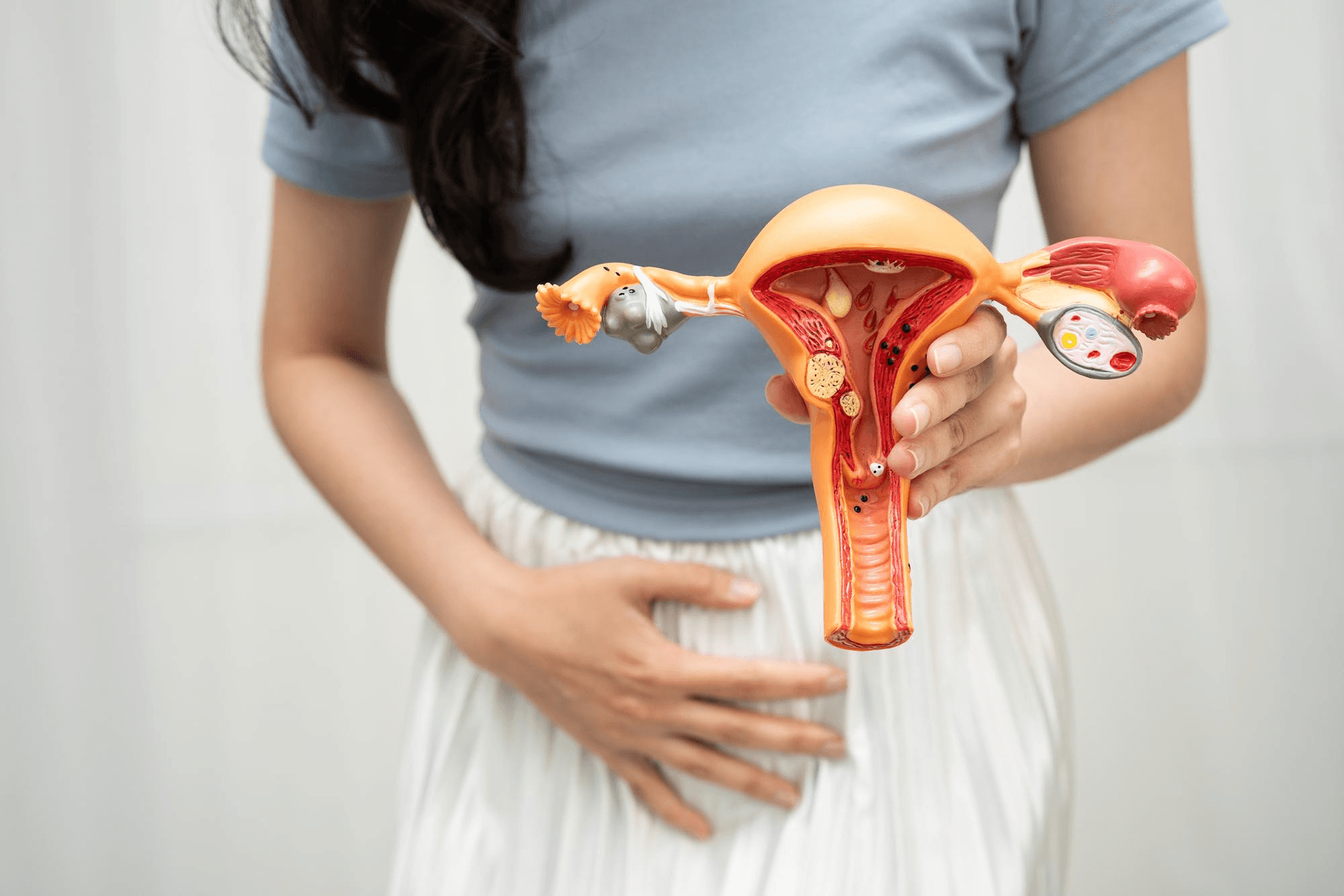
Dermoid cysts form from the ovary's germ cells, which is why they can contain hair, fat or teeth.
"There is a dermoid cyst on your left ovary." Hearing that on a routine scan is startling, partly because of the name and partly because of what a surgeon may add: that it can contain hair, fat or even tooth-like material. It sounds like something out of a medical horror story.
It is, in fact, one of the most common benign ovarian growths in young women, and in the great majority of cases it is not cancer. It does need proper attention, though, because dermoid cysts can twist the ovary, grow over time and, rarely, cause other problems.
This guide explains what a dermoid cyst is, why it forms, symptoms, how it's diagnosed, when it needs removal and what laparoscopic surgery involves. If you are searching for an experienced laparoscopic surgeon in Noida, details are at the end.
What is a dermoid cyst?
An ovarian dermoid cyst is the common name for a mature cystic teratoma. The word teratoma comes from Greek and refers to a "monster tumour," though the real thing is far less dramatic. It forms from the ovary's germ cells, the cells that normally become eggs. Instead of developing into an egg, a germ cell develops into a mixture of tissues from different layers of the body. That's why dermoid cysts can contain:
- Skin and sebaceous (oily) material
- Hair
- Fat
- Teeth or bone
- Cartilage
- Occasionally thyroid tissue or other tissue
The cyst is filled with thick, greasy material, and it is usually surrounded by a smooth wall. The tissue is the woman's own, not a foreign body, and not a twin, despite what internet rumours suggest.
Dermoid cysts are present from birth in the sense that the germ cells they develop from are present early in life, but they typically grow slowly and are discovered anywhere from the teens through the forties. They are the commonest ovarian tumours in young women. About 10 to 15 percent are present in both ovaries.
Symptoms
Most dermoid cysts cause no symptoms and are found by chance on an ultrasound done for another reason. When symptoms occur, they depend on the size of the cyst and any complications.
- Dull ache or heaviness in the lower abdomen or pelvis
- Sense of fullness or bloating
- Pressure on the bladder or bowel (frequent urination, constipation)
- Pain during intercourse
- Irregular periods in some cases
- A palpable lump if the cyst is large
- Sudden severe pain with nausea or vomiting, which suggests torsion (see below)
Complications
Ovarian torsion
The ovary is held in place by ligaments and can twist around its stalk, cutting off its blood supply. Dermoid cysts are heavy and often sit at the end of the ovary, which makes them one of the most common causes of ovarian torsion. It causes sudden severe lower abdominal pain, often one-sided, with nausea and vomiting. This is a surgical emergency. If the ovary is untwisted quickly, it can often be saved. Delay can lead to loss of the ovary. Torsion occurs in a minority of dermoid cysts, with the risk higher in cysts above about 5 cm.
Rupture
If the cyst wall breaks, the oily contents can spill into the abdomen, causing chemical inflammation (peritonitis) and severe pain. This is uncommon but may need urgent surgery.
Infection
Rarely, a cyst can become infected.
Malignant change
A very small proportion (around 1 to 2 percent, mostly in women over 40 or in older, large cysts) develop cancerous change in one of the tissues. This is why cysts that have unusual features on imaging, or have grown rapidly, are removed and examined.
Effect on the ovary
As the cyst grows, it can stretch and thin the normal ovarian tissue around it, so it is usually best not to leave a large one for years.
Anti-NMDA receptor encephalitis
A very rare autoimmune neurological condition that can be linked to ovarian teratomas. It's mentioned for completeness, and is not something most women will meet.
Does it affect fertility?
A dermoid cyst does not usually prevent you from getting pregnant. The ovaries continue to ovulate, and the other ovary is typically normal. But there are some considerations.
- A large cyst can displace tissue or press on the tube.
- Surgery can reduce ovarian reserve (the egg supply) if too much healthy ovarian tissue is lost or damaged, particularly with bilateral cysts or repeat surgery. This is why surgical technique matters, and why your doctor may check an AMH level before surgery, especially if you are planning pregnancy.
- Pregnancy with a dermoid is generally safe, but the cyst can twist or rupture, especially as the uterus enlarges. If found in pregnancy, it is monitored and removed in the second trimester only if it is large or complicated.
How is it diagnosed?
Ultrasound. The first test, and often diagnostic. Dermoid cysts have a characteristic look: a bright echogenic nodule (Rokitansky nodule), lines or dots from hair, shadows from teeth or calcium, and a "tip of the iceberg" sign where the sound waves can't pass beyond the front part of the cyst. A skilled sonologist can often recognise one at a glance.
MRI or CT. Used when the ultrasound is uncertain or the cyst is large, solid-looking or complex. MRI can show fat clearly.
Blood tests. CA-125 and other tumour markers are sometimes ordered when there's concern. Dermoid cysts typically have normal or mildly raised markers. Normal values are reassuring but do not completely exclude cancer. AMH is useful for fertility planning.
Do all dermoid cysts need to be removed?
Not always, but most are. Because they do not shrink by themselves, do not respond to hormone pills and carry a risk of torsion and rarely other complications, surgery is the usual recommendation, especially when:
- The cyst is larger than about 5 cm or growing
- It is causing symptoms
- It has suspicious features on imaging
- The woman is planning pregnancy (to avoid problems in pregnancy)
- The cyst is bilateral and growing
For a small cyst (say under 3 to 4 cm) with no symptoms and typical appearances, some doctors suggest monitoring with periodic ultrasound, especially in young women where preserving ovarian tissue is the priority. This is a shared decision.
Laparoscopic removal (cystectomy)
The preferred operation is laparoscopic ovarian cystectomy, a keyhole procedure that removes the cyst and keeps the ovary.
Before surgery. Blood tests, an ultrasound review, sometimes MRI, and a discussion of risks. You are usually asked to fast for several hours.
The operation. Under general anaesthesia, the surgeon makes three or four small cuts (5 to 10 mm) in the abdomen. Carbon dioxide gas inflates the abdomen to make space, and a camera and instruments are inserted. The surgeon makes a cut in the surface of the ovary, separates the cyst wall from healthy ovarian tissue and removes the cyst whole, often in a protective bag, so the contents do not spill. The ovary is repaired, if necessary, with minimal use of electrical cautery, to protect egg reserve. The surgery typically takes 45 to 90 minutes.
Preventing spillage. The thick, oily material can irritate the abdomen if it spills. The surgeon carefully avoids spillage, and if any occurs, the abdomen is washed out thoroughly.
Pathology. The removed cyst is sent for examination to confirm that it is a benign mature teratoma.
If the ovary is badly damaged. Rarely, if torsion has caused the ovary to die or if there is cancer, removal of the ovary may be needed. Your surgeon should discuss this in advance.
Recovery
- Most women go home the same day or the next day.
- Shoulder-tip pain from the gas, mild abdominal soreness and bloating are common for a few days.
- You can usually return to light activity within a few days, and to work within about a week, depending on your job.
- Avoid heavy lifting and strenuous exercise for around two to four weeks.
- Intercourse can usually be resumed after one to two weeks, once you feel comfortable and any bleeding has settled.
- Follow-up includes a review of the pathology report and an ultrasound after some weeks or months.
Laparoscopy usually means smaller scars, less pain, faster recovery and fewer adhesions than open surgery. Open surgery is sometimes needed for very large cysts or suspected cancer.
Risks of surgery
Surgery carries general risks like bleeding, infection, injury to nearby organs (bowel, bladder, blood vessels), anaesthetic risk and the possibility of converting to open surgery. Cyst-specific risks include reduced ovarian reserve, incomplete removal with recurrence, and spillage causing inflammation. Recurrence in the same ovary or a new cyst in the other ovary occurs in a small percentage of women, so follow-up scans are advised.
What if torsion is suspected?
If you have sudden severe lower abdominal pain, especially with vomiting, go to an emergency department straight away. An urgent ultrasound with Doppler and, if needed, an emergency laparoscopy can untwist the ovary and remove the cyst. Do not wait to see if it settles. Ovaries that are untwisted early can often recover.
Living with a dermoid cyst
- If you are being monitored, keep your scan appointments and know the warning signs.
- Avoid sudden vigorous twisting movements if your cyst is large, though there is no proof activity causes torsion.
- If you plan pregnancy, discuss the timing of removal beforehand.
- Do not rely on herbal products, diets or hormonal pills to dissolve a dermoid. They do not work.
Common questions
Can a dermoid cyst turn into cancer? Rarely. Most are benign, and surgery with laboratory examination gives a definite answer.
Will removal affect my periods? Typically not.
Can I get pregnant after surgery? Yes, in most cases. Ovarian reserve is preserved as much as possible.
Does a dermoid cyst come back? Occasionally, in the same ovary or the other. Follow-up scans help catch it early.
Can the cyst contain teeth and hair? Yes, though they are only tissues from your own body, not signs of anything dangerous.
Is it hereditary? There's no strong link, although some families have more than one case.
Get expert advice before deciding
Whether a dermoid cyst needs to be removed depends on its size, features and your plans. A skilled surgeon who protects ovarian tissue makes a big difference. I perform laparoscopic surgery for ovarian cysts for women from Noida, Greater Noida, Ghaziabad and Delhi NCR at Prakash Hospital, Sector 33. To book a consultation, call +91 97023 46853.
Related reading
- Laparoscopic ovarian cyst removal
- Ovarian torsion: emergency signs
- Ovarian cyst types and treatment
- AMH test and ovarian reserve
- Laparoscopy as day-care surgery
This article is for general education. Please see a doctor for diagnosis and treatment.