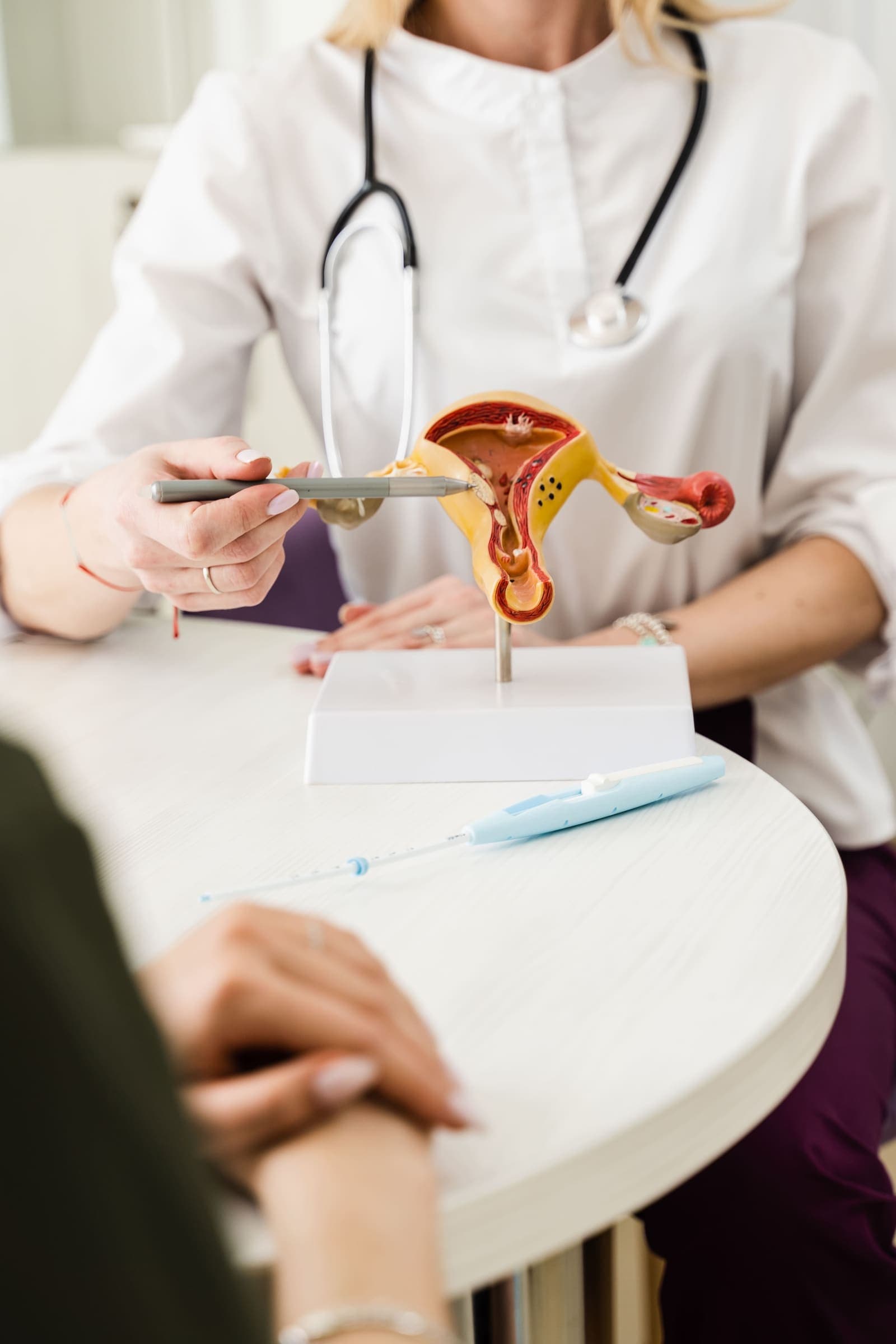
Frozen Embryo Transfer (FET): The Process, Success Factors and Who Needs It

Vitrification freezes embryos so fast that no ice crystals form, and most good-quality embryos survive thawing.
In the early days of IVF, an embryo was transferred a few days after it was created, and what you did not use was often discarded. Today, freezing embryos has become one of the central parts of fertility care. A large share of IVF babies are now born from frozen embryo transfer (FET) cycles, and in some clinics freezing every embryo and transferring later is the standard plan.
If you are about to start FET, or you have just been told your doctor wants to "freeze all," you probably have questions. Is a frozen embryo as good as a fresh one? What medicines do I take? Does the transfer hurt? When do I test? And what are my real chances?
This guide walks you through the whole process in plain language. If you are looking for a fertility specialist in Noida to guide you, details are at the end.
What is a frozen embryo transfer?
In an IVF or ICSI cycle, eggs are collected from the ovaries, fertilised in the laboratory and grown into embryos over 3 to 6 days. Those embryos can be transferred to the uterus in the same cycle (a fresh transfer), or frozen for later use (a frozen transfer). A FET is simply the transfer of a thawed embryo into a uterus that has been prepared for it, in a separate cycle.
Modern freezing uses vitrification, a very rapid cooling process that turns the embryo into a glass-like state without ice crystals. Survival rates after thawing with vitrification are high, typically above 90 percent for good-quality embryos in experienced laboratories. Embryos can be stored for years without losing their potential, although storage rules vary by country and regulation.
Why are embryos frozen?
There are several reasons a doctor may recommend a freeze-all approach or a later transfer.
- Risk of ovarian hyperstimulation syndrome (OHSS). In women with PCOS or a high response to stimulation, pregnancy hormones from a fresh transfer can make OHSS worse. Freezing avoids this.
- Surplus embryos. Embryos left over after a fresh transfer can be stored for future attempts or for a sibling.
- A lining that is not ready. If the uterine lining is thin or out of step with the embryo on the planned day, transfer can be postponed.
- High progesterone levels before the egg trigger, which can affect lining receptivity in some cycles.
- Preimplantation genetic testing (PGT). Biopsied embryos need time for results before transfer.
- Medical conditions needing treatment first, such as endometrial polyps, fluid in the tubes or infection.
- Fertility preservation. For women who will have cancer treatment or want to delay pregnancy.
- Failed fresh transfer, where remaining embryos are used in later cycles.
- Patient circumstances, such as illness, travel or personal reasons.
Is a frozen embryo as good as a fresh one?
This is the question I hear most. The honest answer is that the two are comparable, and in some groups FET gives results as good or better than fresh transfer. Several large trials show that in women with PCOS and in those with a high response to stimulation, live birth rates are similar or higher with freeze-all, along with a lower OHSS risk. For women with a normal response, results are broadly similar between fresh and frozen.
The reason frozen transfers sometimes do better is thought to be that the uterus is not exposed to the high hormone levels of ovarian stimulation. The lining can be prepared under controlled conditions and the embryo transferred when the lining is ready.
What matters most is the quality of the embryo (which depends largely on the age of the woman who produced the egg), the receptivity of the uterus and the skill of the lab.
How to prepare the uterus: types of FET cycle
The aim is to match the embryo's stage with the lining's readiness. There are three main approaches.
1. Natural cycle FET
The cycle follows your own ovulation. Ultrasound scans and sometimes blood tests track the follicle and the lining. When ovulation occurs, the transfer is timed according to the embryo's age. It suits women who ovulate regularly. It involves few or no medicines, but it needs close monitoring and a flexible schedule.
2. Modified natural cycle
Like the natural cycle, but with a trigger injection to time ovulation exactly and progesterone support after ovulation.
3. Artificial (hormone replacement) cycle
For women with irregular or absent ovulation, or for convenience. You take oestrogen (tablets, patches or gel) from the early days of the cycle to build the lining, and a scan checks it after about 10 to 14 days. Once the lining reaches a suitable thickness and pattern, progesterone is added (as vaginal tablets, gel or injections) and the transfer is scheduled a fixed number of days later. The medicines continue until the pregnancy test and, if positive, usually into the first trimester.
Which protocol is best? Evidence is mixed. Natural cycles may have a slight advantage on some pregnancy complications. Artificial cycles offer scheduling convenience. Your doctor will choose based on your cycles and history.
Add-on treatments
Sometimes, depending on the history, medicines may be added, for example for an infection of the uterine lining (chronic endometritis), or for adhesions or polyps found on hysteroscopy. Treatments such as aspirin, steroids, heparin, intralipids or immune therapies are used in selected cases, but many lack strong evidence. It is reasonable to ask your doctor why each one is recommended.
Before the transfer: the checklist
- A scan to check lining thickness and appearance, usually aiming for about 7 to 8 mm or more with a trilaminar pattern, although pregnancies happen in thinner linings
- Review of hormone levels in some protocols
- Treatment of any infection, polyp or fluid in the tubes beforehand
- Confirming the number and stage of embryos to thaw
- Informed consent, including how many embryos to transfer
How many embryos should be transferred?
Many clinics now advise transferring a single good-quality blastocyst to reduce the chance of twins. Twin pregnancies carry higher risks of preterm birth and complications. For older women or after repeated failure, two embryos may be considered after a frank discussion of the risks. The decision is yours with your doctor.
The day of transfer
The procedure is simple and short.
- The embryo is thawed in the lab, assessed and prepared for transfer. This takes place early on the day.
- You may be asked to arrive with a comfortably full bladder, which helps ultrasound guidance and straightens the uterus.
- You lie on the table and a speculum is inserted. The cervix is cleaned.
- A soft, thin catheter containing the embryo in a tiny drop of fluid is passed through the cervix under ultrasound guidance and the embryo is placed in the uterine cavity.
- The catheter is checked in the lab to be sure the embryo has been released.
- You rest for a short time and go home.
It takes about 10 to 15 minutes, and most women feel only mild pressure, like a Pap smear. Sedation is not needed. Many clinics allow your partner to be present and show you the scan image of the embryo.
After the transfer
You can usually resume light daily activities straight away. Strict bed rest is not necessary and has not been shown to help. Instead:
- Continue all prescribed medicines, including progesterone, without missing doses
- Avoid heavy lifting, strenuous exercise and long travel for a few days
- Follow your clinic's advice on intercourse and hot baths
- Drink water and eat balanced meals
- Avoid smoking and alcohol
- Do not take anti-inflammatory painkillers unless your doctor allows
The next stage is the wait. Our article on the two-week wait covers it in detail.
When do you test?
A blood test for beta-hCG is usually done around 9 to 14 days after transfer, depending on the age of the embryo (day 3 or day 5). Home urine tests too early can mislead. If positive, a repeat test confirms rising levels, and an ultrasound at about 5 to 6 weeks of pregnancy checks for the heartbeat.
What are the success rates?
Success depends on several factors, and I am wary of quoting a single number. The most important are:
- The age of the woman when the eggs were collected. Embryos made from younger eggs generally have higher chances. A woman in her late twenties or early thirties has a better chance per embryo than a woman in her forties.
- Embryo quality and stage. Good-quality blastocysts do better.
- Genetic testing, if used, which can increase the rate of implantation per transfer in selected groups but does not suit everyone.
- The state of the uterus. Fibroids, polyps, adhesions, adenomyosis or a thin lining can lower implantation.
- Previous failed cycles and the reasons.
- Laboratory standards.
As a broad picture, a good-quality blastocyst transferred to a receptive uterus has a decent chance, though not a certainty. Even perfect embryos sometimes fail to implant. Ask your clinic for its own data, by age group, rather than relying on generic numbers.
Risks and considerations
- Failed implantation. The most common outcome of any single transfer, and emotionally hard.
- Multiple pregnancy, if more than one embryo is transferred.
- Ectopic pregnancy. A small risk, slightly higher in women with tubal damage.
- Miscarriage. Related largely to embryo chromosomes and maternal age.
- Pregnancy complications. Some studies find a slightly higher risk of high blood pressure disorders (preeclampsia) after artificial-cycle FET, and of large babies after FET compared with fresh transfer. Your obstetrician can plan monitoring accordingly.
- Medicine side effects. Bloating, breast tenderness, headaches, mood changes and local irritation from vaginal progesterone.
- Storage issues. Make sure your clinic has secure storage and consent paperwork, including what happens to unused embryos.
What if the transfer doesn't work?
A negative result is painful. Give yourself time. Afterwards, your doctor will review the cycle: embryo quality, lining, timing and any underlying issues. Next steps might involve:
- A hysteroscopy to check the cavity
- Testing for chronic endometritis
- Investigating thyroid, clotting or immune factors if there is a pattern of repeated failure
- Considering genetic testing of embryos
- Changing the protocol
- Another transfer with remaining embryos or a fresh cycle
Many couples achieve pregnancy on a later attempt. Our article on what to do after a failed IVF cycle looks at this further.
Practical tips
- Keep a copy of your embryo reports and the freezing details, including the day, grade and number of embryos stored.
- Ask your clinic how long storage is included and the renewal rules.
- Plan your calendar. FET cycles can take around three to five weeks from the first scan to the pregnancy test.
- Look after your emotional health. Talk to your partner, a friend or a counsellor.
Common questions
Is FET painful? Usually not. Injections or medicines may cause minor discomfort.
Can I work during a FET cycle? Most women can. Plan for scans and the transfer day.
Do frozen embryos get damaged? With vitrification, the vast majority survive, but occasionally an embryo does not survive thawing.
Will my baby be affected by freezing? Studies have not shown an increase in birth defects with frozen embryos compared to fresh. Children born from FET appear to do well.
Is travel allowed after transfer? Short, comfortable travel is generally fine. Check with your doctor.
Plan with a team you trust
A frozen embryo transfer is a precise process, and details like timing and lining preparation matter. I see couples from Noida, Greater Noida, Ghaziabad and Delhi NCR for fertility evaluation and counselling at Prakash Hospital, Sector 33. To book a consultation, call +91 97023 46853.
Related reading
- IVF step by step
- Embryo transfer and the two-week wait
- Failed IVF cycle: what to do next
- Pregnancy after IVF: what to expect
- Thin endometrium: causes and treatment
This article is for education. Treatment decisions should be made with your fertility team.