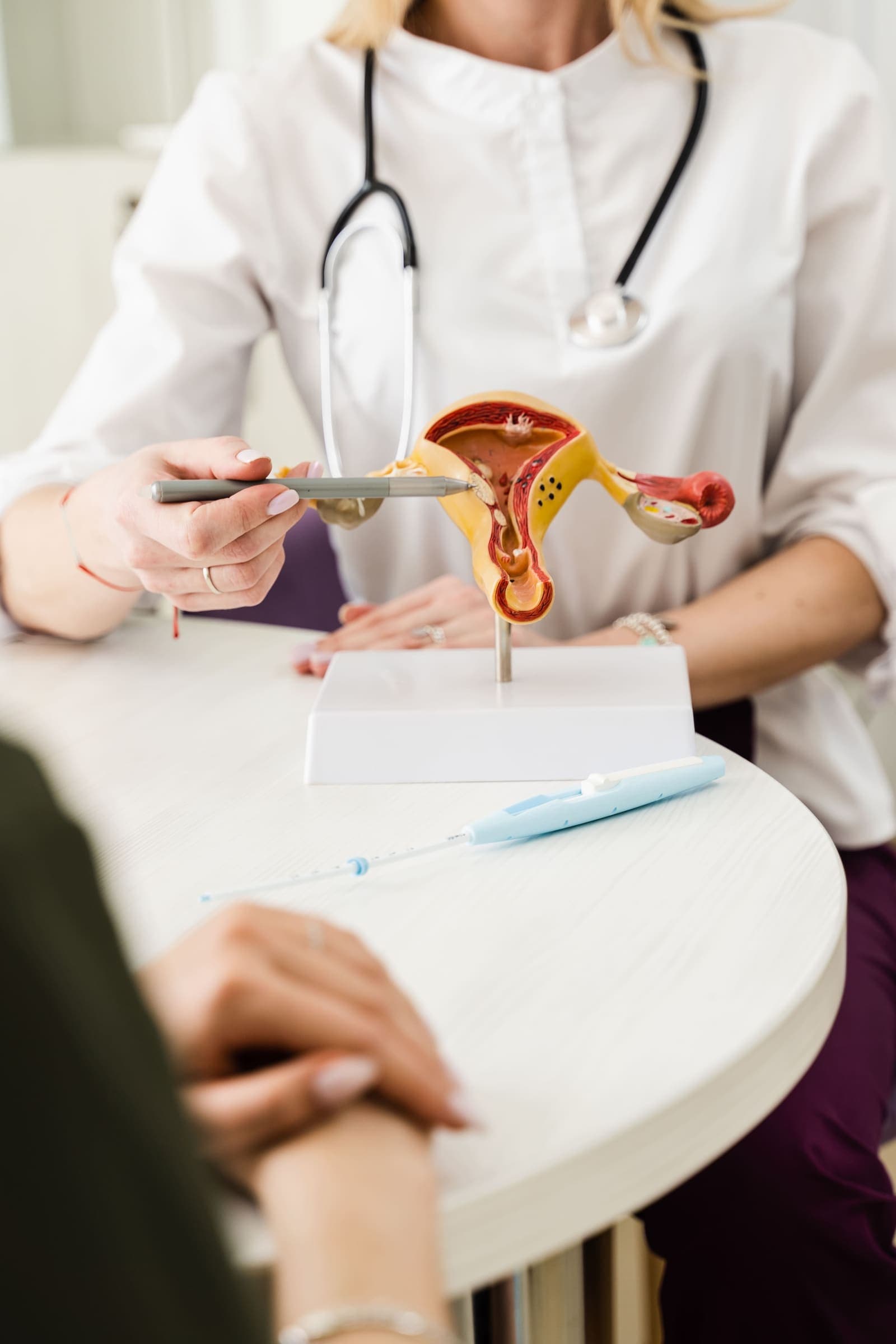
HSG Test (Hysterosalpingography): Preparation, Pain, Results and Safety

HSG is usually booked between day 7 and day 10 of the cycle, after bleeding stops and before ovulation.
When couples struggle to conceive, one of the first tests I suggest for the woman is an HSG, short for hysterosalpingography. The word is a mouthful, and the idea of having dye pushed into the womb makes many women nervous. Most arrive at the clinic having read horror stories online.
I want to give you the real picture. An HSG is a quick X-ray test, usually over in about 10 minutes. It does cause cramping, which varies a lot from woman to woman. And it gives your doctor valuable information about two things that matter for fertility: the shape of your uterus and whether your fallopian tubes are open.
This guide covers what the test is, why it is done, how to prepare, what it feels like, risks, results and what comes next. If you are searching for a fertility specialist in Noida or an experienced gynaecologist to guide you through testing, you will find details at the end.
What is an HSG test?
Hysterosalpingography is an X-ray examination of the uterus (hystero) and fallopian tubes (salpingo). A thin catheter is placed gently through the cervix and a contrast dye is passed into the uterus. The dye shows up on X-ray, so the doctor can see the cavity of the uterus and watch the dye travel along the tubes and spill out of their ends into the pelvis.
If the tubes are open, the dye flows through them freely. If a tube is blocked, the dye stops or collects in a swollen segment.
Why is the test needed?
The fallopian tube is where the egg and sperm meet and where the early embryo travels toward the uterus. If both tubes are blocked, an egg and sperm cannot meet, and natural pregnancy will not happen. If one tube is blocked, you still have a chance, though it is lower.
Doctors advise HSG when:
- You have been trying to conceive for a year (or six months if you are 35 or older) without success
- You have had pelvic infection, tuberculosis, endometriosis or pelvic surgery
- You have had an ectopic pregnancy
- You have had repeated miscarriages and an abnormal uterine shape is suspected
- You are planning IUI, where open tubes are needed
- You have had a tubal ligation and want to check a reversal
Blocked tubes are found in roughly 1 in 4 to 1 in 5 couples facing infertility, according to commonly quoted estimates. That makes this a worthwhile test, because the result changes the treatment plan. For example, if both tubes are blocked, IUI would not work, and moving straight to IVF saves months.
What can an HSG show?
- Open or blocked tubes (and which side)
- Hydrosalpinx: a tube that is blocked at the far end and swollen with fluid, which can lower IVF success unless treated
- Uterine cavity shape: a septum, a bicornuate or T-shaped uterus
- Intrauterine adhesions (scar tissue), as in Asherman's syndrome
- Polyps and submucosal fibroids, seen as filling defects
- Cervical incompetence, occasionally
HSG does not show the ovaries, cannot tell you whether you ovulate, and cannot reliably find endometriosis. It also cannot tell the quality of the eggs. That is why it is only one piece of a fertility evaluation, alongside ovulation tracking, hormone tests (like AMH), a pelvic ultrasound and your partner's semen analysis.
When in your cycle should you have it?
The ideal timing is after your period has stopped and before ovulation, usually between day 7 and day 10 of the cycle (day 1 is the first day of full flow). This window has three advantages.
- You are not bleeding, so the images are clear.
- You are almost certainly not pregnant, since you have not ovulated yet.
- The uterine lining is thin, so the cavity is seen clearly.
If your cycles are irregular, we may use a different approach based on your tracking and a pregnancy test.
Avoid unprotected intercourse between your period ending and the test. If there is any chance you are pregnant, tell your doctor. The test uses X-rays and should not be done in pregnancy.
How to prepare
Your doctor will give specific advice, but the usual steps are as follows.
- Book the day within the window above and confirm that your bleeding has ended.
- Do a pregnancy test if there is any doubt.
- Tell the doctor about allergies, especially to iodine or contrast dye, and about asthma or kidney disease.
- Ask about pain medication. Many doctors recommend taking a painkiller such as ibuprofen or paracetamol about an hour before, unless you have a reason not to. Do not take medication without asking.
- Antibiotics. Some doctors prescribe a short antibiotic course, particularly if you have had pelvic infection in the past.
- Empty your bladder just before the test.
- Wear comfortable clothes and bring a sanitary pad.
- Eat normally. Fasting is not usually required, but your radiology centre may tell you otherwise.
- Bring someone with you if you like. Some women feel lightheaded afterward.
What happens during the test?
The whole procedure typically takes 5 to 15 minutes in the X-ray room.
- You lie on the table, knees bent, as for a Pap smear.
- A speculum is inserted into the vagina to see the cervix, which is cleaned with antiseptic.
- A thin catheter is passed through the cervical opening, and a small balloon or cone holds it in place.
- The speculum is removed (in some set-ups) and the dye is injected slowly while X-ray images are taken.
- You may be asked to shift position slightly for a few extra pictures.
- The catheter is removed. You rest for a while and then go home.
Does it hurt?
Honest answer: it varies. Many women describe it as period-like cramping, sharp for a short moment as the dye fills the uterus. Some feel almost nothing. Others find it quite uncomfortable. Women with blocked tubes, previous pelvic infections or anxiety often report more pain, because the pressure builds up when the dye cannot escape.
Things that help include taking the pain medicine your doctor recommends, deep breathing, relaxing the pelvic muscles, and having a calm and experienced operator who injects the dye slowly. Do tell the doctor if the pain becomes severe. The test can be paused.
After the test: what to expect
- Mild cramps for a few hours
- Light spotting or watery, dye-stained discharge for a day or two
- Occasional dizziness; sit for a while before standing
You can usually go back to normal work the same day. Use a pad, not a tampon, for a couple of days. Many doctors advise avoiding intercourse for a few days until spotting settles.
Call your doctor promptly if you have:
- A fever or chills
- Severe or worsening lower abdominal pain
- Heavy bleeding (soaking a pad in an hour)
- Foul-smelling discharge
- Fainting or a rash, swelling or difficulty breathing after the dye
These are uncommon, but pelvic infection after HSG occurs in about 1 in 100 women or fewer, more often in those with a history of tubal disease. Antibiotics treat it.
Is HSG safe? Risks to know about
For most women, yes. The main risks are:
- Infection (as above), more likely if hydrosalpinx or a past infection exists
- Allergic reaction to the contrast dye, which is rare
- Radiation exposure. The dose is small, about the same as a few months of natural background radiation, and the ovaries are exposed only briefly. Pregnancy must be excluded
- Vasovagal faint during or after the procedure
- Uterine perforation or bleeding, which is very rare
HSG should not be done if you are pregnant, have an active pelvic infection, are bleeding heavily or are allergic to the dye.
Understanding your result
You will be given images and a report. Common outcomes include the following.
Normal. Triangular uterine cavity with smooth outline, dye flowing freely along both tubes and spilling into the pelvis. This is the best-case outcome.
One tube blocked. Often managed by timed intercourse or IUI using the open side. Whether to treat the blocked side depends on the type and location.
Both tubes blocked. If the block is at the proximal (uterine) end, there is a chance that it was caused by spasm or debris. A repeat test or a laparoscopy may be suggested. If the blockage is distal (near the ovary), surgery might help, or IVF may be advised.
Hydrosalpinx. A swollen, fluid-filled tube. If you are going for IVF, removing or clipping the affected tube before the embryo transfer improves outcomes. Your doctor will explain.
Abnormal uterine cavity. A filling defect suggests a polyp, fibroid or adhesion. A hysteroscopy follows to confirm and treat.
Inconclusive. Tubal spasm can mimic blockage. The doctor may repeat the test, give an antispasmodic or switch to another method.
A small fertility bonus
Research has found that pregnancy rates in the months right after an HSG tend to be a little higher than before it, particularly when oil-based contrast dye is used. The theory is that flushing the tubes may clear mucus plugs or debris. It is not a reason to have the test, but it explains why some couples conceive soon after.
Alternatives to HSG
- HyCoSy or sonosalpingography: an ultrasound-based test using a contrast fluid or foam instead of X-ray. It avoids radiation and shows the uterus well. It may be less detailed for tubes.
- Laparoscopy with chromopertubation: a keyhole surgery in which dye is passed through the tubes and observed directly. It is the gold standard for tubal assessment and allows treatment in the same sitting, but it requires anaesthesia.
- Hysteroscopy: to examine the inside of the uterus directly.
The right choice depends on your history, your doctor's recommendation and what is available.
Common questions from patients
Does a normal HSG mean I will get pregnant? It means your tubes are open and the cavity looks normal, which is good news. It does not test ovulation, egg quality or sperm.
Can I drive home? Most women can. If you feel faint, wait before you leave or have someone with you.
Will I need to stay in the hospital? No, it is an outpatient procedure.
How soon can we try to conceive after HSG? Usually in the same cycle if you tolerated it well and there is no infection. Your doctor will advise.
Can HSG be done during periods? No. Menstrual blood interferes with images and increases infection risk.
Is the HSG result valid forever? Tubal status can change after infection or surgery. A report from several years ago may need repeating.
Planning your fertility evaluation
HSG is a short, useful test when done at the right time by an experienced team, and knowing your tubal status early saves months of uncertainty. I see couples from Noida, Greater Noida, Ghaziabad and Delhi NCR for fertility assessment at Prakash Hospital, Sector 33. To book a consultation, call +91 97023 46853.
Related reading
- Blocked fallopian tubes: causes and treatment
- Hydrosalpinx and IVF
- IUI vs IVF: which is right for you?
- Female infertility: causes and tests
- Asherman's syndrome and uterine adhesions
This article is for general education. Your own doctor's instructions always come first.