Contraception After 35: What Changes and What to Consider
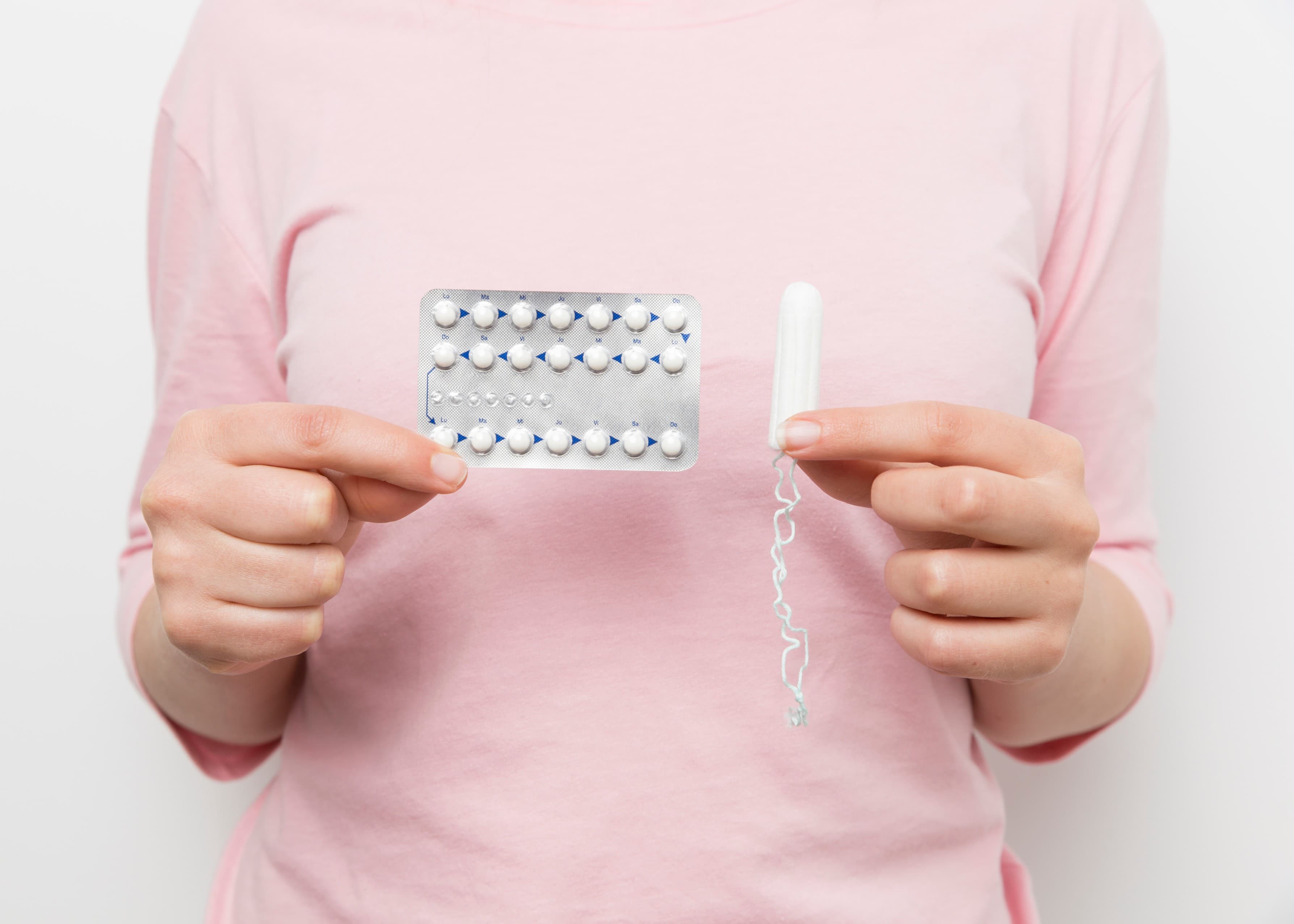
Girl holding pills
Contraceptive needs at 35, 40, and 45 are not the same as they were at 25. Medical factors change — blood clot risk, blood pressure, cardiovascular factors, and approaching perimenopause all influence which contraceptive options are safe and which are best avoided. And the question of whether future pregnancy is desired becomes more relevant to the choice.
Dr. Shachi Singh, consultant gynaecologist at Prakash Hospital, Sector 33, Noida, explains the contraception landscape for women after 35.
Why Contraception Is Still Needed After 35
A common misconception: "I'm over 40, I probably don't need contraception anymore." This is incorrect. Women can conceive into their late 40s — the chance per cycle is lower, but it is not zero until menopause is confirmed. Perimenopause produces irregular cycles that can be difficult to interpret. Pregnancy after 40 is higher risk — so unintended pregnancy in perimenopause, though rarer, can have significant consequences.
Contraception is needed until menopause is confirmed — defined as 12 consecutive months without a period in women over 50, or 24 consecutive months in women under 50.
Combined Hormonal Contraception (CHC): The Pill, Patch, Ring
The situation after 35: The combined pill (oestrogen + progestogen) is used by millions of women safely. However, combined oestrogen-containing contraception increases the risk of venous thromboembolism (VTE — blood clots) — and this risk rises with age. Other cardiovascular risk factors interact:
Absolute contraindications to CHC in women over 35:
- Smoking (any amount) — combined OCP + smoking + age above 35 is a high-risk combination for VTE and stroke. This is the most clinically important restriction.
- Hypertension — particularly uncontrolled
- Personal history of VTE, stroke, or heart attack
- Migraine with aura — at any age this is a contraindication; risk amplifies with age
- BMI above 35
Women over 35 without these risk factors: Combined hormonal contraception (pill, patch, ring) remains an option — the benefit-risk calculation is acceptable but should be reviewed annually.
The pill and perimenopause: Combined OCP masks perimenopausal symptoms (by providing exogenous hormones) and makes it difficult to know when natural menopause has occurred. This is sometimes relevant when deciding to stop contraception.
Progestogen-Only Methods: Generally Preferred After 35
Progestogen-only methods avoid oestrogen's cardiovascular and thrombotic risk — making them suitable for most women over 35, including smokers and those with hypertension.
Progestogen-only pill (POP / mini-pill): Traditional POP (norethisterone-based) requires strict timing (taken within a 3-hour window daily). Newer desogestrel-based POP (Cerazette) has a 12-hour window and works primarily by inhibiting ovulation — more forgiving. Side effects: irregular bleeding, particularly in the first 3 to 6 months.
Mirena IUD (levonorgestrel-releasing intrauterine system): One of the most suitable options for women over 35:
- 99.8% effective
- Significantly reduces menstrual bleeding — useful for women with heavy periods (which become more common in perimenopause)
- Local hormone delivery — very low systemic progestogen levels
- Lasts 5 to 6 years (can be continued as contraception into menopause in women over 45)
- Can be used as the progestogen component of HRT (combined with oestrogen patches or gel for HRT, avoiding the need for a separate oral progestogen)
Injectable progestogen (Depo-Provera): Injection every 3 months — highly effective. Causes amenorrhoea (absence of periods) in most women — which some see as a benefit and others as a drawback. Bone density decreases with long-term use — relevant in perimenopause when bone loss is already accelerating.
Implant (Nexplanon/Implanon): A small rod inserted under the skin of the upper arm, lasting 3 years. Very high efficacy. Irregular bleeding is the main side effect.
Copper IUD (Non-Hormonal)
The copper IUD is a highly effective non-hormonal option — suitable for women who want to avoid all hormones. Lasts 5 to 10 years. Does not affect periods (may make them slightly heavier). No systemic hormonal effects — suitable for women with cardiovascular contraindications to hormones.
Can be left in place past menopause and removed 1 to 2 years after the last period.
Permanent Contraception: Female Sterilisation and Vasectomy
For women and couples who have definitively completed their family, permanent contraception is the most practical long-term solution.
Female sterilisation (laparoscopic tubal ligation or bilateral salpingectomy): Performed laparoscopically under general anaesthesia — day surgery. Bilateral salpingectomy (removing both tubes) is now preferred over tubal ligation at many centres because it also reduces ovarian cancer risk. Near 100% effective permanently. No ongoing contraceptive burden.
Vasectomy: Simpler, safer, and equally effective — the male partner's procedure should be the first consideration when permanent contraception is sought in a couple. A very minor outpatient procedure.
Contraception and Perimenopausal HRT
Women using HRT for menopausal symptoms still need contraception if they are under 50 and not definitively postmenopausal. The Mirena IUD combined with oestrogen HRT is an efficient dual-purpose approach — it provides both contraception and the progestogen component of HRT.
Gynaecological Care in Noida and Greater Noida
Dr. Shachi Singh at Prakash Hospital, Sector 33, Noida, provides contraceptive counselling tailored to the specific needs of women in their 30s, 40s, and into perimenopause across Noida and Greater Noida.
To book a consultation, call: +91 97023 46853
Clinic Hours: Monday to Saturday, 9 AM – 6 PM | Sunday, 10 AM – 2 PM
Address: D-12A, 12B, Sector-33, G.B. Nagar, Noida, UP 201301
This blog is for educational purposes only. Contraceptive choice must be individualised based on your health history.