Contraception After Delivery: What's Safe While Breastfeeding and When to Start
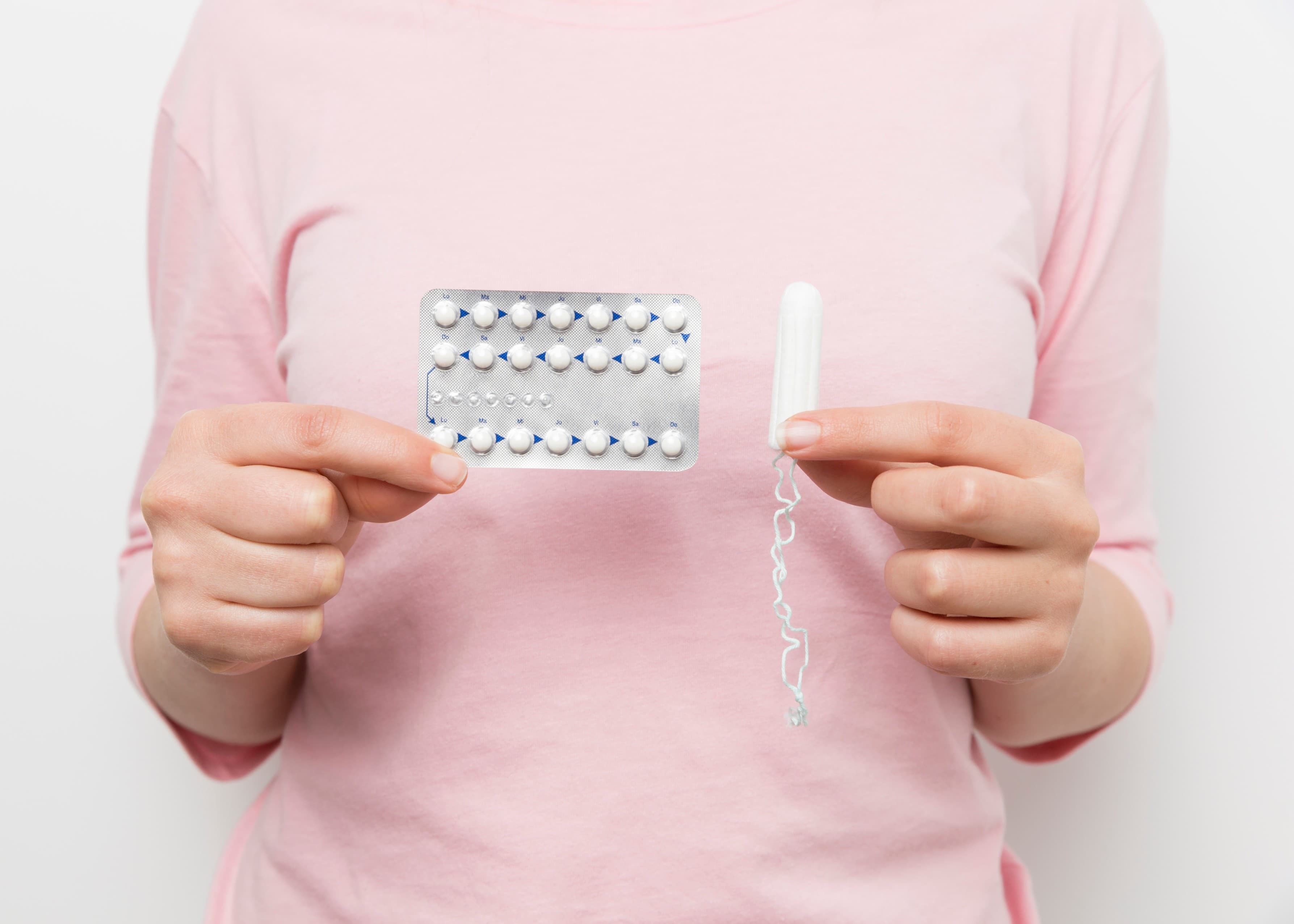
Girl holding pills
Contraception after childbirth is an important and frequently neglected conversation. Many women are surprised to learn that ovulation can return before the first period after delivery — meaning pregnancy is possible before a woman even knows her fertility has returned. For many couples, becoming pregnant again within months of delivery is not the plan.
Dr. Shachi Singh, consultant gynaecologist at Prakash Hospital, Sector 33, Noida, explains all postnatal contraception options.
When Fertility Returns After Delivery
Breastfeeding women: Prolactin — the hormone driving breast milk production — suppresses GnRH and therefore suppresses ovulation. Lactational amenorrhoea method (LAM) — exclusively breastfeeding, day and night, with no supplementary feeding, in a woman whose periods have not yet returned — provides approximately 98% contraceptive efficacy in the first 6 months. Once any of these three conditions changes, contraceptive protection of LAM falls significantly.
Non-breastfeeding women: Ovulation typically returns by 4 to 6 weeks after delivery. The first ovulation occurs before the first postpartum period — meaning pregnancy is possible before periods return.
The practical implication: All women who do not want to become pregnant again should have a contraceptive plan in place by 3 to 4 weeks postpartum — earlier for women who are not breastfeeding.
Options Safe During Breastfeeding
Progestogen-only pill (POP / mini-pill): Safe during breastfeeding from 3 weeks postpartum. Contains only progestogen — no oestrogen. Progestogen does not affect milk supply and transfers only minimally to breast milk. Highly effective with consistent use. Must be taken at the same time each day (within 3 hours for most POPs, within 12 hours for the desogestrel-containing POP).
Progestogen-only injectable (Depo-Provera): A single injection provides 12 weeks of contraception. Safe during breastfeeding from 6 weeks postpartum. Highly effective, convenient. Side effects include irregular bleeding and potential for prolonged return of fertility after stopping.
Progestogen-only implant (Nexplanon/Implanon): A small rod inserted under the skin of the upper arm. Provides 3 years of highly effective contraception. Safe from 3 to 4 weeks postpartum during breastfeeding.
Levonorgestrel-releasing IUS (Mirena): The most effective reversible contraception available. Contains only progestogen. Safe during breastfeeding. Can be inserted at 4 to 6 weeks postpartum or at the 6-week check. Provides 5 to 7 years of contraception. Also reduces heavy postpartum periods.
Copper IUCD (non-hormonal): Highly effective, hormone-free, safe during breastfeeding. Can be inserted immediately after delivery (within 48 hours) or from 4 to 6 weeks. Suitable for women who prefer a non-hormonal method.
Barrier methods (condoms, diaphragm): Safe from when intercourse resumes. Lower effectiveness with typical use compared to hormonal methods. Condoms remain the only contraceptive method that protects against STIs.
LAM: As described above — effective in the first 6 months with strict conditions met.
What to Avoid While Breastfeeding
Combined oral contraceptive pill (containing oestrogen): Oestrogen reduces breast milk production and supply, particularly in the first 6 weeks when milk production is being established. Combined OCP is therefore avoided for the first 6 months of breastfeeding, and used cautiously thereafter. After 6 months when milk supply is established, small amounts of oestrogen in the pill transfer minimally to milk. Many guidelines permit combined OCP after 6 months of established breastfeeding.
After Breastfeeding Ends (or for Non-Breastfeeding Women)
All methods are available. The combined oral contraceptive pill can be started from 6 weeks after delivery in non-breastfeeding women (or after 3 to 4 weeks if the woman was not breastfeeding at all). IUCD, implant, and POP remain good options.
Gynaecological Care in Noida and Greater Noida
Dr. Shachi Singh at Prakash Hospital, Sector 33, Noida, provides postnatal contraceptive counselling and all method insertions for women across Noida and Greater Noida.
To book a consultation with Dr. Shachi Singh, call: +91 97023 46853
This blog is for informational purposes only.