Myths And Facts About Laparoscopic Surgery

The medical staff carries out a laparoscopic procedure, a minimally invasive operation, efficiently and cleanly in sterile conditions.
Laparoscopic or 'minimal access surgery' has revolutionised modern medicine through speedier patient recovery and minimally invasive incisions. Although a well-accepted form of surgery, its continued widespread application is not without accompanying myth and misconception, which can understandably create confusion and apprehension for patients.
Misconceptions that this type of surgery may be inherently unsafe or more appropriate for smaller operations, in addition to questions regarding its efficacy over traditional open surgery,y need to be demystified as the reality is that this technique is used for multiple serious conditions and has a proven safety profile when carried out by suitably trained surgeons. Knowing what is myth and what is fact can allow patients to make clear decisions with comfort and confidence.
Understanding Laparoscopic Surgery
Gynecologic laparoscopy is a less invasive surgical procedure used for diagnosing and treating conditions affecting the female reproductive system. The technique involves the use of a small lighted scope that is inserted through a small abdominal incision; this scope provides visualisation of the uterus, ovaries, fallopian tubes, and surrounding tissue structures.
CO2 insufflation into the abdomen provides space and visualisation for the surgery. Indications for the procedure include endometriosis, ovarian cysts, ectopic pregnancy, fibroid disease, and evaluation of infertility. Compared with traditional abdominal surgery, less pain, smaller scarring, shorter hospitalization, and faster recovery can be expected with laparoscopy. The procedure is performed under general anesthesia by a qualified gynecologic surgeon, and specialised instrumentation is required.
Debunking Myths About Laparoscopic Surgery
Laparoscopic surgery (minimally invasive surgery) has greatly changed modern medicine due to the possibility of safer surgery, quicker recovery, and fewer scars. Nevertheless, many people still have false concepts about this advanced surgical procedure, and hence feel nervous before the surgery. We will provide common myths about laparoscopic surgery and the truth behind them.
Myth 1: Only minor procedures can be performed with laparoscopic surgery.
Fact: Laparoscopic surgery has been commonly applied for both minor and major procedures. Procedures for gallbladder, hernia repair, appendectomy, and gynecological operations such as hysterectomy and endometriosis are often performed using this method.
With the development of surgical instruments and techniques, even patients who are overweight and suffer from chronic diseases can be operated laparoscopically without much harm. Each patient needs an individual assessment by a qualified surgeon before the surgery.
Myth 2: Open surgery is safer than laparoscopic surgery.
Fact: In many procedures, laparoscopic surgery is even safer than open surgery. Smaller incisions result in less blood loss and a lower risk of complications, especially infection. Once it is carried out by a skilled surgeon, patients will have satisfying results and have fewer complications.
Myth 3: Patients recovering from laparoscopic surgery take more time.
Fact: Usually, patients who are treated with laparoscopic surgery recover more quickly. Because of small incisions, the wounds are less painful, and most patients can resume normal activities in a few days or one week. However, depending on different surgeries, the exact time of recovery may vary, but it is often shorter than that for open surgery.
Myth 4: The scar caused by laparoscopic surgery is quite big.
Fact: A major benefit of laparoscopic surgery is that there are hardly any obvious scars. With tiny incisions(0.5-1.5 cm) to perform the surgery, the scars heal fast and leave tiny traces compared with open surgery. So the cosmetic effect is better.
Myth 5: Laparoscopic surgery is more painful than open surgery.
Fact: Most patients find that the pain experienced after laparoscopic surgery is less severe than that of open surgery. It is caused by a small incision and tissue damage. So patients may feel more comfortable and need less medication. They can mobilise more easily and heal faster, too.
Myth 6: Laparoscopic Surgery is a longer-duration operation.
Fact: While some Laparoscopic operations are complex and take longer than open procedures, some can be completed quicker than open surgery, requiring a surgeon and team with special expertise and equipment. More importantly, ly the shorter stay and faster recovery mean that the overall treatment duration is much shorter.
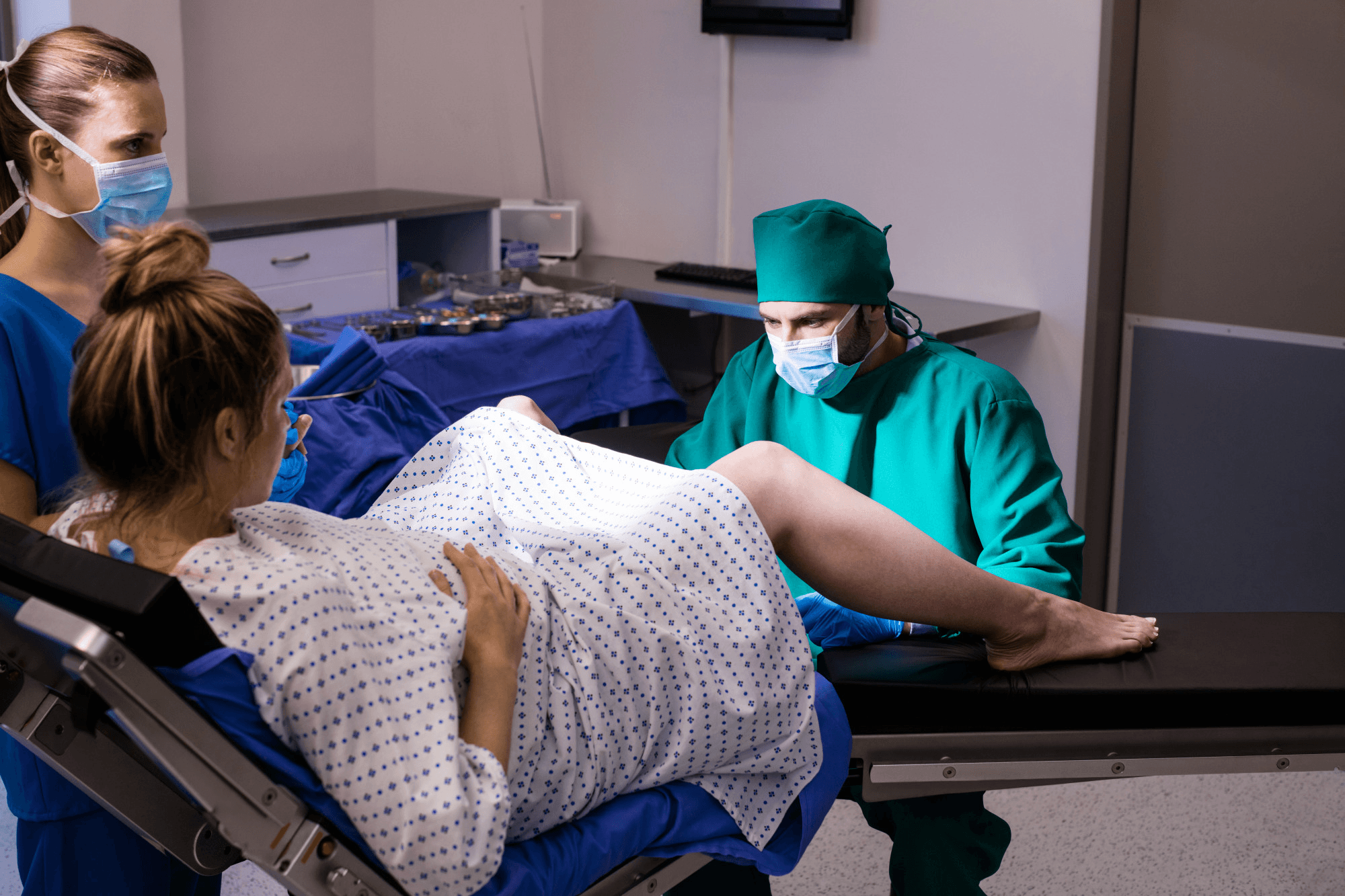
A surgical setting to prepare and operate on a female patient for laparoscopic reproductive surgery.
Myth 7: Laparoscopic surgery is very expensive.
Fact: Whilst the initial cost is slightly more than for open surgery, it tends to be more cost-effective in the long run. Savings include less time in the hospital, fewer complications, quicker recovery with the need for fewer pain killers, and minimal hospital visits.
Myth 8: The infection risk is higher with laparoscopic surgery.
Fact: The risk of infection with laparoscopic surgery is significantly less than with open surgery. A small incision means there is far less exposure of the internal organs and consequently there is much less chance of a surgical site infection. This is particularly helpful for diabetic and obese patients, who tend to be more prone to infection.
Myth 9: Laparoscopic surgery is less effective than open surgery.
Fact: Many laparoscopic procedures are as effective or indeed more effective than open surgery. Studies show similar and in some cases better results compared to open surgery, along with decreased pain, faster recovery, and less visible scarring. The success is related to the experience of the surgeon more than the approach used.
Myth 10: Previous abdominal surgery prohibits the laparoscopic approach.
Fact: Having previous abdominal surgery is not necessarily a contraindication for Laparoscopic surgery. There may be more scar tissue and adhesions than in an otherwise clear abdomen, but experienced Laparoscopic surgeons can safely perform Laparoscopic operations using specialised equipment and techniques. Each patient's case is assessed.
Final Thoughts
The use of laparoscopy has become a standard of care in gynaecology,y and it is one of the most effective and user-friendly techniques developed. Many myths about the procedure and the technique of the procedure cause patients to become apprehensive about having surgery, even though in most cases the method is a well-established procedure offering advantages over open laparoscopy, including less pain, faster recovery, smaller scars, and good clinical results by an experienced laparoscopist.
The truth is that by understanding and recognizing these myths, patients feel confident in making their decision about having the surgery. However, each patient is individual,l and all treatment decisions must be guided by a complete understanding of the individual circumstances. Consult a laparoscopy specialist for optimal results.
Expert Care With Dr. Shachi Singh
Laparoscopic surgery is complicated. If you are planning or need help with your gynecological problem, then don't live by rumors; gain reliable information. Consult with Dr. Shachi Singh, senior consultant gynecologist, Laparoscopic Surgeon, and a professional with 15 years of experience, who is consulted in Noida and across Delhi NCR for accurate diagnoses and advanced surgery, with all-round professional support from experienced professionals.
For simple issues, as well as critical situations, you can be sure to receive tailored, evidence-based care. For a positive stride to health, well-being, and a boost in your confidence, book a consultation now for secure, successful, and state-of-the-art treatment.

A consultation to explain to a woman the risks, advantages, and post-operative management required after laparoscopic minimally invasive surgery.
Frequently Asked Questions (FAQs)
1. Is the laparoscopic method better than the open method?
Compared with the traditional open method, the minimally invasive laparoscopic method causes less pain, has a smaller scar, speeds up the recovery period,d and decreases the length of hospitalization.
2. How long will it take to recover from the laparoscopic operation?
It usually takes about 1-3 weeks for the patient to fully recover from a laparoscopic operation; it also depends on the sort of operation and the patient's health, and following instructions in the post-operative period.
3 . When can I return to my normal daily routine after a laparoscopic operation?
Patients can do the normal daily work a few days after the laparoscopic operation, but heavy and strenuous exercises must be avoided for 2-4 weeks.
4. Why will I feel gas or shoulder pain after a laparoscopic operation?
Gas that has been injected for a laparoscopic operation causes an irritating effect on the diaphragm and refers to shoulder pain, which would disappear after a few days spontaneously.