Laparoscopy vs Open Surgery: An Honest Comparison for Women Facing a Gynaecological Procedure
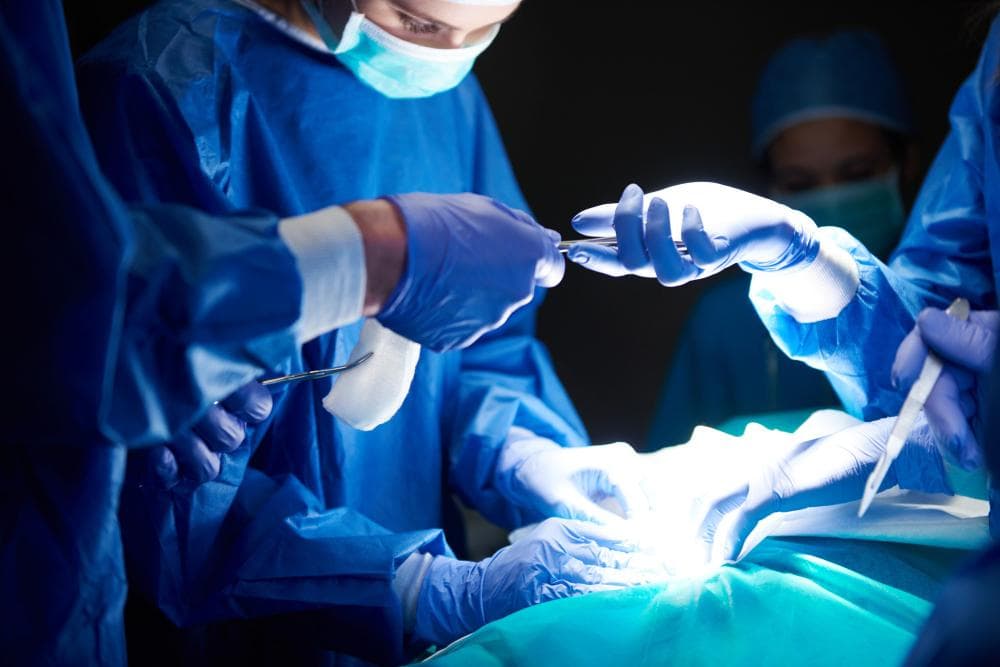
Surgeons conducting a laparoscopic hysterectomy operation on a patient.
If you have been told you need surgery — a hysterectomy, fibroid removal, cyst removal, endometriosis treatment — and you are now trying to understand your options, the laparoscopy vs open surgery question is likely one of the first things you are researching.
The short answer is that for most gynaecological conditions, laparoscopic surgery produces equivalent or better outcomes with a significantly faster recovery, less pain, smaller scars, and lower infection risk compared to open surgery. That is not marketing language — it is the clinical consensus supported by decades of surgical research.
The longer answer involves understanding why this is true, what the limitations of laparoscopy are, and when open surgery remains the appropriate choice.
Dr. Shachi Singh, consultant gynaecologist and laparoscopic surgeon at Prakash Hospital, Sector 33, Noida, has performed hundreds of laparoscopic gynaecological procedures over 15 years. This is an honest breakdown of the two approaches.
The Fundamental Difference: How the Two Approaches Work
Open surgery (laparotomy): A horizontal incision — typically 10 to 15 centimetres — is made across the lower abdomen. The surgeon reaches the organs directly through this opening. The abdominal muscles are retracted and sometimes cut through to access the internal structures. After the procedure, all layers are sutured shut.
Laparoscopic surgery (keyhole surgery): Two to four small incisions, each between 0.5 and 1.5 centimetres, are made in the abdomen. A thin instrument with a high-definition camera (the laparoscope) is inserted through one incision. The abdomen is inflated with carbon dioxide gas to create working space. Specialised instruments are inserted through the other small incisions. The surgeon operates by viewing the internal anatomy on a monitor screen. When the procedure is complete, the gas is released, and the tiny incisions are closed.
Both approaches can accomplish the same gynaecological objectives. What differs is the route taken to get there — and that difference in route has significant consequences for the patient.
Recovery Time: The Difference That Changes Everything
This is where the gap between the two approaches is most stark.
Open surgery recovery:
- Hospital stay: 3 to 5 days
- Return to light activity (household tasks, short walks): 4 to 6 weeks
- Return to desk work: 4 to 6 weeks
- Return to physical work or exercise: 8 to 12 weeks
- Full internal recovery: 6 to 12 weeks
Laparoscopic surgery recovery:
- Hospital stay: Day care (same day) to 1 to 2 nights maximum
- Return to light activity: 2 to 5 days
- Return to desk work: 1 to 2 weeks
- Return to physical work or exercise: 3 to 4 weeks
- Full internal recovery: 4 to 6 weeks
For a working woman — for virtually any woman with responsibilities — the difference between 6 weeks and 2 weeks of recovery is not minor. It affects income, family functioning, childcare, and the entire context of the person's life. The physical recovery is genuinely faster because the trauma to the body is genuinely smaller.
A 2025 peer-reviewed comparative study confirmed that laparoscopic surgical patients had an average hospital stay of 2.1 days versus 4.4 days for open surgical patients, alongside significantly lower blood loss and operative time.
Pain Levels: Significantly Less with Laparoscopy
Post-operative pain depends directly on how much tissue has been cut through, stretched, and sutured. Open surgery involves a large abdominal incision through multiple tissue layers — skin, fat, and fascia. The resulting pain is significant and requires meaningful analgesia for several days to weeks.
Laparoscopic surgery involves tiny incisions, no retraction of abdominal muscles, and minimal disturbance to surrounding structures. Post-operative pain is typically mild and concentrated around the small incision sites.
One pain that is unique to laparoscopy: Shoulder and collarbone discomfort. The carbon dioxide gas used to inflate the abdomen can irritate the diaphragm, and this irritation is felt as referred pain in the shoulder and upper chest area. It sounds alarming but is completely harmless and resolves within 24 to 48 hours as the body absorbs the residual gas.
Most women after laparoscopic surgery are comfortable on standard oral pain relief within 24 to 48 hours. Women after open surgery often need stronger analgesia for longer periods, and the abdominal wound pain can interfere with sleeping, moving, and breathing deeply.
Scarring: A Visible, Long-Term Difference
Open surgery: Leaves a horizontal scar across the lower abdomen — typically the Pfannenstiel incision. This scar is 10 to 15 centimetres long, visible above the pubic hairline. It fades over time but is permanent. For many women, particularly younger women, this is a significant and unwanted cosmetic consequence.
Laparoscopic surgery: Leaves 2 to 4 puncture marks, each less than 1.5 centimetres. These heal to marks that are typically barely visible within months. Most women find them completely unremarkable within a year.
Blood Loss: Less with Laparoscopy
Laparoscopic surgery involves significantly less intraoperative blood loss than open surgery for the same procedure. In the same 2025 comparative study, laparoscopic patients lost an average of 120 ml of blood versus 170 ml for open surgery patients — a statistically significant difference.
Less blood loss means a lower risk of requiring a blood transfusion, faster post-operative recovery of energy levels, and less likelihood of post-operative anaemia — which is particularly relevant for women who often have borderline haemoglobin going into surgery.
Infection Risk: Lower with Laparoscopy
The risk of surgical site infection is directly proportional to the size of the wound and the degree of tissue exposure during surgery. A 10 to 15 centimetre open incision represents a much larger potential entry point for bacteria than four 1 cm punctures. Internal organs are exposed to the operating theatre environment for longer in open surgery.
The infection rate after laparoscopic surgery is approximately half that seen with comparable open surgical procedures. For Indian women who may have limited access to antibiotic follow-up or face logistical challenges with wound care at home, this lower infection risk is particularly practically important.
Visualisation: Actually Better in Laparoscopy
This surprises many people. The assumption is that open surgery gives the surgeon a better view because they can see and feel the structures directly. In reality, the laparoscope's camera — particularly modern 4K high-definition systems — provides a magnified, illuminated, close-up view of the surgical field that is often clearer than what the naked eye sees through an open wound.
Surgeons operating laparoscopically can inspect the surfaces of internal organs, the fallopian tubes, and deep pelvic structures in magnification that open surgery cannot match. This is one reason laparoscopy is the gold standard for diagnosing endometriosis — the deposits are often millimetre-sized and more clearly visible on a magnified camera view than to the naked eye.
Hospital Stay and Economics
Shorter hospital stay translates directly to lower costs. The difference in admission costs between a 1-night and a 4-night stay for the same surgical objective is substantial. Add the faster recovery and earlier return to work, and the economic case for laparoscopy — not just the clinical case — is strong.
For families in Noida and Greater Noida where the woman contributes to household income or manages household functions, the shorter recovery is not just a comfort issue — it is a practical economic issue.
When Open Surgery Is Still the Right Choice
Laparoscopy is not appropriate in every situation. The honest answer includes acknowledging that open surgery remains the right approach in certain circumstances:
Very large fibroids or masses: Fibroids above a certain size — sometimes above 10 to 12 cm, depending on the surgeon's laparoscopic expertise — may be better managed through open surgery. Removing and extracting very large tissue volumes through tiny incisions presents technical challenges that can affect surgical time and outcome.
Suspected malignancy: When there is a meaningful concern that a mass may be cancerous, the surgical approach needs to prioritise complete, intact removal and thorough staging. In some cases, this is better achieved through an open approach, though minimally invasive techniques are increasingly being used even in oncological settings.
Dense, extensive pelvic adhesions: Previous multiple abdominal surgeries or severe endometriosis can create dense scar tissue throughout the pelvis that makes laparoscopic navigation technically difficult or unsafe. An experienced laparoscopic surgeon will assess this preoperatively but may need to convert to open surgery if the anatomy cannot be safely navigated laparoscopically.
Haemodynamic instability: In emergencies involving significant internal bleeding, open surgery allows faster direct access to control bleeding. Laparoscopic ectopic pregnancy surgery is appropriate in stable patients; in acute haemorrhage with cardiovascular compromise, open surgery may be faster.
Patient factors: Severe obesity can limit the working space within the abdomen during laparoscopy. Very advanced prior surgeries or specific cardiorespiratory conditions may affect the suitability of the gas insufflation used in laparoscopy.
When a surgeon recommends open surgery in a patient who expected laparoscopy, asking why is entirely appropriate. The answer should make medical sense.
The Surgeon's Experience: A Factor That Matters
Laparoscopic surgery is technically more demanding than open surgery for the same procedure. The surgeon must develop spatial reasoning in a 2D screen environment, operate through narrow ports, and manage instruments at greater distances. This requires substantial dedicated training and ongoing case volume to maintain proficiency.
A surgeon who performs laparoscopic hysterectomies regularly will achieve better outcomes, shorter operating times, and lower complication rates than one who performs occasional cases. When seeking laparoscopic surgery, asking about the surgeon's case volume and specific training in the procedure you need is a reasonable and appropriate question.
The Evidence in Summary
The clinical literature on laparoscopy versus open surgery for gynaecological procedures consistently shows
- Equal or better surgical outcomes for the same conditions
- Significantly faster recovery in every measured domain
- Less post-operative pain requiring less analgesia
- Lower infection rates
- Less blood loss
- Shorter hospital stays
- Better cosmetic outcomes
For conditions like laparoscopic hysterectomy versus open hysterectomy, the data is unambiguous. For ovarian cyst removal and myomectomy, the data consistently favour laparoscopy in appropriate candidates. The shift in surgical practice over the last two decades — from open surgery as the default to laparoscopy as the default — reflects this evidence.
Laparoscopic Gynaecological Surgery in Noida and Greater Noida
Dr. Shachi Singh at **Prakash Hospital, Sector 33, Noida, performs the full range of gynaecological laparoscopic procedures — including TLH (laparoscopic hysterectomy), ovarian cyst removal, laparoscopic myomectomy, endometriosis surgery, and diagnostic laparoscopy — for women across Noida and Greater Noida.
If you have been advised of surgery and want to understand whether a laparoscopic approach is appropriate for your specific condition, a consultation is the right starting point.
To book a consultation with Dr. Shachi Singh, call: +91 97023 46853
Clinic Hours: Monday to Saturday, 9 AM – 6 PM | Sunday, 10 AM – 2 PM
Clinic Address: D-12A, 12B, Sector-33, G.B. Nagar, Noida, Uttar Pradesh 201301
Frequently Asked Questions
Is laparoscopic surgery safer than open surgery?
For most gynaecological conditions, yes. Lower infection risk, less blood loss, and less tissue trauma generally make laparoscopy the safer option when performed by an experienced surgeon. Open surgery remains appropriate in specific situations — very large masses, suspected malignancy, or dense adhesions.
Will I have less pain after laparoscopic surgery?
Significantly less. Post-operative pain from laparoscopic surgery is typically managed with standard oral pain medication within 24 to 48 hours. Open surgery often requires stronger analgesia for longer periods due to the larger wound.
How long is recovery after laparoscopic surgery compared to open?
Laparoscopic surgery: light activity in 2 to 5 days, desk work in 1 to 2 weeks, full recovery in 4 to 6 weeks. Open surgery: light activity in 4 to 6 weeks, desk work in 4 to 6 weeks, full recovery in 6 to 12 weeks.
Can all gynaecological surgeries be done laparoscopically?
Most, but not all. Very large fibroids, suspected malignancy, dense adhesions, or emergency haemorrhage may require open surgery. Your surgeon will assess your specific situation and explain which approach is appropriate and why.
Does laparoscopic surgery affect fertility?
Laparoscopic surgery for conditions like fibroids (myomectomy), endometriosis, ovarian cysts, and adhesions generally improves fertility by treating the conditions that impair it, while preserving healthy tissue. The laparoscopic approach typically causes less collateral tissue damage than open surgery.
This blog is written for educational and informational purposes only. Please consult Dr. Shachi Singh or a qualified gynaecological surgeon for a clinical assessment specific to your condition and surgical needs.