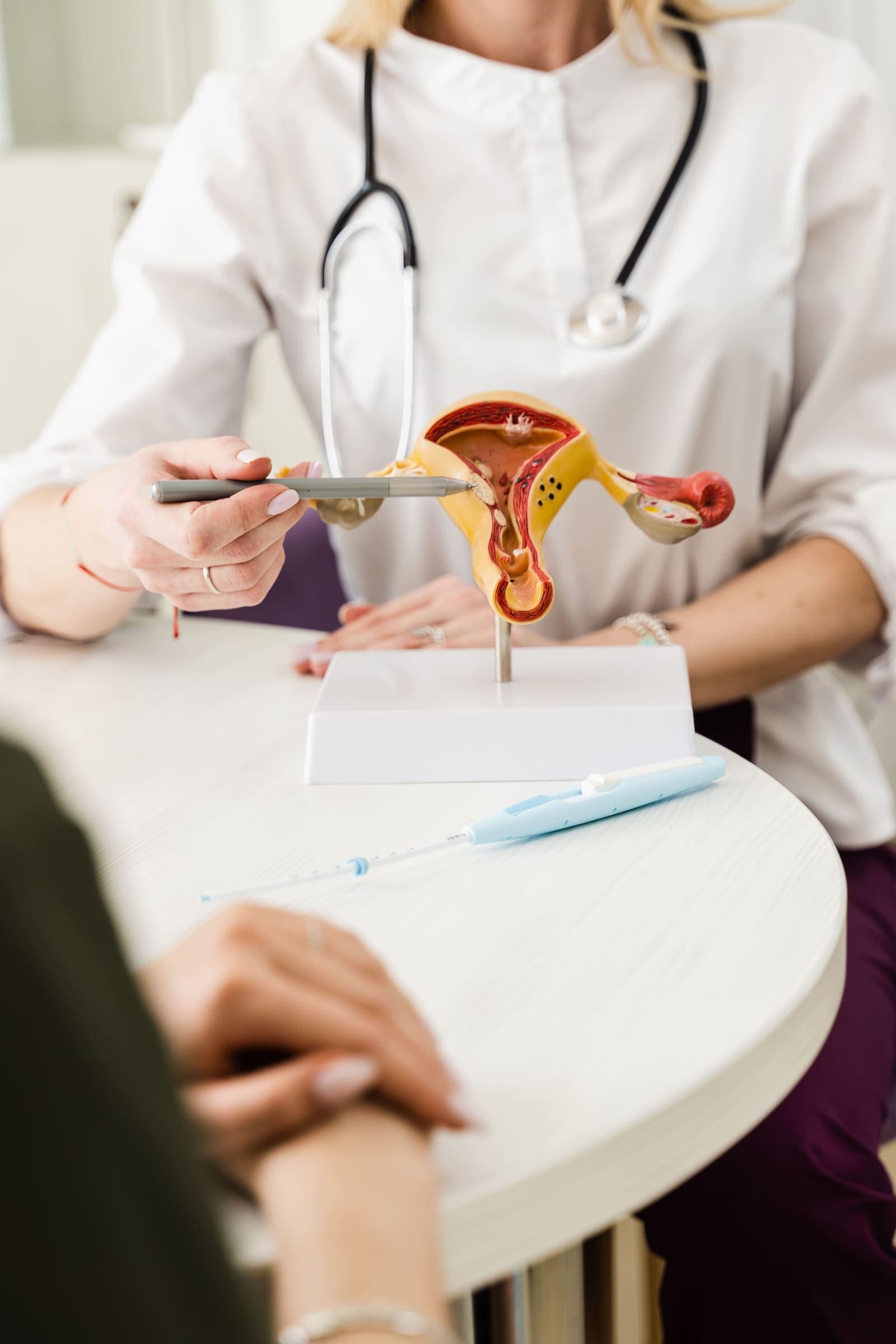
Burning Sensation While Peeing in Women: What It Means When It's Not a UTI

Burning Sensation While Peeing in Women
Burning when you urinate. The instinct for most women is immediate: must be a UTI, go to the pharmacy, get an antibiotic. Sometimes that is exactly right. But burning during urination has multiple causes — and treating the wrong one, or missing one, means the burning does not go away.
The medical term is dysuria. It is one of the most common presenting complaints in gynaecological and general practice. And while a urinary tract infection is the most frequent cause, it is not the only one. Getting the right diagnosis matters — both because some causes need specific treatment that an antibiotic will not provide, and because recurrent dysuria that keeps coming back deserves proper investigation rather than repeated empirical antibiotic courses.
Dr. Shachi Singh, consultant gynaecologist at Prakash Hospital, Sector 33, Noida, walks through the full picture of what causes burning urination in women and what each cause needs.
Understanding Where the Burning Comes From
The first clue is location. Burning that is felt inside the urethra and bladder as urine flows through — internal dysuria — usually points toward a urinary tract infection or urethral condition. Burning that is felt externally as urine touches the vulvar skin — external dysuria — usually points toward a vulvovaginal condition (infection, skin condition, or atrophy). Some women have both simultaneously.
This distinction guides both diagnosis and treatment. External burning with a negative urine culture should prompt a vaginal examination, not another antibiotic.
The Most Common Causes
1. Urinary Tract Infection (Cystitis)
The most frequent cause. E. coli and other bowel bacteria ascend the urethra to the bladder, causing inflammation. The burning is typically felt internally throughout urination. Other features that typically accompany UTI include urgency, frequency, suprapubic discomfort, and sometimes cloudy or blood-tinged urine.
Diagnosis: Urine dipstick and culture. Treatment: Appropriate antibiotics, guided by culture sensitivity.
2. Vulvovaginal Candidiasis (Thrush)
Fungal infection of the vagina and vulvar area — the most commonly missed cause of external dysuria. As urine passes over an inflamed, irritated vulva, it causes burning that can be intense. Women often assume it is a UTI and are puzzled when the antibiotic does not help.
Other features: Intense vulval itching, thick white cottage-cheese-like vaginal discharge, redness and swelling of the vulva.
Diagnosis: Clinical assessment, vaginal swab for microscopy and culture if the diagnosis is uncertain. Treatment: Antifungal (clotrimazole pessary or cream, or oral fluconazole).
3. Bacterial Vaginosis (BV)
BV — overgrowth of mixed anaerobic bacteria replacing normal Lactobacillus-dominant vaginal flora — can cause mild vulvar irritation and external burning during urination. The discharge is typically greyish-white with a characteristic fishy odour, particularly after sex.
Diagnosis: Vaginal pH testing (elevated above 4.5), microscopy or culture. Treatment: Metronidazole (oral or vaginal gel) or clindamycin.
4. Vaginal Dryness and Atrophy
In postmenopausal women and breastfeeding women, oestrogen deficiency causes the vaginal and urethral tissues to thin, lose lubrication, and become easily irritated. The urethra and vaginal tissues are closely related — atrophic changes affect both. Burning during urination in a postmenopausal woman with a negative urine culture should prompt consideration of genitourinary syndrome of menopause (GSM).
Diagnosis: Clinical examination. Treatment: Local vaginal oestrogen (cream or pessary) — highly effective and minimally absorbed systemically.
5. Sexually Transmitted Infections
Several STIs present with or cause dysuria:
Chlamydia: One of the most common STIs in women and frequently asymptomatic. When symptoms occur, dysuria and urethral discharge are features. Many women with chlamydial urethritis are misdiagnosed as having a UTI — the urine culture is negative, and the antibiotic used for UTI does not treat chlamydia (which requires azithromycin or doxycycline).
Gonorrhoea: Similar presentation to chlamydia — urethral discharge and dysuria. Both chlamydia and gonorrhoea are tested using a specific swab or urine NAAT (nucleic acid amplification test), not a standard urine culture.
Herpes simplex (genital herpes): Burning during urination in herpes is typically external — urine contacts the painful ulcers or blisters on the vulvar skin. The blisters and ulcers are usually visible on examination. First-episode herpes often causes severe dysuria.
Trichomonas vaginalis: A parasitic STI causing a frothy yellow-green vaginal discharge with itching and external burning during urination.
Any woman with dysuria whose urine culture is negative, or who has recurrent episodes with negative cultures, should be screened for STIs.
6. Urethritis
Inflammation of the urethra itself — from the organisms listed above (chlamydia, gonorrhoea) or from non-specific urethritis. The burning is specifically felt at the urethral opening and along the urethra. A urethral swab (not a standard urine culture) is needed to diagnose urethral-specific infection.
7. Contact Dermatitis and Vulvar Skin Irritation
As urine flows over sensitised or irritated vulvar skin, it causes burning. Common irritants include:
- Scented sanitary pads or panty liners
- Vaginal washes, sprays, or deodorants
- Synthetic underwear
- Laundry detergent
- Spermicide gels
- Latex condoms (in latex-sensitive women)
The burning is typically external — felt at the vulvar opening, not inside the bladder — and may be accompanied by redness, itching, or swelling of the vulvar skin.
8. Lichen Sclerosus and Other Vulvar Skin Conditions
The chronic inflammatory skin condition lichen sclerosus causes intense vulvar itching and skin changes (white, thinned, fragile skin). As it progresses, architectural changes can narrow the urethral and vaginal opening, causing burning and difficulty with urination.
This diagnosis is frequently missed for years. Persistent external dysuria in a postmenopausal woman with vulvar skin changes should always prompt a gynaecological examination.
9. Interstitial Cystitis (Bladder Pain Syndrome)
A chronic bladder condition causing pelvic pain, urinary urgency, frequency, and dysuria in the absence of infection. Women with interstitial cystitis frequently receive repeated courses of antibiotics for "UTIs" that are never actually confirmed on culture. The urine cultures are repeatedly negative. The symptoms persist and worsen.
Interstitial cystitis is underdiagnosed in India. Any woman with persistent bladder symptoms and repeatedly negative urine cultures should be assessed for this condition by a urologist or urogynaecologist.
10. Kidney Stones
A stone passing through the ureter or lodged near the bladder can cause dysuria alongside the more typical features of renal colic (severe flank pain, blood in the urine). Dysuria from a stone is usually accompanied by other distinctive features that make the diagnosis clearer.
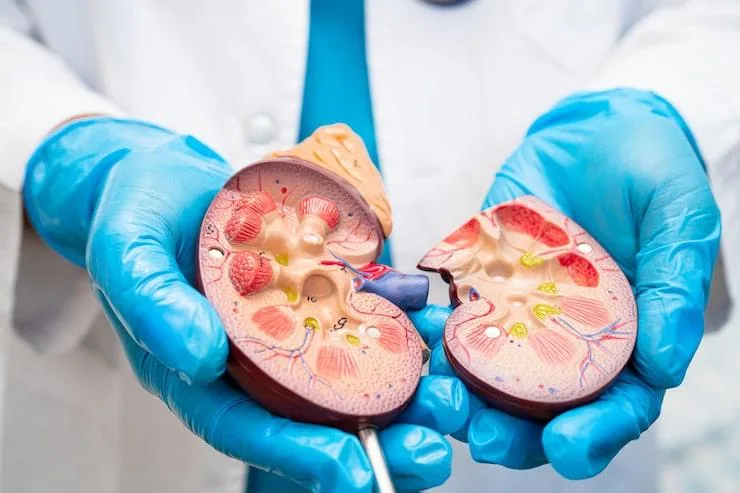
Model of an open kidney
What Makes This Hard to Self-Diagnose
The problem is that several of these conditions produce symptoms that overlap significantly. Candidiasis can cause dysuria without obvious discharge in some women. Chlamydia is frequently asymptomatic. A postmenopausal woman's GSM can produce the exact urinary symptoms of a UTI — but with a negative culture. Interstitial cystitis mimics recurrent UTIs for years before the correct diagnosis is made.
This is why the pattern of recurrent "UTIs" that keep coming back despite treatment, or that have negative urine cultures, deserves a proper investigation rather than repeated empirical antibiotics.
The Evaluation: What a Proper Assessment Involves
When burning urination is persistent, recurrent, or not responding to treatment, a thorough evaluation includes:
- Urine dipstick and culture: To confirm or exclude bacterial infection and identify the organism and its sensitivities
- Vaginal examination: To assess for thrush, BV, atrophy, contact dermatitis, herpes, or other vulvovaginal conditions
- STI screening: NAAT testing for chlamydia and gonorrhoea (from vaginal or urethral swab, or urine)
- Vaginal pH: A simple bedside test that helps distinguish infection (elevated pH) from normal
- Microscopy: Examining vaginal discharge under the microscope to identify infection types
- Urological assessment if indicated: For women with recurrent negative cultures and persistent symptoms
Gynaecological Assessment in Noida and Greater Noida
Dr. Shachi Singh at Prakash Hospital, Sector 33, Noida, evaluates dysuria and recurrent urinary symptoms in women across Noida and Greater Noida — including full vaginal assessment, STI screening, culture-directed treatment, and management of underlying causes including vaginal atrophy, vulvar skin conditions, and recurrent infection.
To book a consultation with Dr. Shachi Singh, call: +91 97023 46853
Clinic Hours: Monday to Saturday, 9 AM – 6 PM | Sunday, 10 AM – 2 PM
Clinic Address: D-12A, 12B, Sector-33, G.B. Nagar, Noida, Uttar Pradesh 201301
Frequently Asked Questions
1. If my urine test is negative, why do I still have burning when I urinate?
A negative urine culture means bacteria are not growing from your urine sample. But burning during urination has many non-bacterial causes — vaginal infections (thrush, BV), STIs (chlamydia causes urethral symptoms with a negative bladder urine culture), vaginal atrophy, contact dermatitis, and interstitial cystitis. A gynaecological examination alongside the urine test gives a much more complete picture.
2. Can thrush cause burning when urinating?
Yes. Candida (thrush) causes external burning — as urine contacts the inflamed vulvar skin it produces a burning sensation that can be intense. It is frequently confused with UTI. The distinguishing features are typically intense vulval itching, white discharge, and external rather than internal burning.
3. Is burning during urination always sexually transmitted?
No. The most common cause is a UTI, which is not sexually transmitted. STIs are one cause among several. A proper assessment — urine culture and vaginal examination — identifies the actual cause.
4. Can vaginal dryness cause burning when I urinate?
Yes, particularly in postmenopausal women and breastfeeding women. Oestrogen deficiency causes the urethral tissue to thin and become easily irritated. Local vaginal oestrogen treatment addresses this effectively.
This blog is written for educational and informational purposes only. Please consult Dr. Shachi Singh or a qualified gynaecologist for assessment specific to your symptoms.