Gestational Diabetes: A Complete Guide for Newly Diagnosed Pregnant Women
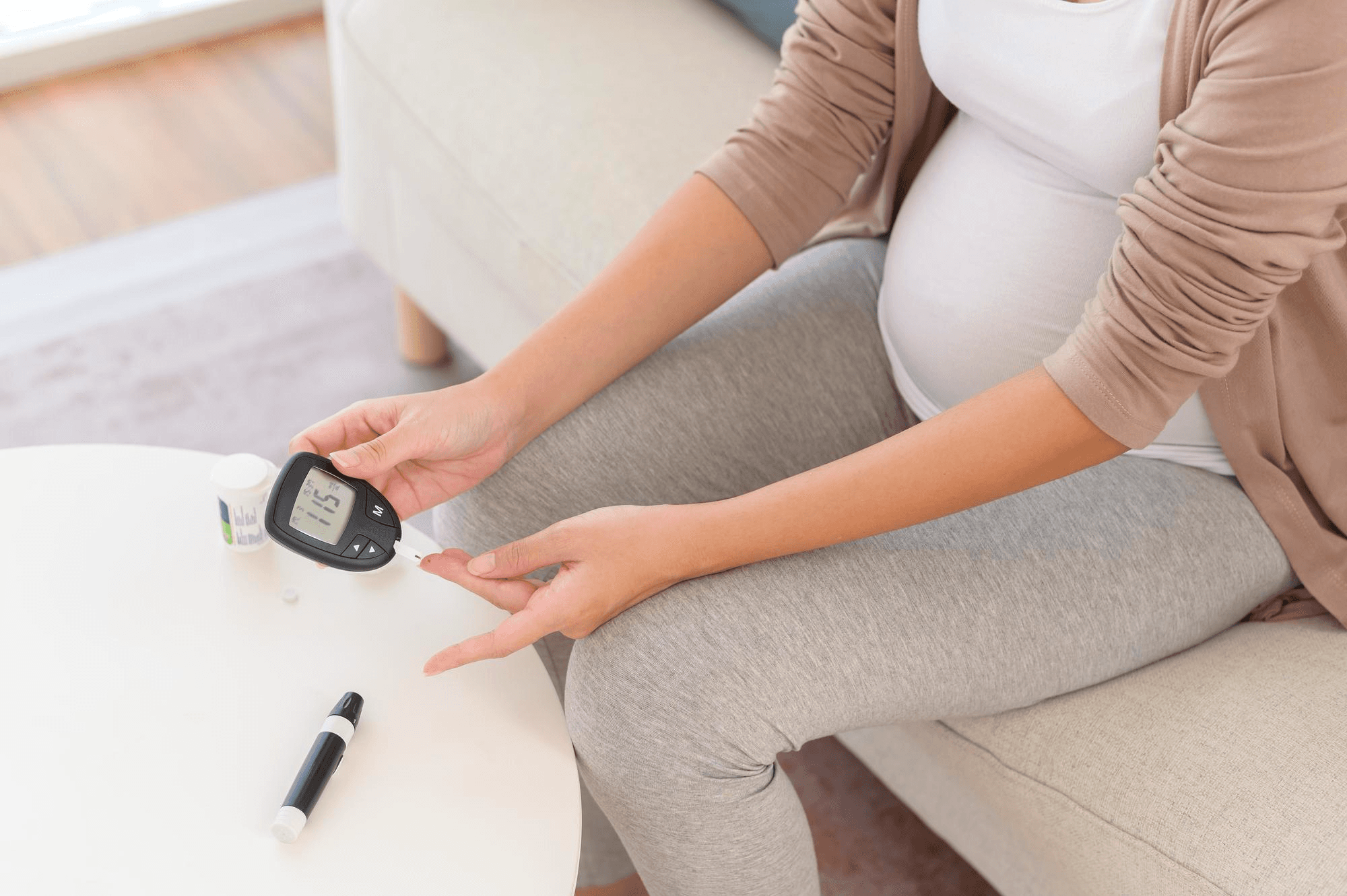
Pregnant woman checking her blood sugar level with a glucometer at home during an ongoing health routine.
A gestational diabetes (GDM) diagnosis at 24 to 28 weeks often comes as a shock — particularly for women who felt well and had no obvious risk factors. The words "gestational diabetes" conjure fear about the baby, the delivery, and what this means for health. Most of that fear is disproportionate to the actual situation.
GDM is manageable. With proper diet, monitoring, and treatment when needed, the vast majority of women with GDM deliver healthy babies at term with no complications.
Dr. Shachi Singh, consultant obstetrician at Prakash Hospital, Sector 33, Noida, explains.
What Gestational Diabetes Is
Pregnancy produces insulin resistance as a normal physiological mechanism — hormones from the placenta (particularly human placental lactogen, progesterone, and cortisol) reduce maternal insulin sensitivity, diverting glucose to the fetus. In most women, the pancreas compensates by producing more insulin. In women with GDM, the pancreatic response is insufficient — blood glucose rises above normal.
GDM is not type 2 diabetes — it develops specifically because of pregnancy and in most cases resolves after delivery. But it does share metabolic mechanisms: women with GDM are at significantly elevated risk of developing type 2 diabetes in the years after pregnancy.
Risk Factors
Who is at higher risk:
- BMI above 25 (overweight)
- PCOS — insulin resistance is intrinsic to PCOS pathophysiology
- Family history of type 2 diabetes
- Previous GDM
- Previous large baby (macrosomia — birth weight above 4 kg)
- Age above 35
- South Asian ethnicity (Indian women have significantly elevated GDM risk compared to European populations — at lower BMI thresholds)
- Previous stillbirth or unexplained pregnancy loss
- Glycosuria on routine urine testing
India's GDM prevalence is approximately 10 to 20% in urban pregnant populations — notably higher than Western figures. Routine screening is essential.
Diagnosis: The Glucose Tolerance Test (GTT)
When: 24 to 28 weeks for standard screening. Earlier (first trimester) for women with significant risk factors — PCOS, previous GDM, BMI above 30, strong family history.
How: 75g oral glucose tolerance test (OGTT) — fasting blood glucose taken, then 75g glucose solution drunk, then blood taken at 1 hour and 2 hours.
Diagnostic thresholds (WHO 2013 criteria — used in India):
| Time Point | GDM Threshold | |---|---| | Fasting | ≥ 5.1 mmol/L (92 mg/dL) | | 1 hour | ≥ 10.0 mmol/L (180 mg/dL) | | 2 hours | ≥ 8.5 mmol/L (153 mg/dL) |
One abnormal value is sufficient to diagnose GDM.
Diet: The First-Line Treatment
Dietary modification controls GDM in approximately 70 to 80% of women — without needing medication.
The core principle: Avoid rapid rises in blood glucose (glycaemic spikes) by choosing foods that release glucose slowly (low glycaemic index) and distributing carbohydrate intake throughout the day.
Practical guidance for Indian women with GDM:
Reduce refined grains: Maida (white flour) in chapati, paratha, bread, biscuits, and snacks causes rapid glucose spikes. Switch to: multigrain or whole wheat chapati (atta with added jowar, bajra, or oat bran). Smaller portions.
Control rice: Rice has a high glycaemic index. Replace with brown rice, or use smaller portions of white rice with a generous proportion of dal and sabzi. Eating rice as part of a complete meal (with protein and fibre) slows absorption.
Eat protein at every meal and snack: Protein slows glucose absorption and reduces post-meal spikes. Options: dal, curd, paneer, eggs, fish, chicken, nuts. A handful of roasted chana or a cup of curd as a snack is better than biscuits or fruit juice.
Fruit in moderation: Fruit contains fructose and is healthy, but high-sugar fruits (mango, banana, grapes, sapota/chikoo, lychee) raise glucose significantly. Better choices: guava, jamun, pear, apple, orange — in moderation (one small serving at a time). Fruit juice is not recommended — it is concentrated sugar without the fibre.
Avoid sugary foods and drinks: Chai with more than a teaspoon of sugar, packaged juice, cold drinks, mithai, sweets. These cause rapid spikes.
Three meals and three snacks: Spreading carbohydrate intake across 6 smaller eating occasions rather than 3 large meals prevents large post-meal glucose spikes. Never skip meals.
Timing the evening meal: A late dinner (after 9 PM) raises fasting glucose the next morning more than an earlier dinner. Aim for dinner by 8 PM.
Blood Glucose Monitoring
Home glucose monitoring: A glucometer is essential. Standard monitoring targets in GDM:
- Fasting (morning, before food): below 5.3 mmol/L (95 mg/dL)
- 1 hour after meals: below 7.8 mmol/L (140 mg/dL)
- 2 hours after meals: below 6.7 mmol/L (120 mg/dL)
Frequency: 4 readings daily (fasting + after each meal) initially — reduces to 2 to 4 as patterns stabilise.
A glucose diary of readings alongside food notes helps identify which foods cause spikes for an individual woman — because glycaemic responses vary between individuals.
When Medication Is Needed
If blood glucose targets are not met consistently despite dietary adherence:
Metformin: Oral tablet — commonly used as first-line pharmacological treatment in India. Reduces insulin resistance. Crosses the placenta — the safety data in pregnancy is extensive and reassuring. Not suitable for women with kidney impairment.
Insulin: The traditional gold standard — does not cross the placenta, acts quickly, and dose can be precisely adjusted. Given as injections (typically before meals and/or at bedtime). Modern insulin pens make administration straightforward. Not to be feared — insulin is a normal body hormone.
The choice between metformin and insulin depends on the degree of glucose elevation, patient preference, and clinical context.
Labour and Delivery
Most women with well-controlled GDM can have a normal vaginal delivery at term. Induction of labour at 38 to 40 weeks (depending on control quality and ultrasound findings) is commonly recommended rather than waiting beyond 40 weeks — because macrosomia and stillbirth risk rise with gestation in poorly controlled GDM.
Blood glucose is monitored during labour. Insulin infusion is used if glucose rises during labour.
A baby born to a GDM mother may have hypoglycaemia (low blood sugar) in the first hours after delivery — because the baby's pancreas was producing high insulin to cope with high maternal glucose, and it takes time to adjust after birth. Early feeding and neonatal glucose monitoring is standard.
After Delivery: Long-Term Implications
GDM resolves after delivery in the vast majority of women. However:
- Women with GDM have a 30 to 50% lifetime risk of developing type 2 diabetes
- A postnatal 75g OGTT at 6 to 8 weeks after delivery checks that glucose has returned to normal
- Annual fasting glucose or HbA1c screening thereafter
- Lifestyle modification — maintaining healthy weight, exercising regularly, reducing refined carbohydrates — significantly reduces the conversion risk
Obstetric Care in Noida and Greater Noida
Dr. Shachi Singh at Prakash Hospital, Sector 33, Noida, manages gestational diabetes throughout pregnancy — from diagnosis through dietary counselling, glucose monitoring support, medication when needed, and delivery planning — for women across Noida and Greater Noida.
To book a consultation, call: +91 97023 46853
Clinic Hours: Monday to Saturday, 9 AM – 6 PM | Sunday, 10 AM – 2 PM
Address: D-12A, 12B, Sector-33, G.B. Nagar, Noida, UP 201301
This blog is for educational purposes only. GDM management should be supervised by your obstetrician.