Placenta Previa: What It Means, What to Watch For, and How Delivery Is Planned

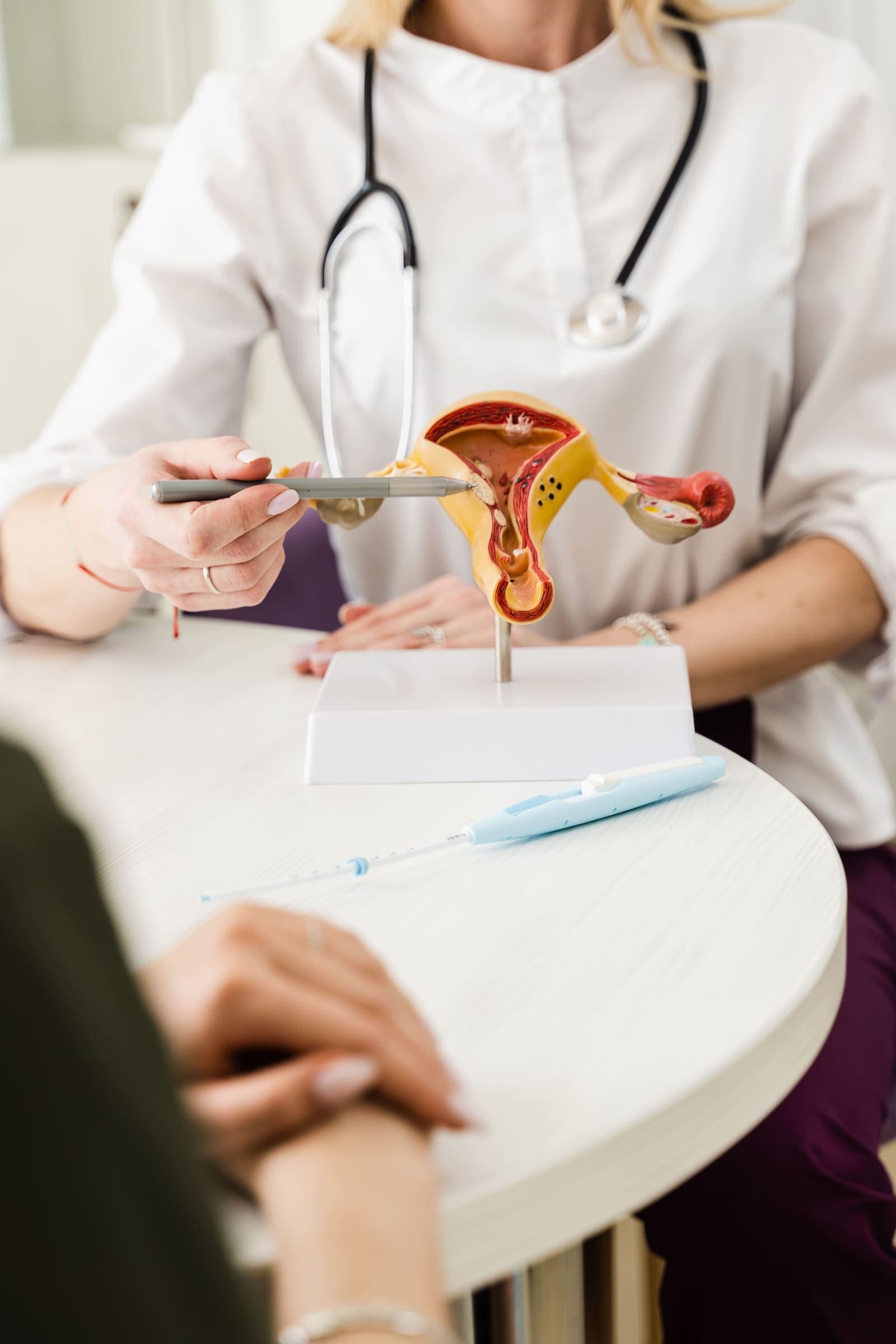
A woman explaining her medical conditions to a health professional, treatment discussed.
"Your placenta is low" — these words at an ultrasound scan can produce significant anxiety, often out of proportion to the actual clinical situation. The reason is that placenta previa sounds alarming, the implications for delivery are significant, and it is frequently not well-explained at the time the finding is reported.
Most "low-lying placentas" found at the 18 to 20 week anomaly scan resolve on their own — the uterus grows upward and the placenta appears to migrate away from the cervix as pregnancy progresses. True placenta previa, confirmed in the third trimester, is a different situation — it requires specific management and planned caesarean delivery.
Dr. Shachi Singh, consultant obstetrician at Prakash Hospital, Sector 33, Noida, explains what placenta previa is, why early low-lying placentas usually resolve, which ones do not, and what the management involves.
What Placenta Previa Is
The placenta normally attaches to the upper part of the uterus — the fundus or the body — away from the cervical opening. In placenta previa, the placenta is implanted in the lower segment of the uterus, partially or completely covering the internal cervical os (the opening of the cervix into the uterine cavity).
This matters because as the cervix opens and effaces (thins) at the end of pregnancy — whether during labour or planned procedures — a placenta covering the cervix will bleed. The bleeding comes from the separation of the placenta from the uterine wall as the cervix begins to change. Unlike most causes of antepartum haemorrhage, placenta previa bleeding is maternal blood (not primarily fetal), is painless, and tends to be bright red.
Types of Placenta Previa
Low-lying placenta: The lower edge of the placenta is within 2 cm of the internal cervical os but does not cover it. Many of these resolve before term.
Marginal placenta previa: The placental edge just reaches the os without covering it.
Partial placenta previa: The placenta partially covers the cervical os.
Complete placenta previa: The placenta completely covers the cervical os. This will not resolve and requires planned caesarean section.
Why Most Low-Lying Placentas at 20 Weeks Resolve
The key concept is that the placenta does not literally "migrate." What happens is that the lower uterine segment — the part of the uterus just above the cervix — grows substantially in the second half of pregnancy. As it grows upward, it carries the placental attachment site further from the cervix. The placenta's position relative to the cervix therefore changes as the uterus grows.
At 20 weeks, approximately 5% of placentas are classified as low-lying. By 36 weeks, fewer than 1% remain low-lying or previa. The further the placenta is from the cervix at 20 weeks, the more likely it is to resolve. A placenta that is completely covering the os at 20 weeks has a higher chance of remaining previa at term than one that is marginally low.
For this reason, a finding of "low-lying placenta" at the 20-week anomaly scan typically leads to a repeat transvaginal ultrasound at 32 to 34 weeks to reassess the position — not to immediate intervention.
Symptoms of Placenta Previa
Painless vaginal bleeding in the second or third trimester — particularly bright red bleeding without contractions or abdominal pain — is the hallmark presentation of placenta previa. It is often described as "sudden" and can be heavy.
The bleeding occurs because small tears in the placental attachment at the lower uterine segment develop, particularly as the cervix begins to efface and thin in late pregnancy. It can also be triggered by intercourse or by internal examination of the cervix.
In some women, placenta previa is completely asymptomatic and discovered only on ultrasound.
Diagnosis
Placenta previa is diagnosed on ultrasound. Transvaginal ultrasound (TVUS) is the most accurate method for assessing the relationship between the placental edge and the cervical os — more accurate than transabdominal ultrasound. It is safe to perform in placenta previa; the ultrasound probe does not enter the cervical canal.
Important: Digital vaginal examination (finger examination of the cervix) should never be performed in any pregnant woman with vaginal bleeding until placenta previa has been excluded. If the examiner's finger touches the placenta overlying the cervix, severe haemorrhage can result.
Management
1. Confirmed Low-Lying Placenta — Awaiting Resolution
Women with a low-lying placenta at 20 weeks are monitored with a repeat ultrasound at 32 to 34 weeks. If the placenta has moved away from the cervix, no further specific management is needed.
While waiting for the repeat scan, advice typically includes avoiding sexual intercourse and avoiding vigorous activity that could trigger bleeding.
2. Confirmed Placenta Previa in the Third Trimester
Once placenta previa is confirmed at the third-trimester scan, management depends on the degree of previa, the gestational age, and whether the woman has had bleeding episodes:
Pelvic rest: Strict avoidance of sexual intercourse and digital vaginal examination.
Activity restriction: Avoiding strenuous exercise and heavy lifting. Women with major placenta previa (complete or partial) may be advised to avoid long journeys far from hospital.
Hospitalisation for bleeding episodes: Any episode of bleeding with confirmed placenta previa warrants hospital assessment. If bleeding is heavy, hospitalisation for observation may be required until it settles.
Planning for hospitalisation near term: Women with complete or major placenta previa are often admitted to hospital from around 34 to 36 weeks, particularly if they have had bleeding episodes, to be near the operating theatre if emergency caesarean is needed.
Planned caesarean section: The definitive management for placenta previa is planned caesarean section. Vaginal delivery is not possible when the placenta is covering the cervical os — delivery of the baby through the cervix would require the placenta to be delivered first, causing catastrophic haemorrhage.
The timing of planned caesarean for placenta previa is typically:
- 36 to 37 weeks for major placenta previa without complications
- Earlier if there has been repeated significant bleeding, if the woman is at significant risk of emergency delivery
3. Placenta Accreta Spectrum
Women with placenta previa who have had previous caesarean sections are at significantly elevated risk of placenta accreta — where the placenta abnormally adheres to or invades the uterine wall, making delivery extremely hazardous. This combination (prior caesarean + placenta previa) requires specialist management including MRI evaluation, delivery at a centre with interventional radiology and potential blood transfusion capacity, and detailed surgical planning.
Obstetric Care in Noida and Greater Noida
Dr. Shachi Singh at Prakash Hospital, Sector 33, Noida, manages placenta previa and low-lying placenta for women across Noida and Greater Noida — including appropriate ultrasound surveillance, activity guidance, management of bleeding episodes, and planned delivery.
To book a consultation with Dr. Shachi Singh, call: +91 97023 46853
Clinic Hours: Monday to Saturday, 9 AM – 6 PM | Sunday, 10 AM – 2 PM
Clinic Address: D-12A, 12B, Sector-33, G.B. Nagar, Noida, Uttar Pradesh 201301
Frequently Asked Questions
1. My 20-week scan showed a low-lying placenta — should I be worried?
Most low-lying placentas at 20 weeks resolve by the third trimester as the uterus grows. A repeat ultrasound at 32 to 34 weeks confirms whether the placenta has moved away from the cervix. Most women found to have a low-lying placenta at 20 weeks go on to have a normal delivery.
2. Is sex safe with a low-lying placenta?
Avoidance of intercourse is typically advised when a low-lying placenta has been identified, particularly if the placenta is close to or covering the cervical os. Confirm with your obstetrician whether this applies to your specific situation.
3. Can I have a normal delivery with placenta previa?
Only if the placenta is not covering the cervical os at the time of labour. Major placenta previa (complete) requires caesarean section. A low-lying placenta that has moved sufficiently from the cervix by 36 weeks may allow vaginal delivery — your obstetrician will assess this.
4. What does painless bleeding in the third trimester mean?
Painless bright red vaginal bleeding in the second or third trimester — particularly without contractions — is the classic presentation of placenta previa. Any vaginal bleeding during pregnancy should be assessed promptly. Go to a maternity unit for assessment.
This blog is written for educational and informational purposes only. Please consult Dr. Shachi Singh or a qualified obstetrician for guidance specific to your pregnancy and ultrasound findings.