Ovarian Torsion: How to Recognise This Gynaecological Emergency
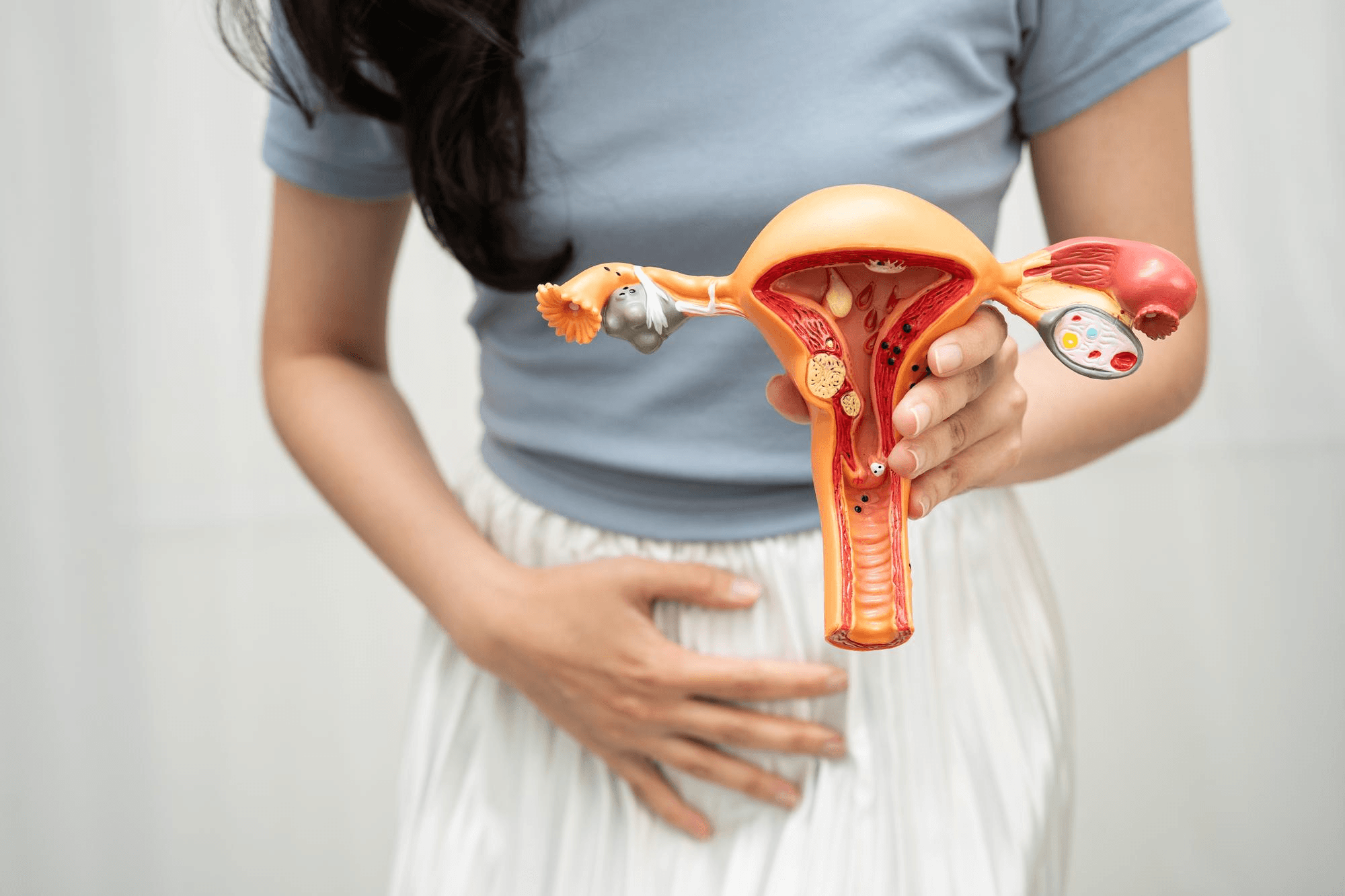
Female showing a model of a ovaries in anatomical form as she discusses the development of an ovarian Torsion.
Ovarian torsion is one of the true surgical emergencies in gynaecology — a condition where time from symptom onset to surgical treatment directly determines whether the ovary can be saved. Delayed diagnosis is common because its symptoms overlap with other conditions, and because women — and occasionally clinicians — do not immediately consider a gynaecological cause for severe abdominal pain.
The ovary is the organ at stake. If torsion is not surgically corrected within hours of onset, the ovary's blood supply is irreversibly compromised and the ovary cannot be salvaged.
Dr. Shachi Singh, consultant gynaecologist and laparoscopic surgeon at Prakash Hospital, Sector 33, Noida, explains what ovarian torsion is, who is at risk, and what the clinical picture looks like.
What Ovarian Torsion Is
The ovary (and usually the fallopian tube together — called adnexal torsion) is attached to the uterus and pelvic sidewall by ligaments. Normally these ligaments hold the ovary in a relatively fixed position. In torsion, the ovary (with or without the fallopian tube) rotates around the ligament on which it hangs, twisting its own blood supply. The twisting compresses the ovarian vein first (obstruction of venous outflow), causing engorgement and oedema, then the ovarian artery (obstruction of arterial inflow), causing ischaemia. Without blood supply, the ovarian tissue infarcts — it dies.
The critical window: the ovary can tolerate ischaemia for a limited time before irreversible necrosis occurs. Surgical detorsion (untwisting the ovary) performed within this window allows the ovary to recover function in most cases, even when it appears dark or discoloured at surgery. After this window, the ovary cannot be salvaged and must be removed.
Who Is at Risk
1. Ovarian cysts: The most common predisposing factor. A cyst enlarges the ovary, increasing its weight and changing its centre of gravity — making it more prone to rotation. Dermoid cysts (teratomas), functional cysts, and endometriomas are the most common cyst types associated with torsion. The risk increases as cysts grow, particularly above 5 cm.
2. Ovarian hyperstimulation: Women undergoing ovarian stimulation for IVF have multiple enlarged follicles — significantly increasing torsion risk. Torsion complicates approximately 0.1 to 0.2% of stimulated IVF cycles but is more common with significant hyperstimulation.
3. Pregnancy: The enlarged corpus luteum, hormonal changes, and altered pelvic anatomy in pregnancy slightly increase torsion risk — particularly in the first and second trimesters.
4. Longer ovarian ligament: Some women naturally have a longer utero-ovarian ligament — giving the ovary more freedom to rotate. This is an anatomical predisposition seen in younger women and girls.
5. Previous torsion: Women who have had one episode of torsion are at higher risk of torsion on the same side (if the ovary was preserved) or the opposite side.
6. Age: Torsion occurs at all ages but is most common in women of reproductive age, with a peak in the second and third decades. It is also seen in prepubertal girls — any female child with acute pelvic pain deserves consideration of this diagnosis.
Symptoms: What Ovarian Torsion Feels Like
Sudden onset severe pelvic or lower abdominal pain — this is the cardinal symptom. The pain is typically:
- Sudden in onset — often described as starting sharply within minutes
- Severe — many women describe it as the worst pain they have experienced
- Usually unilateral — right or left lower abdomen, corresponding to the affected ovary
- Constant with intermittent severe exacerbations — the constant pain reflects ongoing ischaemia; the exacerbations may reflect the ovary twisting further
Nausea and vomiting — extremely common, reflecting the visceral pain stimulus and sometimes vagal activation.
Fever — may develop if the ischaemic ovary becomes necrotic and inflammatory.
No single symptom is specific — this is what makes torsion difficult to diagnose. The combination of sudden unilateral lower abdominal pain with nausea in a woman of reproductive age (particularly one known to have an ovarian cyst) should prompt consideration of torsion as an urgent priority.
Why Ovarian Torsion Is Frequently Misdiagnosed
The most common misdiagnoses are appendicitis (right-sided pain), renal colic (unilateral pain radiating to the back), ruptured ovarian cyst, ectopic pregnancy, and gastroenteritis. The overlap of symptoms between these conditions means torsion is not always the first diagnosis considered.
Important: an ultrasound that shows a normal ovarian Doppler (blood flow) does not exclude torsion. The presence of blood flow on Doppler does not mean the ovary is not torted — intermittent torsion can show periods of partial blood flow. The decision to operate should be based on clinical suspicion, not solely on Doppler findings.
Diagnosis and Emergency Treatment
Investigations: Transvaginal ultrasound with Doppler. May show an enlarged, oedematous ovary; a cyst; a midline shift of the ovary (twisted on its ligament); and absent or reduced Doppler flow (though present flow does not exclude torsion).
Serum hCG: To exclude ectopic pregnancy.
The diagnosis is confirmed surgically, not by imaging. When clinical suspicion is high, proceeding to diagnostic laparoscopy is appropriate — the cost of a negative laparoscopy is far lower than the cost of a delayed diagnosis resulting in ovarian loss.
Surgical treatment: Laparoscopic detorsion. The ovary is identified, the degree of twisting is assessed, and the ovary is carefully untwisted. In almost all cases, even if the ovary appears dark, congested, and discoloured, detorsion should be attempted — the majority of seemingly non-viable ovaries recover function after detorsion.
The ovarian cyst (if present) may be removed at the same procedure or in a planned second procedure once the ovary has recovered.
Oophorectomy (removing the ovary) is reserved for cases where the ovary is clearly necrotic and unsalvageable — determined carefully at surgery.
After Detorsion: Risk of Recurrence
Following successful detorsion of an ovary with an underlying cyst, the cyst should be removed (either at the same procedure or definitively before the risk of re-torsion). Oophoropexy — surgically fixing the ovary to the pelvic wall to prevent future rotation — may be considered in women at particularly high recurrence risk (very long ligament, previous bilateral torsion, women who have had multiple episodes).
Gynaecological Emergency Care in Noida and Greater Noida
Dr. Shachi Singh at Prakash Hospital, Sector 33, Noida, manages gynaecological emergencies including ovarian torsion with emergency laparoscopic surgery for women across Noida and Greater Noida.
If you have sudden severe unilateral pelvic pain with nausea — go to the emergency department immediately. Do not wait.
To book a non-emergency consultation with Dr. Shachi Singh, call: +91 97023 46853
Clinic Hours: Monday to Saturday, 9 AM – 6 PM | Sunday, 10 AM – 2 PM
Clinic Address: D-12A, 12B, Sector-33, G.B. Nagar, Noida, Uttar Pradesh 201301
This blog is written for educational and informational purposes only. Ovarian torsion is a medical emergency. If you have sudden severe pelvic pain, seek emergency medical care immediately.