Mastitis: What It Is, Why It Happens, and How to Treat It Quickly

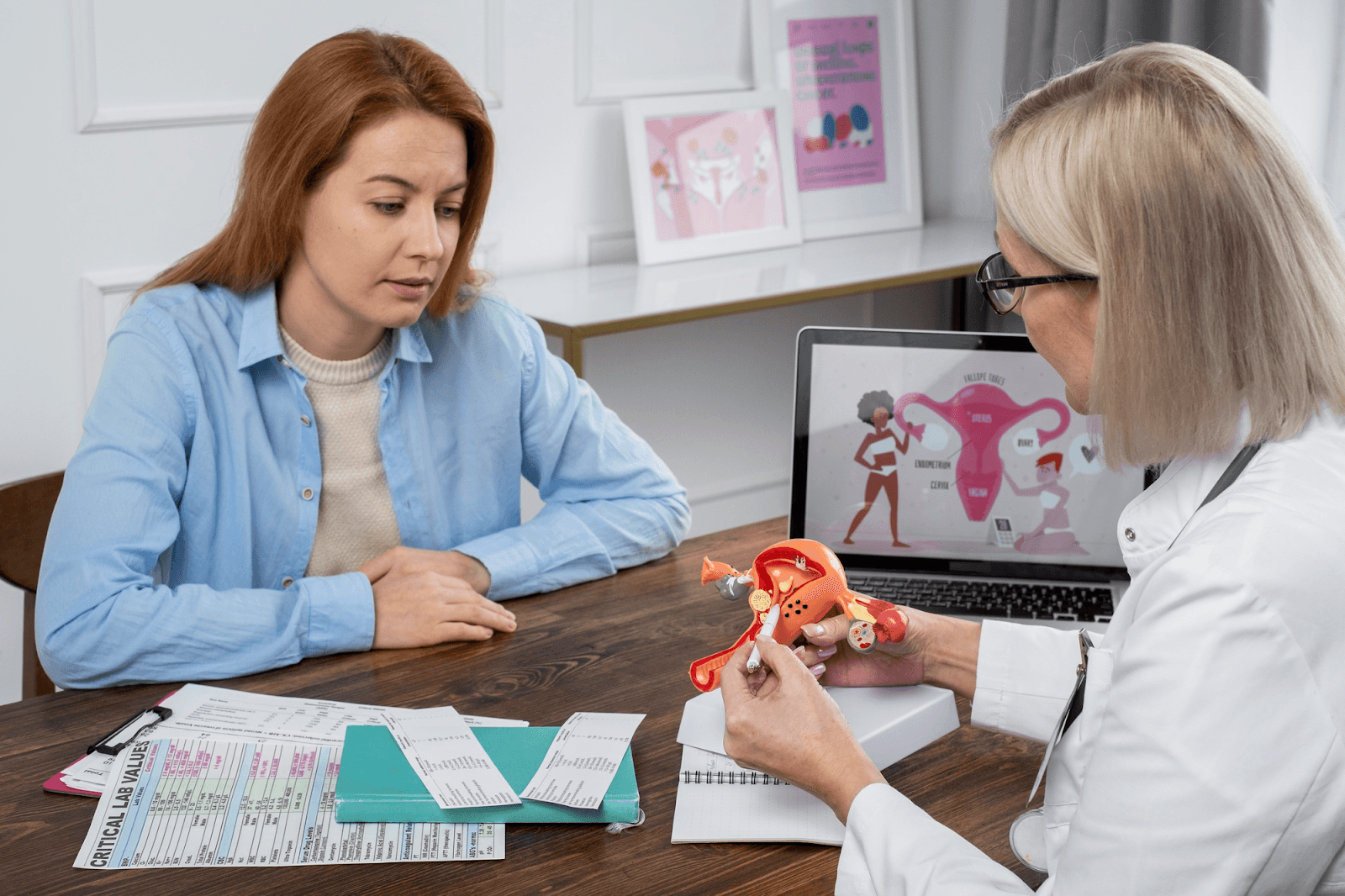
Doctor monitoring breast lumps and breast health.
Mastitis is an inflammation of the breast tissue — most commonly occurring in breastfeeding women — that can progress to infection if not managed promptly. It is painful, frightening, and affects a woman's ability to breastfeed comfortably. Many women stop breastfeeding when they develop mastitis, often unnecessarily, when continued feeding is actually the most effective treatment.
Dr. Shachi Singh, consultant obstetrician and gynaecologist at Prakash Hospital, Sector 33, Noida, explains what mastitis is and how to manage it effectively.
What Mastitis Is
Mastitis refers to inflammation of the breast parenchyma — the milk-producing tissue. It can be:
Non-infective mastitis (inflammatory mastitis): Inflammation without bacterial infection, typically from milk stasis — milk that is not draining adequately pools in the breast, causing pressure, oedema, and inflammatory response. Does not require antibiotics — resolves with improved milk drainage.
Infective mastitis: Bacterial infection of the breast tissue, typically Staphylococcus aureus entering through cracked or damaged nipples. Requires antibiotics.
The distinction is clinical — both present similarly in the early stages. Infective mastitis tends to be more severe, with higher fever and a breast that does not improve with 12 to 24 hours of improved feeding.
Symptoms
Local symptoms:
- A wedge-shaped area of the breast that is red, swollen, warm, and tender to touch — the wedge shape reflects involvement of one or more breast segments
- The breast feels hard and engorged in the affected area
- Pain in the affected area — often described as burning or aching, worsening during and after feeds
Systemic symptoms:
- Fever — often above 38.5°C, sometimes with rigors (shivering)
- Flu-like symptoms — body aches, fatigue, generalised malaise — these fluey symptoms are classic and frequently the first thing women notice ("I feel like I have the flu")
- Headache
The combination of a hot, red, painful area of the breast plus flu-like symptoms in a breastfeeding woman is mastitis until proven otherwise.
Why Mastitis Happens: Risk Factors
Milk stasis: The commonest underlying cause. When milk is not adequately removed from the breast — from infrequent or shortened feeds, poor latch causing incomplete drainage, skipped feeds, sudden reduction in feeding frequency, tight bra, or sleeping face-down — it accumulates and creates the conditions for mastitis.
Cracked or damaged nipples: Provide an entry point for skin bacteria (predominantly Staphylococcus aureus) into the breast tissue.
Poor latch: Ineffective milk transfer means milk is not adequately removed at each feed, predisposing to stasis.
Engorgement: Severe engorgement from delayed or missed feeds stretches and damages ductal tissue, promotes stasis, and increases mastitis risk.
Blocked milk ducts: A blocked duct — a firm, tender lump in a specific area of the breast without systemic symptoms — is a precursor to mastitis. Treat a blocked duct promptly to prevent progression.
Maternal stress and fatigue: Both impair the milk let-down reflex, reducing drainage efficiency.
Previous mastitis: The single strongest risk factor for recurrence.
Treatment
1. Continue Breastfeeding — or Expressing
This is the most important and most counterintuitive aspect of mastitis management. Continuing to breastfeed from the affected breast is the most effective way to drain the engorged milk and resolve the mastitis. Stopping feeding allows milk to accumulate, worsens engorgement, and can cause mastitis to progress to abscess.
Feed frequently: Every 2 to 3 hours, starting on the affected side where the let-down reflex is strongest. Feed in different positions to ensure different segments of the breast are drained.
If feeding is too painful: Express the affected breast by hand or pump after applying warm compression to stimulate let-down.
The baby cannot be harmed by feeding from a breast with mastitis — the milk is safe.
2. Warm Compress Before Feeding
Applying warm, moist heat (a warm flannel or a warm shower) to the affected breast immediately before feeding helps stimulate the let-down reflex and improves milk flow.
3. Gentle Massage
Gentle massage from the affected area toward the nipple — before and during feeding — helps move stagnant milk toward the nipple for drainage.
4. Pain Relief and Anti-Inflammatory
Ibuprofen (400 mg three times daily) — if not breastfeeding a newborn under 1 month — is the preferred agent for mastitis because it is both an analgesic and an anti-inflammatory, addressing both the pain and the underlying inflammation. Safe during breastfeeding in doses up to 400 mg three times daily.
Paracetamol (1 g up to four times daily) — safe throughout breastfeeding. Used when ibuprofen is not appropriate or as an addition.
5. Rest
Mastitis is a systemic illness — it requires rest. This is often the hardest advice for a new mother to follow, but it is clinically meaningful.
6. Antibiotics: When Are They Needed?
Start antibiotics if:
- Symptoms do not improve significantly within 12 to 24 hours of optimal milk drainage and anti-inflammatory treatment
- Symptoms are severe from the outset — high fever, significant systemic illness
- There are cracked or damaged nipples (suggesting bacterial entry and infection)
- There is a personal or family history of MRSA
Antibiotic choice: Flucloxacillin (500 mg four times daily for 10 to 14 days) is first-line in India — covers Staphylococcus aureus effectively. Cefalexin or co-amoxiclav are alternatives. Full 10 to 14 day course is important — premature stopping risks relapse and abscess formation.
Continue breastfeeding during antibiotic treatment — all of the antibiotics used for mastitis are safe during breastfeeding.
Complication: Breast Abscess
If mastitis is not adequately treated — particularly if antibiotic treatment is not started when needed, or is stopped early — the area of infection can liquefy into a pus-filled cavity: a breast abscess. Signs of abscess: the red area becomes fluctuant (feels fluid-filled), pain worsens despite antibiotics, fever persists or returns.
Breast abscess requires drainage — either by ultrasound-guided aspiration (the preferred approach where available, avoids surgical scarring and allows continued breastfeeding) or surgical incision and drainage. After drainage, antibiotics are continued.
Prevention
- Ensure a good latch from the beginning — if latch is painful or baby is not feeding effectively, get lactation support early
- Feed frequently and on demand — do not routinely restrict feed duration
- Treat blocked ducts promptly (warm compress, frequent feeding from affected side, gentle massage)
- Treat cracked nipples promptly — use lanolin cream (Lansinoh), ensure correct latch to prevent further damage, allow nipples to air dry
- Wear a well-fitting (not tight) bra — avoid underwired bras during active breastfeeding
- Rest when possible — maternal fatigue is a real risk factor
Postnatal and Gynaecological Care in Noida and Greater Noida
Dr. Shachi Singh at Prakash Hospital, Sector 33, Noida, provides postnatal care and management of breastfeeding complications including mastitis for women across Noida and Greater Noida.
To book a consultation with Dr. Shachi Singh, call: +91 97023 46853
Clinic Hours: Monday to Saturday, 9 AM – 6 PM | Sunday, 10 AM – 2 PM
Clinic Address: D-12A, 12B, Sector-33, G.B. Nagar, Noida, Uttar Pradesh 201301
Frequently Asked Questions
Can I keep breastfeeding when I have mastitis?
Yes — continuing to breastfeed is actually the most important part of mastitis treatment. Stopping feeding allows milk to stagnate and can worsen the condition or lead to abscess. The baby cannot be harmed by feeding from a breast with mastitis.
How quickly should mastitis improve with treatment?
With optimal management (frequent feeding, warm compress, ibuprofen), non-infective mastitis improves within 24 to 48 hours. Infective mastitis on antibiotics should show clear improvement within 48 to 72 hours. If symptoms are not improving by 48 to 72 hours on antibiotics, contact your doctor — the antibiotic may need to be changed or abscess formation may need to be excluded.
Is mastitis the same as a blocked duct?
No. A blocked duct is a firm, tender lump in a specific area of the breast without systemic symptoms (no fever, no flu-like illness). It is a precursor to mastitis. Treating a blocked duct with warm compress, frequent feeding from the affected side, and gentle massage can prevent progression to mastitis.
This blog is written for educational and informational purposes only. Please consult Dr. Shachi Singh or a qualified healthcare provider for guidance specific to your situation.