Labial Asymmetry Or Enlargement: When Treatment Might Be Needed

Lower abdomen holding a heart over the pelvis.
The most frequent concern to address in cosmetic gynaecology is asymmetrical labial size or enlargement; that one labium has a larger, longer, or uneven shape in comparison to the other side. Typically, this will have been present all along and simply means that one side is larger than the other, not that anything is wrong.
It can be an issue both in terms of discomfort and aesthetic embarrassment that can affect a woman's comfort and confidence throughout her everyday life. Fortunately, there are effective treatments available through cosmetic gynaecology, which will be individual to the patient and can help resolve physical and/or cosmetic issues.
What Is Labial Asymmetry Or Enlargement?
Labial asymmetry means that the left and right labia minora and labia majora are not of equal size. Labial enlargement is when the labia have grown bigger than average. This enlargement can be genetic or a result of growing and changes over time. The differences in size between the labia are incredibly common and can be caused by:
- Genetics
- Hormonal changes
- Puberty or the aging process
- Childbirth
- Natural tissue variations
There is nothing wrong with having variations, as there is no definitive or "correct" size.
When Does It Become A Concern?
In the area of cosmetic gynaecology, there are several occasions when treatment may be necessary despite not causing a physical complaint:
- Discomfort when running, cycling, or exercising.
- Chafing from the movement against clothes.
- Poor hygiene
- Recurring inflammation or sensitivity.
- The patient may have personal/psychological problems with the appearance of the area.
- The comfort of intercourse or intimate well-being may be impacted.
If a patient is experiencing physical discomfort or psychological distress from the issue, it should be evaluated by a specialist.
Cosmetic Gynaecology Treatment Options
There are a variety of treatment options for problems related to cosmetic gynaecology, which would need to be tailored based on the severity of the symptoms, anatomical variants of the individual and the level of comfort/concern. Treatment aims to ensure comfort during daily life, boost confidence levels, and enhance intimate function, and not just for cosmetic reasons alone.
Non Surgical Support
These non-surgical options are best for milder concerns or cases where there are less severe symptoms, and the focus is on improving overall comfort.
- Changes to lifestyle to reduce irritation. These could involve avoiding tight underwear, long periods of friction activity, and maintaining a healthy lifestyle.
- Wearing breathable and appropriate undergarments. Cotton-based, appropriately fitting underwear is vital for reducing excessive sweating, irritation and recurring irritation in the private area.
- Hygiene necessity for sensitive and private parts. Gentleness while cleaning, avoidance of chemical-based products.
While these do not anatomically correct any problem, they often improve the feeling of well-being.
Labiaplasty (Surgical Treatment)
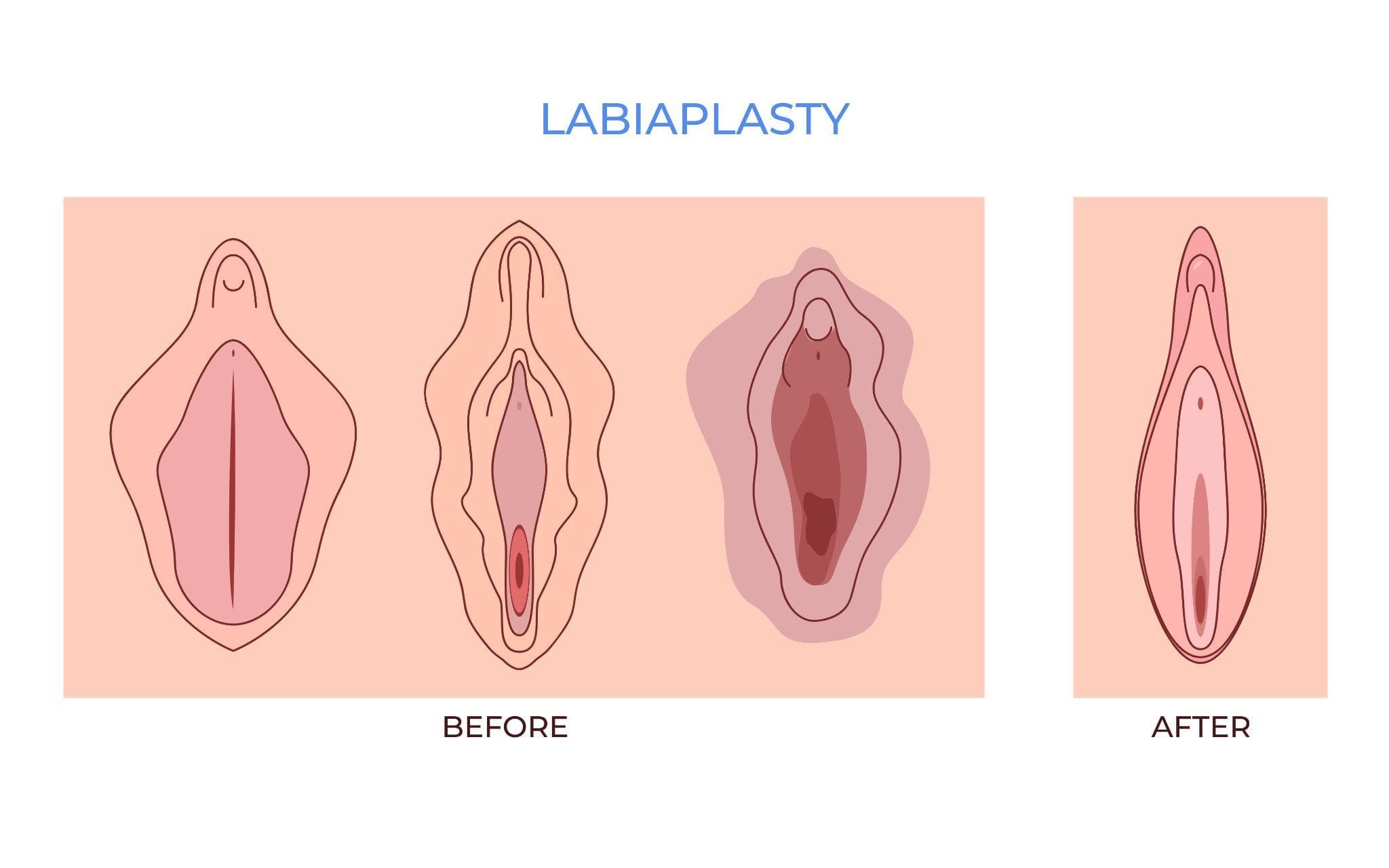
Labiaplasty before-and-after anatomical diagram.
Labiaplasty is a popular and well accepted cosmetic gynaecology surgery used to reduce the size or alter the shape of the labia majora and/or labia minora. It is offered when the labia causes discomfort and functional problems or aesthetic distress. This treatment is planned individually and tailored to the individual, with appropriate attention being paid to the anatomical as well as functional aspects.
It is considered in order to achieve the following goals:
- Natural looking results.
- Minimum discomfort, as modern techniques are refined.
- Preserve sensation and functionality.
- Safe,precise and predictable correction.
Recovery is usually uncomplicated, and patients are normally able to resume normal activities in a graded way with the guidance of the specialist.
When Is Treatment Necessary?
In most instances, labial asymmetry and enlargement are considered a normal variation in a woman's anatomy rather than a disease process. Most women have some asymmetry between their labia, and while it has no detrimental effect on the body, there is no risk to the woman's health, fertility or normal body functions. For this reason, it is usually an elective procedure rather than one that is necessary.
As a result, treatment is often chosen out of discomfort, for purely cosmetic reasons, or due to inconvenience in daily life rather than medical necessity. In fact,t several women experience absolutely no discomfort whatsoever, and are not candidates for treatment at all.
However, there are instances in which these abnormalities can affect a woman's daily life, causing discomfort while exercising, difficulty in wearing particular clothing, or psychological problems based on her image. In these instances, treatment is seen as an enhancement in a woman's quality of life. A comprehensive clinical consultation with the relevant specialist would allow them to consider whether:
- Symptoms are within the limits of normal variation.
- The tissue is causing discomfort due to rubbing and friction.
- The use of other treatments, such as local creams or exercises, might prove beneficial.
- Whether the use of a cosmetic procedure, such as labiaplasty, would be suitable.
Ultimately, the final decision would always lie with the woman herself, based upon the recommendations of the specialist, and how the asymmetry is affecting her.
Psychological and Emotional Concerns
Psychological and emotional implications of labial asymmetry. Some women experience discomfort and negative effects to the psychological state as well as self-image due to asymmetric or enlarged labia.
- Body image issues - Some women find themselves insecure about their sexual region.
- Decreased self-esteem - Feeling inadequate in terms of appearance may decrease general self-confidence.
- Anxiety related to intimacy - Hesitancy may develop when considering sexual intimacy with another person due to the appearance of the sexual region.
- Emotional stress - Constantly questioning "normalcy" may create unnecessary stress and overthinking.
- Behavioural impact - This insecurity may manifest as the woman wanting to wear certain kinds of clothing, being hesitant about certain activities, or avoiding certain situations or relationships.
- Social impact - Social media and information sources create a misconception about ideal labia and anatomy. Many women are reassured of their "normal" status after consultation, and if they seek help or therapy may even be useful if required.
When To Consult A Specialist?
It may be beneficial to see a specialist for any of the following reasons:
- You are in pain for an extended period.
- Your daily life is impacted.
- You feel that cosmetic concerns may affect your self-esteem.
- You aren't sure if something is normal.
- A confidential and honest consultation can put your mind at ease so you can make informed decisions with clarity.
Advice of Specialist-Dr Shachi Singh
Dr Shachi Singh in Noida is a consultant gynaecologist providing caring and private treatments for all your intimate and cosmetic gynaecology concerns, prioritising the comfort, safety and informed decisions of her patients. Patients will be provided with:
- Discreet and confidential consultations.
- Treatment supported by scientific evidence.
- Tailored solutions for all your cosmetic gynaecology needs.
- Safe and contemporary procedures, if necessary.
Final Thoughts

Lower torso with a flower covering the genital area.
Labial asymmetry or enlargement is a normal part of being a woman, and for the vast majority of women, there is absolutely nothing to worry about or to do. For those few women who start to feel the effects of it physically, who start to lose a little time every day doing activities or who feel that the effect is impacting their body image or self-esteem, treatment is available through cosmetic gynaecology.
The issue is not to assume that one is experiencing one thing when in reality the patient might be experiencing another. Through careful consultation and through giving proper medical advice, it is important for patients to differentiate between what is normal and is nothing to be concerned about and what should be attended to.
Dr Shachi Singh in Noida has expertise and will guide patients through it, in the safest and most discreet of environments. For whatever the problem or even for just peace of mind regarding the problem, if a patient desires a labiaplasty, she can achieve this in comfort and in safety.
Frequently Asked Questions (FAQs)
1. Is labial asymmetry common in women?
Yes, labial asymmetry is very common and a natural part of female anatomy.
2. When should labial enlargement be treated?
Treatment should be sought for this when it causes discomfort, hygiene issues or affects confidence and a person's daily life.
3. What is the most suitable treatment for labial asymmetry?
Labiaplasty is a popular procedure performed in cosmetic gynaecology to alter the shape and or size of the labia.
4. Is labiaplasty a safe procedure?
Yes, labiaplasty is a safe procedure when carried out by experienced specialists with appropriate aftercare.