Gestational Hypertension: What It Is, How It Differs from Preeclampsia, and What Comes Next

Pregnant woman checking blood sugar levels, indicating gestational diabetes during pregnancy.
A blood pressure reading of 140/90 or above taken at an antenatal appointment — when it was normal before — is the moment gestational hypertension enters a woman's pregnancy. The reading itself is not dramatic. The blood pressure cuff gives a number, the midwife or doctor notes it, and the conversation about what it means begins.
For many women, gestational hypertension is a manageable complication — monitored closely, controlled with medication when needed, and resolved after delivery. For others, it is a warning that can evolve into preeclampsia — a more serious condition with systemic effects on the liver, kidneys, and brain. Distinguishing between the two, knowing what monitoring is needed, and understanding when the situation is moving in a concerning direction are the practical things that matter.
Dr. Shachi Singh, consultant obstetrician at Prakash Hospital, Sector 33, Noida, explains gestational hypertension clearly — what it is, how it is diagnosed, what separates it from preeclampsia, and what management involves.
What Blood Pressure Means in Pregnancy
Normal blood pressure is below 120/80 mmHg. The upper number (systolic) reflects the pressure when the heart beats; the lower number (diastolic) reflects the pressure when it rests between beats.
In the first half of pregnancy, blood pressure typically falls slightly below pre-pregnancy levels — because progesterone causes peripheral blood vessel relaxation. By the second half of pregnancy, it gradually returns toward baseline.
New-onset high blood pressure after 20 weeks of pregnancy — in a woman whose blood pressure was normal before pregnancy — is classified as gestational hypertension.
The threshold is: systolic 140 mmHg or above, and/or diastolic 90 mmHg or above, on two separate readings at least 4 hours apart.
Gestational Hypertension vs Preeclampsia vs Chronic Hypertension
These are distinct diagnoses that are frequently confused
1. Chronic (pre-existing) hypertension
High blood pressure that was present before pregnancy or diagnosed before 20 weeks. Requires specific management throughout pregnancy — some blood pressure medications need to be changed because they are not safe in pregnancy.
2. Gestational hypertension
New-onset high blood pressure after 20 weeks of pregnancy without protein in the urine or other features of preeclampsia. Affects approximately 6 to 10% of pregnancies. In most cases, blood pressure returns to normal within 12 weeks of delivery.
3. Preeclampsia
High blood pressure after 20 weeks accompanied by protein in the urine (proteinuria) AND/OR other end-organ involvement — kidney dysfunction (elevated creatinine), liver involvement (elevated liver enzymes, right upper quadrant pain), blood clotting abnormalities (low platelets), severe headache, visual disturbances, or pulmonary oedema.
The key difference: gestational hypertension is blood pressure elevation alone. Preeclampsia involves blood pressure plus evidence that organ systems are being affected. Gestational hypertension can evolve into preeclampsia — which is why it requires close monitoring. Approximately 15 to 25% of women diagnosed with gestational hypertension go on to develop preeclampsia.
Risk Factors for Gestational Hypertension
Gestational hypertension is more likely in women who are:
- In their first pregnancy
- Carrying twins or higher-order multiples
- Obese (BMI above 30)
- Over 40 years of age
- Women with a family history of hypertension in pregnancy
- Those with pre-existing kidney disease, diabetes, or autoimmune conditions
- Women who had gestational hypertension or preeclampsia in a previous pregnancy
Low-dose aspirin (75 to 150 mg daily), started before 16 weeks of pregnancy, reduces the risk of preeclampsia by approximately 20% in high-risk women. This is one of the few evidence-based preventive interventions in obstetrics with meaningful effect.
Symptoms: What Gestational Hypertension Feels Like
In many cases, gestational hypertension produces no symptoms at all. The elevated blood pressure is detected at an antenatal appointment without the woman noticing anything. This is one reason regular antenatal blood pressure checks matter — the absence of symptoms does not mean the blood pressure is normal.
When symptoms do occur, they may include:
- Headache, particularly at the front or back of the head
- Swelling of the face, hands, or ankles that appears suddenly
- Blurred or disturbed vision
- Pain in the upper right abdomen
Any of these symptoms in a pregnant woman with known or suspected hypertension should prompt immediate medical review — they can indicate progression to severe preeclampsia.
Diagnosis and Monitoring
Once gestational hypertension is diagnosed, close monitoring is the cornerstone of management:
Blood pressure checks: More frequent than standard antenatal care — twice weekly at minimum for mild hypertension (140–149/90–99), potentially daily in hospital for more significant readings.
Urine protein testing: At every blood pressure check, to detect the onset of proteinuria that would change the diagnosis to preeclampsia. This can be done with a urine dipstick or, more accurately, with a protein:creatinine ratio from a urine sample.
Blood tests: Full blood count (platelet count), kidney function (creatinine, urea), and liver function tests (ALT, AST) — to detect any end-organ involvement that would indicate preeclampsia or progression.
Fetal monitoring: Fetal growth ultrasound (growth scans every 2 to 4 weeks) and Doppler assessment of umbilical artery blood flow — to detect fetal growth restriction, which can develop when placental function is compromised by hypertension.
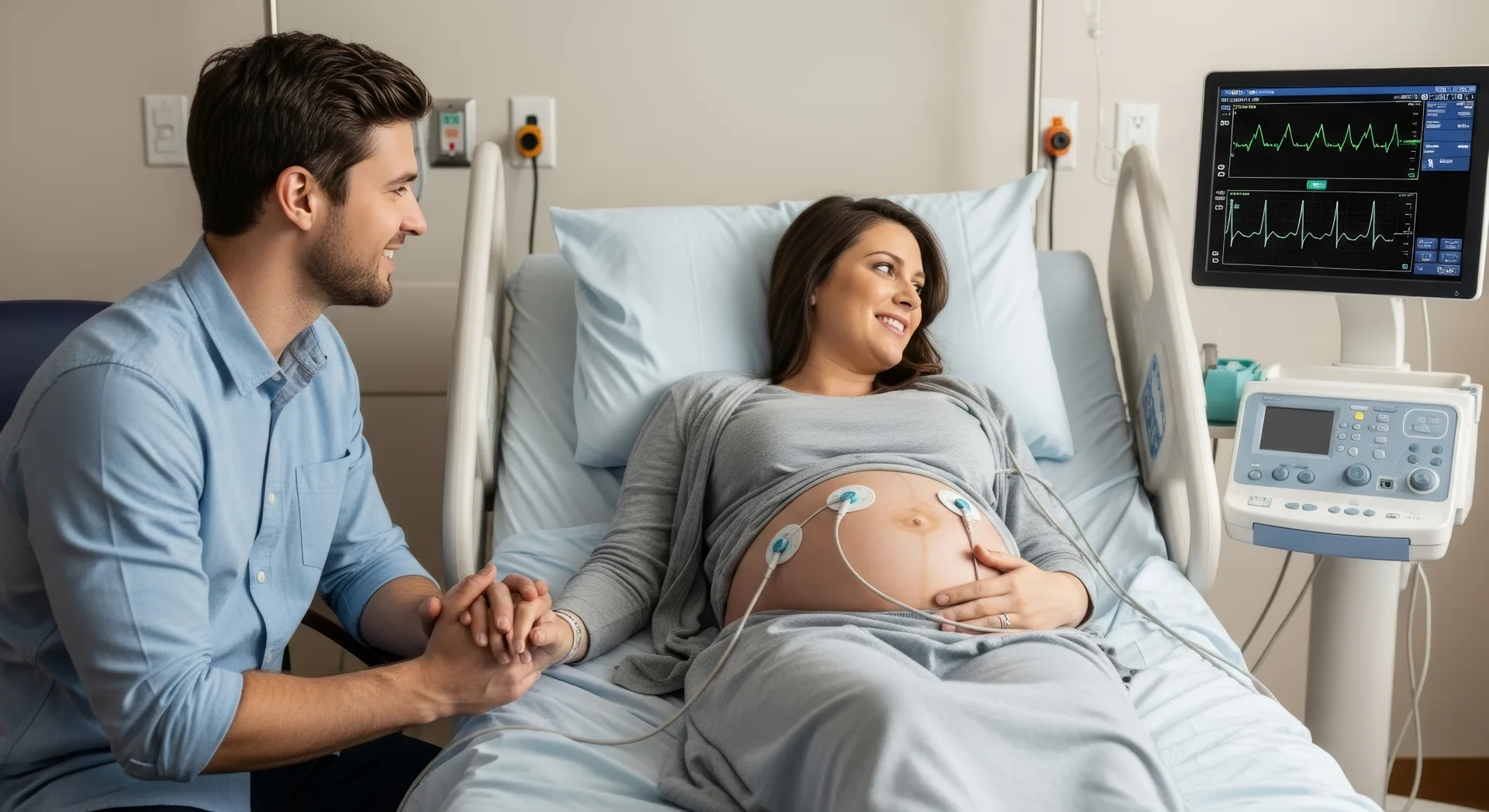
CTG (cardiotocography): Fetal heart rate monitoring from 34 weeks or when there is concern about fetal wellbeing.
Treatment: Blood Pressure Medication in Pregnancy
The goal of antihypertensive medication in pregnancy is to reduce the risk of severe hypertension (systolic 160 or above, diastolic 110 or above), which carries risk of stroke, placental abruption, and organ damage. Most guidelines recommend medication when blood pressure reaches 140–150/90–100 in pregnancy.
Safe antihypertensive medications in pregnancy:
- Labetalol: A beta-blocker and alpha-blocker. Widely used and well-established in pregnancy. Available orally and intravenously.
- Methyldopa: The most commonly used antihypertensive in pregnancy in India. Oral medication. Long safety record in pregnancy.
- Nifedipine (modified release): A calcium channel blocker. Effective and safe in pregnancy. Also relaxes uterine muscle, which has been utilised in preterm labour management.
Medications to avoid in pregnancy:
- ACE inhibitors (enalapril, ramipril) and angiotensin receptor blockers — cause fetal kidney damage and are contraindicated after the first trimester
- Diuretics — generally avoided in pregnancy as they reduce blood volume further
When Is Delivery Indicated?
The definitive treatment for gestational hypertension — and preeclampsia — is delivery. The blood pressure returns to normal after the placenta is delivered in most cases. The decision about when to deliver balances the risk of continuing the pregnancy (maternal and fetal) against the risks of prematurity.
Mild gestational hypertension (140–149/90–99): Can often be managed expectantly with close monitoring to 37 to 38 weeks, at which point elective delivery is typically recommended.
Moderate gestational hypertension (150–159/100–109): Blood pressure medication is used. Monitoring is intensified. Delivery at 37 weeks is typical.
Severe hypertension (160/110 or above) or any preeclampsia feature: Hospitalisation, IV antihypertensives if needed, magnesium sulphate (to prevent seizures if severe preeclampsia features are present), and often delivery regardless of gestational age once the mother is stabilised.
After Delivery
Blood pressure often remains elevated or worsens in the first 48 to 72 hours after delivery before improving. Antihypertensive medication is usually continued for at least 2 weeks postpartum, or until blood pressure normalises.
In most women with gestational hypertension, blood pressure returns to normal within 3 months of delivery. Women who had gestational hypertension have a higher lifetime risk of developing chronic hypertension and cardiovascular disease — annual blood pressure checks are recommended.
Obstetric Care in Noida and Greater Noida
Dr. Shachi Singh at Prakash Hospital, Sector 33, Noida, provides specialist management of gestational hypertension and preeclampsia for women across Noida and Greater Noida — including blood pressure monitoring, antihypertensive management, fetal growth surveillance, and delivery planning.
To book a consultation with Dr. Shachi Singh, call: +91 97023 46853
Clinic Hours: Monday to Saturday, 9 AM – 6 PM | Sunday, 10 AM – 2 PM
Clinic Address: D-12A, 12B, Sector-33, G.B. Nagar, Noida, Uttar Pradesh 201301
Frequently Asked Questions
1. What is the difference between gestational hypertension and preeclampsia?
Gestational hypertension is high blood pressure after 20 weeks of pregnancy without any other organ involvement. Preeclampsia is high blood pressure plus protein in the urine and/or evidence of organ damage (kidney, liver, brain, blood clotting). Gestational hypertension can evolve into preeclampsia — approximately 15 to 25% of cases do — which is why it requires close monitoring.
2. Will I need a caesarean if I have gestational hypertension?
Not necessarily. Many women with gestational hypertension can have vaginal delivery. The mode of delivery depends on the severity of hypertension, fetal wellbeing, cervical favourability, and gestational age at the time delivery is indicated.
3. Does gestational hypertension come back in future pregnancies?
Women who had gestational hypertension or preeclampsia have a significantly higher risk in subsequent pregnancies. Low-dose aspirin started before 16 weeks in the next pregnancy reduces this risk.
4. Can gestational hypertension be prevented?
Low-dose aspirin (75 to 150 mg daily, started before 16 weeks) in high-risk women reduces preeclampsia risk by approximately 20%. Maintaining healthy weight before pregnancy and good control of diabetes reduces risk. Regular antenatal care with blood pressure monitoring ensures early detection and treatment.
This blog is written for educational and informational purposes only. Please consult Dr. Shachi Singh or a qualified obstetrician for management specific to your pregnancy.