Uterine Prolapse: What It Is, Why It Happens, and What Can Be Done

The development process within the womb highlighting the embryo in the early stages of cell generation.
Uterine prolapse — the descent of the uterus from its normal position downward into or through the vaginal canal — is one of the most underreported gynaecological conditions in India. Many women live with significant prolapse for years, dismissing the symptoms as "just part of getting older" or feeling too embarrassed to mention it. The condition is not trivial: it affects bladder, bowel, and sexual function, and significantly reduces quality of life. And it is very treatable — at every stage.
Dr. Shachi Singh, consultant gynaecologist and laparoscopic surgeon at Prakash Hospital, Sector 33, Noida, explains.
What Holds the Uterus in Place — and What Fails
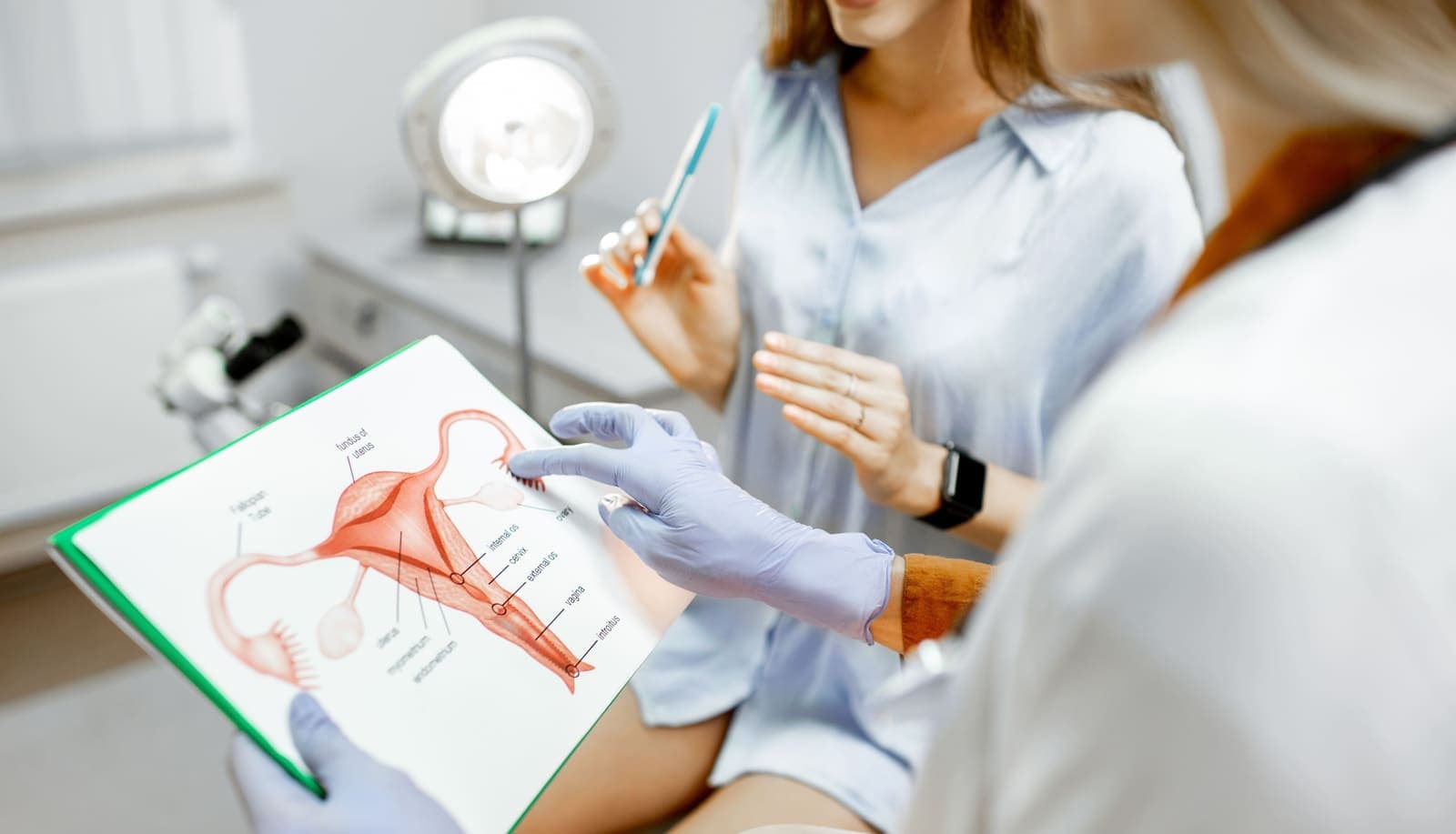
The uterus is suspended in the pelvis by a complex of ligaments (the uterosacral ligaments, cardinal ligaments, and round ligaments) and supported from below by the pelvic floor musculature — primarily the levator ani muscle group. When these supporting structures are damaged, weakened, or stretched, the uterus descends.
The same supporting structures hold the bladder (which can prolapse as a cystocele — the front vaginal wall bulging into the vagina) and the rectum (which can prolapse as a rectocele — the back vaginal wall bulging). These often occur together with uterine prolapse — mixed pelvic organ prolapse.
What Causes Prolapse
Childbirth: The most significant risk factor, particularly:
- Vaginal delivery — the pelvic floor and ligaments are stretched during labour and delivery
- Long second stage of labour (prolonged pushing)
- Large babies
- Instrumental deliveries (forceps, vacuum)
- Multiple deliveries — each pregnancy adds cumulative stress to pelvic floor structures
Menopause: The fall in oestrogen at menopause reduces collagen content and elasticity in all pelvic connective tissues — including the uterosacral ligaments. This is why prolapse becomes more prevalent and more symptomatic after menopause.
Chronically raised intra-abdominal pressure: Chronic constipation and straining at stool, chronic cough (asthma, COPD, smoking), and heavy manual labour all repeatedly stress the pelvic floor from above.
Genetics: Some women have naturally more lax connective tissue — prolapse can occur even in women who have not had children.
Obesity: Excess weight continuously increases intra-abdominal pressure and accelerates pelvic floor weakness.
Grades of Uterine Prolapse
Prolapse is graded by the degree of descent
Grade 1: The uterus descends into the upper vagina but does not reach the vaginal opening.
Grade 2: The uterus descends to the level of the vaginal opening (introitus).
Grade 3 (Procidentia partial): The uterus protrudes partially outside the vaginal opening.
Grade 4 (Procidentia complete): The entire uterus is outside the vaginal opening — the vagina is effectively turned inside out.
Symptoms
The classic symptom: A feeling of something coming down, a dragging heaviness in the pelvis, or a visible or palpable bulge at or outside the vaginal opening. Often described as "sitting on a ball."
Bladder symptoms: Urinary frequency, urgency, incomplete bladder emptying, stress incontinence (leaking with coughing/sneezing), or difficulty initiating urination (if the bladder neck is kinked by the prolapse).
Bowel symptoms: Difficulty defecating, needing to manually support the vaginal wall to pass stool (digitation), constipation.
Vaginal and sexual symptoms: Discomfort or pain during intercourse, reduced sensation, vaginal dryness and skin irritation from exposed vaginal tissue.
Backache: Lower back aching — typically worse with prolonged standing and better with lying down.
Treatment
Conservative Management
Pelvic floor muscle training (Kegel exercises): Supervised by a women's health physiotherapist. Strengthens the levator ani and provides better support from below. Most effective for Grade 1 and mild Grade 2 prolapse.
Lifestyle modification: Weight loss, treating constipation (avoiding straining), stopping smoking, avoiding heavy lifting.
Local vaginal oestrogen: For postmenopausal women with atrophic vaginal tissues and prolapse — oestrogen strengthens the vaginal skin and pelvic connective tissues, improving symptoms and making prolapse management more effective.
Pessary: A silicone device inserted into the vagina that mechanically supports the prolapsed uterus. Ring pessaries (the most common), shelf pessaries, and Gellhorn pessaries are fitted by a gynaecologist. Highly effective non-surgical management — particularly suitable for women who are not surgical candidates (elderly, frail, multiple comorbidities) or who decline surgery. Requires replacement and vaginal inspection every 4 to 6 months.
Surgical Management
For Grade 2 to 4 prolapse not adequately managed by conservative measures, or for women who prefer definitive treatment:
Vaginal hysterectomy with pelvic floor repair: The most established surgical treatment in India. The uterus is removed through the vagina (no abdominal incision), and the vaginal walls are repaired simultaneously — cystocele repair (anterior repair) for bladder prolapse, rectocele repair (posterior repair) for bowel-side prolapse. Well-suited to most women with symptomatic prolapse who have completed their family.
Sacrospinous fixation (vault suspension): After hysterectomy, the vaginal vault (top of the vagina) is fixed to the sacrospinous ligament to prevent vault prolapse.
Uterine-preserving procedures: For women who wish to keep the uterus — sacrohysteropexy (laparoscopic suspension of the uterus to the sacrum using a mesh) is an option in appropriate candidates.
Mesh-augmented repair: Used selectively for recurrent prolapse or where native tissue repair is not expected to be durable. Requires careful patient selection and specialist expertise.
Gynaecological Care in Noida and Greater Noida
Dr. Shachi Singh at Prakash Hospital, Sector 33, Noida, assesses and manages pelvic organ prolapse — from conservative management and pessary fitting to surgical repair — for women across Noida and Greater Noida.
To book a consultation with Dr. Shachi Singh, call: +91 97023 46853
Clinic Hours: Monday to Saturday, 9 AM – 6 PM | Sunday, 10 AM – 2 PM
Clinic Address: D-12A, 12B, Sector-33, G.B. Nagar, Noida, Uttar Pradesh 201301
This blog is written for educational and informational purposes only. Please consult Dr. Shachi Singh for assessment specific to your symptoms and degree of prolapse.