Back Pain During Pregnancy: Causes, Safe Relief, and Warning Signs
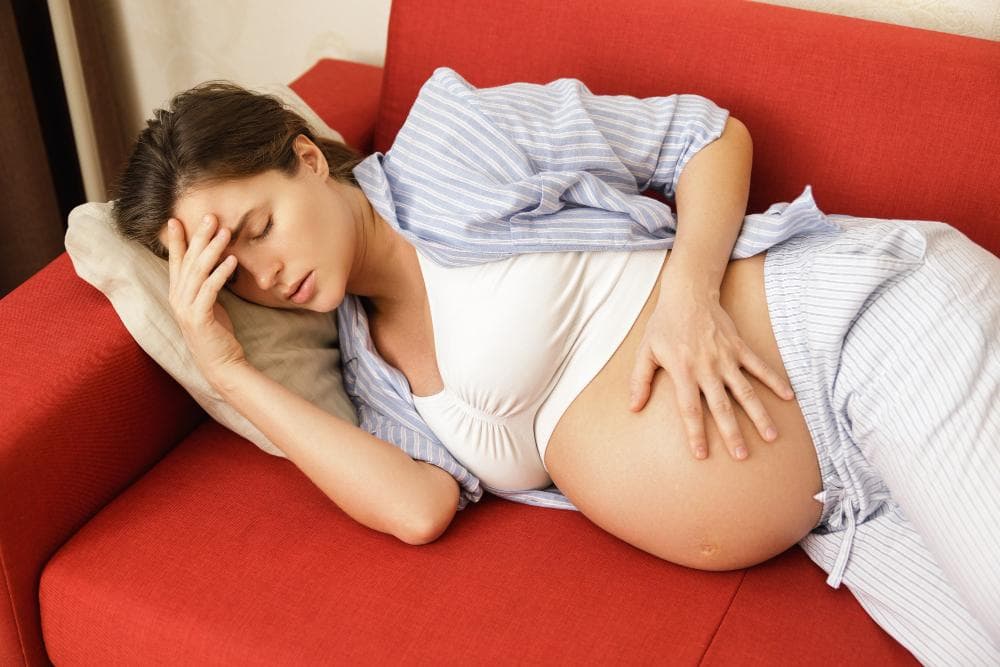
A pregnant woman is lying down on the couch, looking tired and distressed as she holds her forehead.
Back pain is one of the most common complaints of pregnancy — affecting somewhere between 50 and 70% of pregnant women at some point across the nine months. For most women, it is a manageable discomfort. For some, it becomes severe enough to interfere with sleep, work, and daily movement.
It is also one of the symptoms that tends to be under-managed. "It is normal in pregnancy" is true, but it is not the whole answer. Normal does not mean untreatable, and it does not mean every type of back pain in pregnancy is the same. Some is straightforward musculoskeletal discomfort from mechanical changes. Some points to different structures entirely. And some back pain during pregnancy is a symptom of something that needs attention promptly.
Dr. Shachi Singh, consultant obstetrician at Prakash Hospital, Sector 33, Noida, explains the types of pregnancy back pain, the causes, and what actually helps — including which pain medicines are safe and which to avoid.
Why Back Pain Is So Common in Pregnancy
Several simultaneous changes create the conditions for back pain:
Relaxin: A hormone produced in increasing amounts throughout pregnancy that loosens the ligaments and joints in preparation for delivery. Relaxin increases 10-fold during pregnancy, softening the collagen in ligamentous structures. This is essential for allowing the pelvis to widen during delivery — but it also reduces the stability of the sacroiliac joints, the symphysis pubis, and the lumbar spine, making them more susceptible to strain and discomfort.
Weight gain and shifting centre of gravity: As the abdomen grows, the body's centre of gravity moves forward. To compensate, many women unconsciously lean backward — exaggerating the lumbar curve (lordosis) and placing increased strain on the lower back muscles and facet joints.
Abdominal muscle stretching: The rectus abdominis muscles (the "six-pack" muscles) stretch and may partially separate (diastasis recti) as the uterus expands. These muscles normally help support the lumbar spine — their reduced function places more demand on the back muscles alone.
Postural changes: The combined effect of a heavier abdomen, hormonal ligamentous laxity, and altered muscle mechanics produces significant postural changes that accumulate over months.
Pressure on pelvic nerves and blood vessels: As the uterus grows, it can press on pelvic blood vessels and nerves. Lying flat on the back after the first trimester compresses the inferior vena cava (the major vein returning blood to the heart) and the aorta, causing circulatory disruption and sometimes worsening back discomfort in this position.
Two Types of Pregnancy Back Pain
Understanding the type of pain helps identify the right approach.
1. Lumbar Pain (Lower Back Pain)
Pain in the lower back, centred over the lumbar spine and lower back muscles. Often aching or dull in character, worsens with prolonged standing, sitting, or physical activity. Similar in character to common low back pain outside of pregnancy, but driven by the specific hormonal and mechanical changes of pregnancy.
2. Posterior Pelvic Pain (Pelvic Girdle Pain / PGP)
Often confused with lumbar pain but felt deeper in the pelvis and buttocks — over the sacroiliac joints, sometimes radiating to the posterior thighs. Worse with activities that load one leg at a time — walking, climbing stairs, rolling over in bed, standing on one leg. Sometimes accompanied by a catching or grinding sensation in the hip or sacroiliac area.
PGP is related to sacroiliac joint instability from relaxin-driven ligamentous laxity. It is more specific to pregnancy than general lumbar pain. Women who have had it in a previous pregnancy are likely to experience it again.
Both types can coexist. A physiotherapy assessment is the most useful way to clarify which type is predominant and guide specific treatment.
Safe Relief: What Works
1. Exercise and Movement
Not rest — movement. Staying appropriately active is one of the most evidence-supported approaches to pregnancy back pain. Complete rest worsens pain and deconditioning.
Walking: 20 to 30 minutes of brisk walking daily maintains spinal mobility and supports healthy weight gain. Start slower if pain is significant and build up.
Prenatal yoga: Specifically targets the muscles that support the spine and pelvis. Cat-cow stretches, child's pose (modified for pregnancy), pelvic tilts, and gentle hip openers are effective and safe. Look for a pregnancy-specific yoga class or physiotherapist-led exercise programme.

Pregnant woman exercising on a yoga mat with an exercise ball and dumbbells beside her, with a happy expression.
Swimming: The water supports the body weight — nearly eliminating the gravitational load on the spine and pelvis. Swimming or aqua-aerobics is particularly effective for women with significant pelvic girdle pain.
Pelvic tilts: Standing with back against a wall, gently tilting the pelvis under and tucking the tailbone in, then releasing. 10 to 15 repetitions, multiple times daily. Simple, effective, and can be done anywhere.
Cat-cow: On hands and knees, alternately arch and round the spine in sequence with breath. Reduces spinal stiffness and provides immediate relief for lumbar tension.
2. Sleep Position and Support
After the first trimester, sleeping on the back compresses the inferior vena cava and should be avoided. Sleeping on the left side is recommended, with a pillow between the knees (to reduce pelvic rotation) and one under the abdomen. Pregnancy support pillows or a standard long pillow shaped to support the body work well.
Getting in and out of bed is a common trigger for sacroiliac pain: roll to the side first, then push up using the arms rather than sitting straight up from lying. This reduces the asymmetric pelvic load.
3. Posture and Daily Habit Adjustments
Avoid high heels: Flat or low-heeled supportive footwear reduces the strain on the lumbar spine. This is not vanity advice — the mechanical difference is real.
Lift correctly: Bend at the knees, not the waist. Hold objects close to the body. Avoid twisting while lifting. Indian women who continue domestic work throughout pregnancy — carrying water, heavy pots, or bending repeatedly — are at higher risk for back strain.
Sitting: Use a firm chair with lumbar support. Avoid sitting for prolonged periods without breaks. A rolled towel or small cushion at the lumbar curve helps when sitting in chairs that do not support the lower back.
Maternity support belt: A soft, wide band worn around the lower abdomen and lower back provides proprioceptive support for the sacroiliac joints and reduces the pendulum-like loading of the growing uterus on the lumbar spine. Useful for women with significant pelvic girdle pain.
4. Heat and Massage
A warm (not hot) compress or heating pad on the lower back provides immediate muscle relaxation and pain relief. Avoid direct heat on the abdomen.
Gentle pregnancy massage — from 2 to 3 months onwards — reduces muscle tension and has evidence for improving pregnancy-related back pain. Inform the massage therapist that you are pregnant and ensure they are trained in pregnancy-specific technique (avoiding pressure on certain acupressure points and positions that compress the vena cava).
5. Physiotherapy
Prenatal physiotherapy is the most complete approach for significant or persistent pregnancy back pain. A physiotherapist assesses posture, movement patterns, muscle strength, and pelvic stability — then designs a specific exercise programme. Manual therapy, targeted strengthening, and pelvic floor exercises together provide significantly better outcomes than self-directed exercise alone.
6. Safe Pain Relief Medication
Paracetamol (acetaminophen): The safest oral analgesic for pregnancy. Used as directed, it is appropriate for moderate to severe pain that is not managed by physical measures alone.
Avoid NSAIDs (ibuprofen, diclofenac) in the third trimester: NSAIDs carry risks for the fetus — including premature closure of the ductus arteriosus — when used in the third trimester. They should only be used in pregnancy under medical guidance. Never self-medicate with ibuprofen or diclofenac during pregnancy.
Topical treatments: Topical cooling gels and warm topical applications can provide localised relief without significant systemic absorption. Check with your doctor before using any topical product during pregnancy.
Warning Signs: When Back Pain Needs Prompt Attention
Most pregnancy back pain is mechanical and predictable. See your doctor promptly if you have back pain accompanied by any of the following:
Vaginal bleeding or unusual discharge: Back pain with vaginal bleeding — particularly in the first trimester — could indicate ectopic pregnancy or miscarriage. In the third trimester, it may indicate placental abruption.
Regular contractions: Back pain that comes in waves and is accompanied by abdominal tightening at regular intervals may indicate preterm labour — particularly before 37 weeks. Any back pain that is regular, rhythmic, and increasing in intensity needs same-day evaluation.
Fever or burning urination: Back pain with fever and burning urination suggests kidney infection (pyelonephritis) — a serious complication in pregnancy requiring prompt antibiotic treatment.
Sudden severe pain: Sudden, severe, unrelenting back pain that is different from the gradual onset typical of mechanical back pain needs urgent evaluation.
Leg numbness, weakness, or pins and needles: Back pain radiating down the legs with neurological symptoms (weakness, numbness) suggests nerve compression and needs assessment.
Loss of bladder or bowel control: A medical emergency requiring immediate attention — cauda equina syndrome.
Pregnancy and Obstetric Care in Noida and Greater Noida
Dr. Shachi Singh at Prakash Hospital, Sector 33, Noida, provides comprehensive antenatal care including assessment and management of pregnancy-related musculoskeletal symptoms for women across Noida and Greater Noida.
To book a consultation with Dr. Shachi Singh, call: +91 97023 46853
Clinic Hours: Monday to Saturday, 9 AM – 6 PM | Sunday, 10 AM – 2 PM
Clinic Address: D-12A, 12B, Sector-33, G.B. Nagar, Noida, Uttar Pradesh 201301
Frequently Asked Questions
1. Is all back pain in pregnancy normal?
The gradual onset of lower back or pelvic pain that builds through the second and third trimesters is extremely common and usually mechanical in origin. Back pain that is sudden, severe, accompanied by fever, urinary symptoms, vaginal bleeding, or leg neurological symptoms needs prompt medical evaluation.
2. Which pain medicines are safe for back pain in pregnancy?
Paracetamol is the safest option. Avoid NSAIDs (ibuprofen, diclofenac) particularly in the third trimester without medical guidance. Consult your doctor before taking any medication.
3. Is sleeping on the right side bad for the baby?
The recommendation is to sleep on the left side, as the inferior vena cava runs on the right side of the spine — sleeping on the left slightly improves venous return to the heart. However, sleeping on the right side occasionally is not acutely dangerous. The important thing is to avoid sleeping flat on the back after the first trimester.
4. Does pregnancy back pain predict difficult labour?
No — pregnancy back pain is related to the musculoskeletal changes of pregnancy, not the likelihood of a difficult delivery. Women with significant pelvic girdle pain may need specific positioning guidance during labour, but back pain itself does not predict labour complications.
This blog is written for educational and informational purposes only. Please consult Dr. Shachi Singh or a qualified obstetrician for guidance specific to your pregnancy and symptoms.